















Divine order

The Champions Ascend

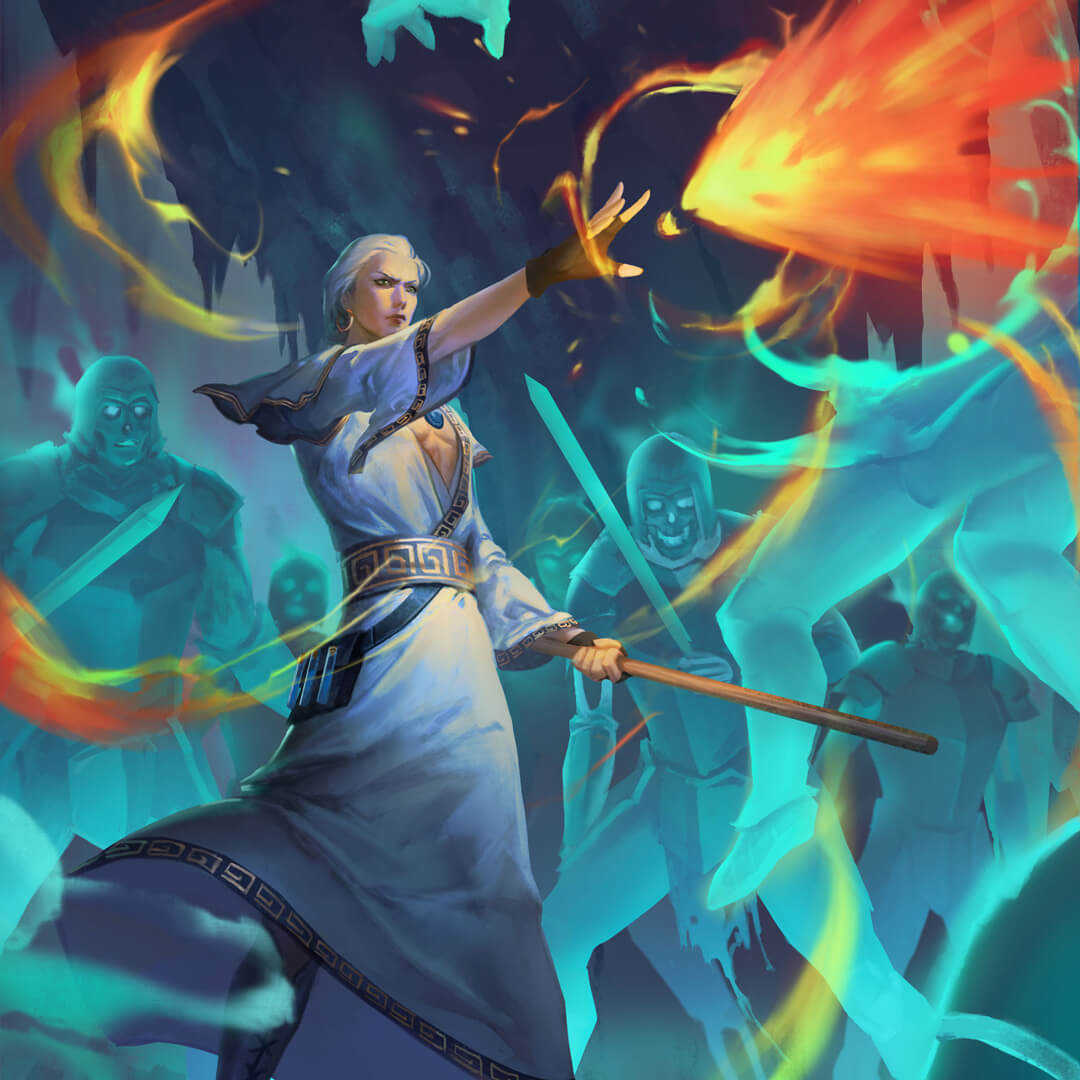
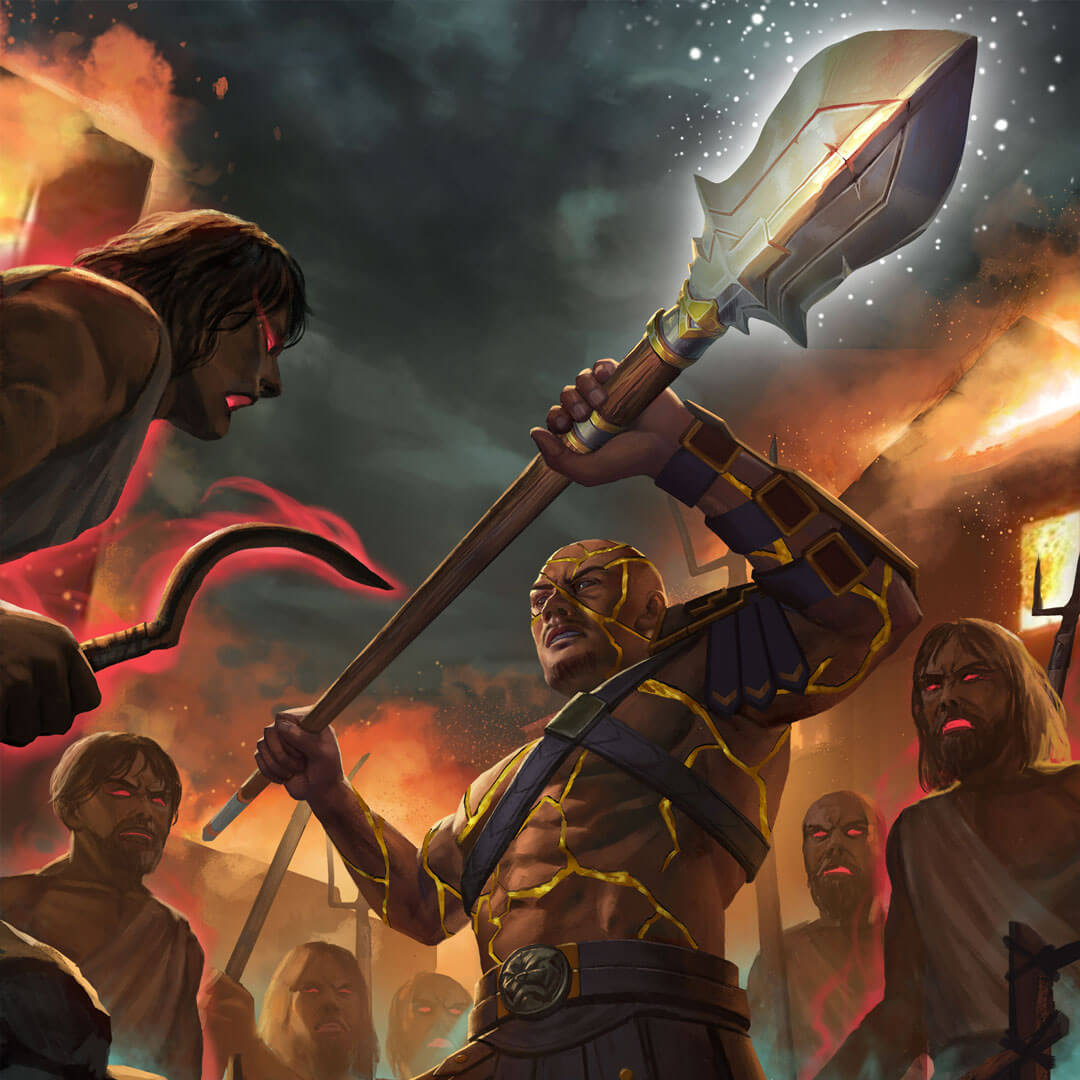
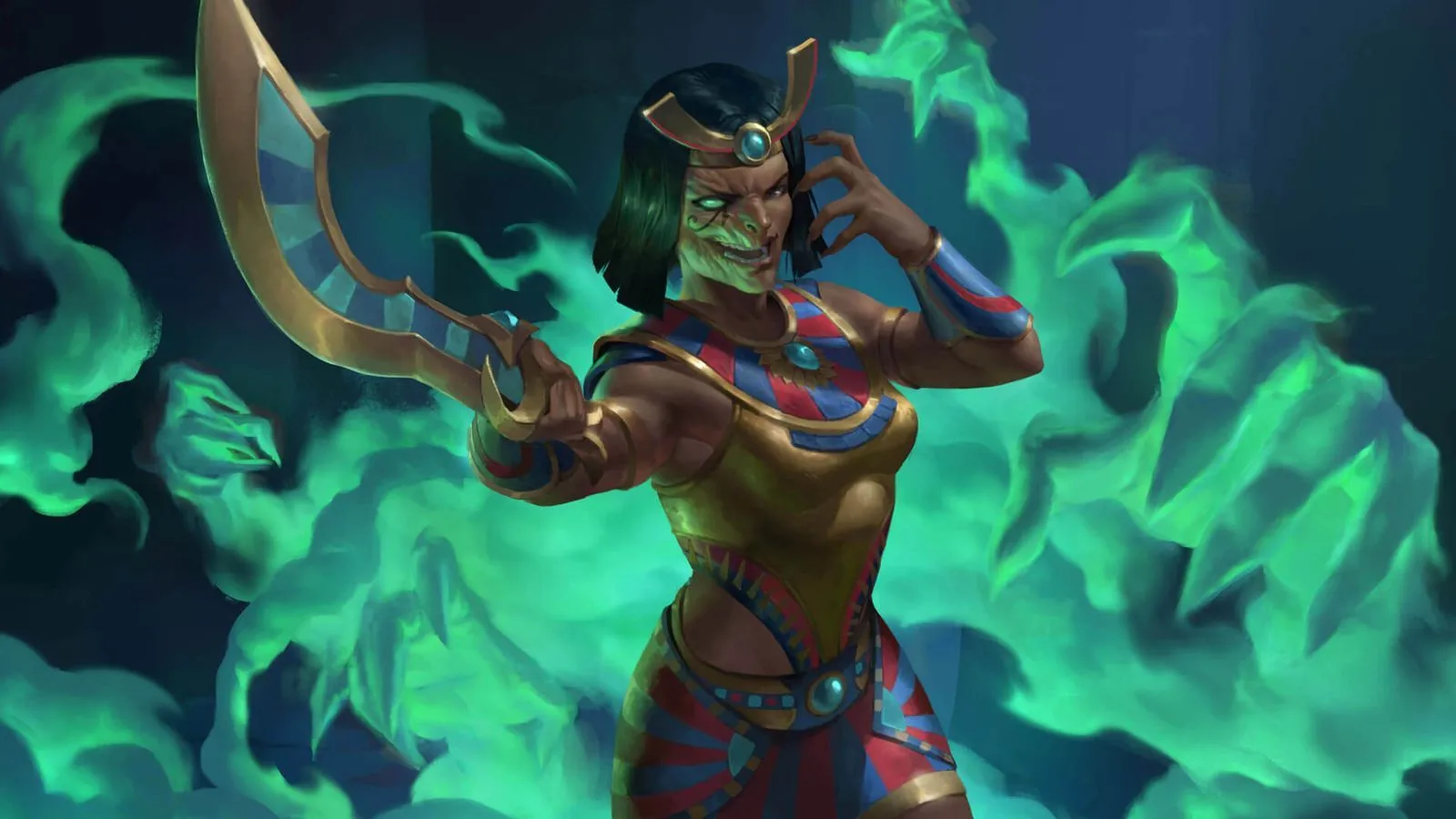
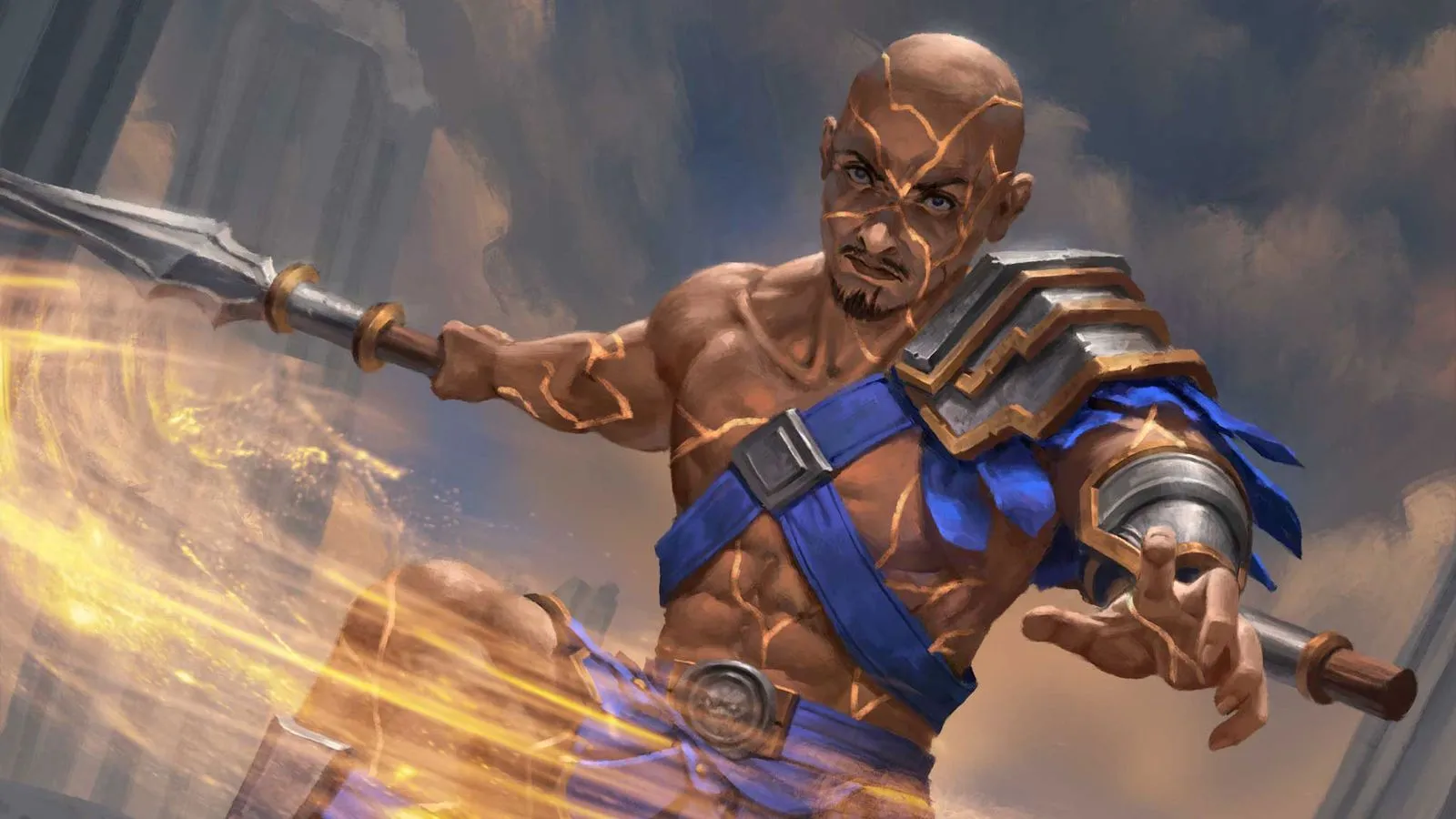
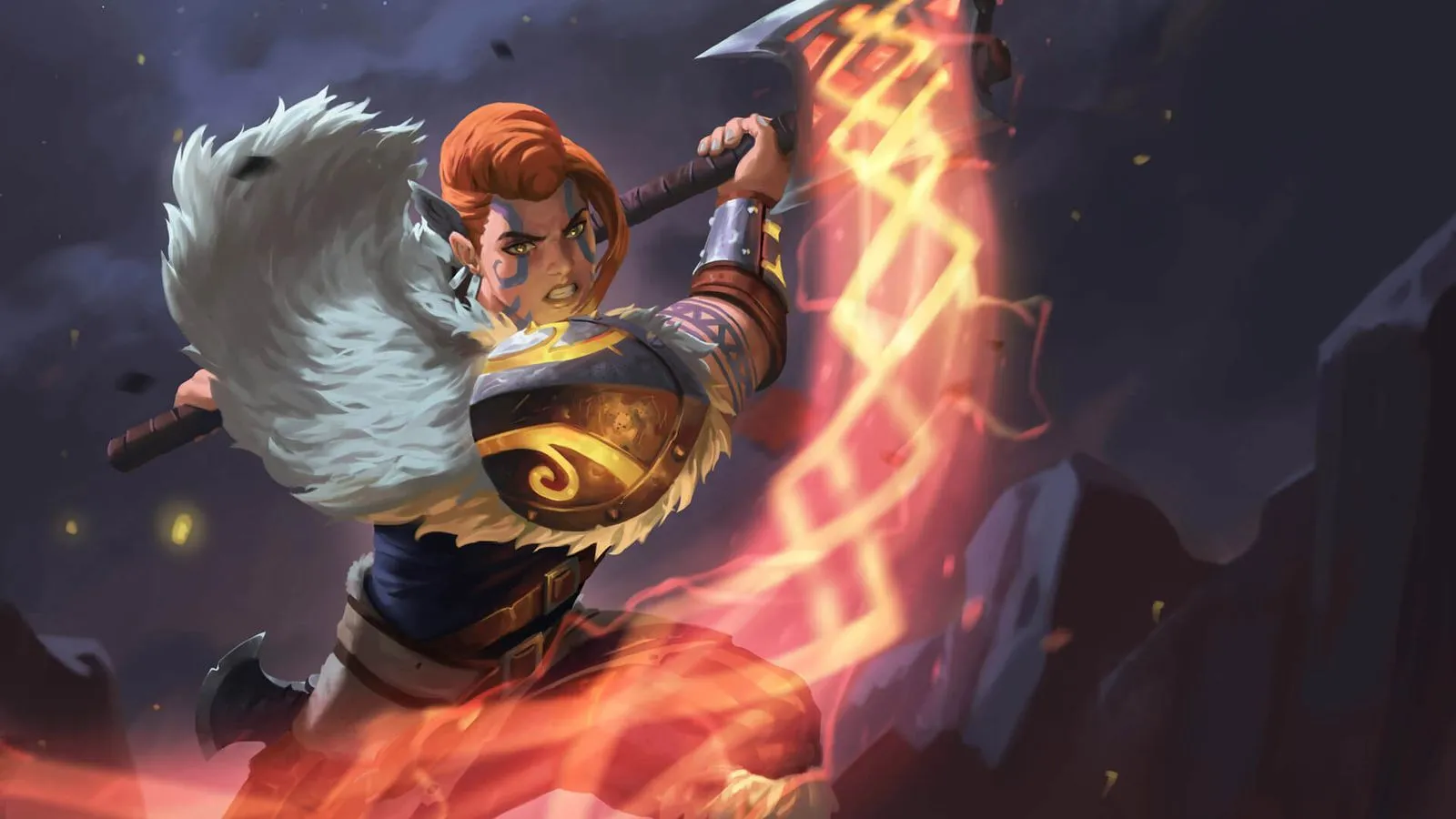
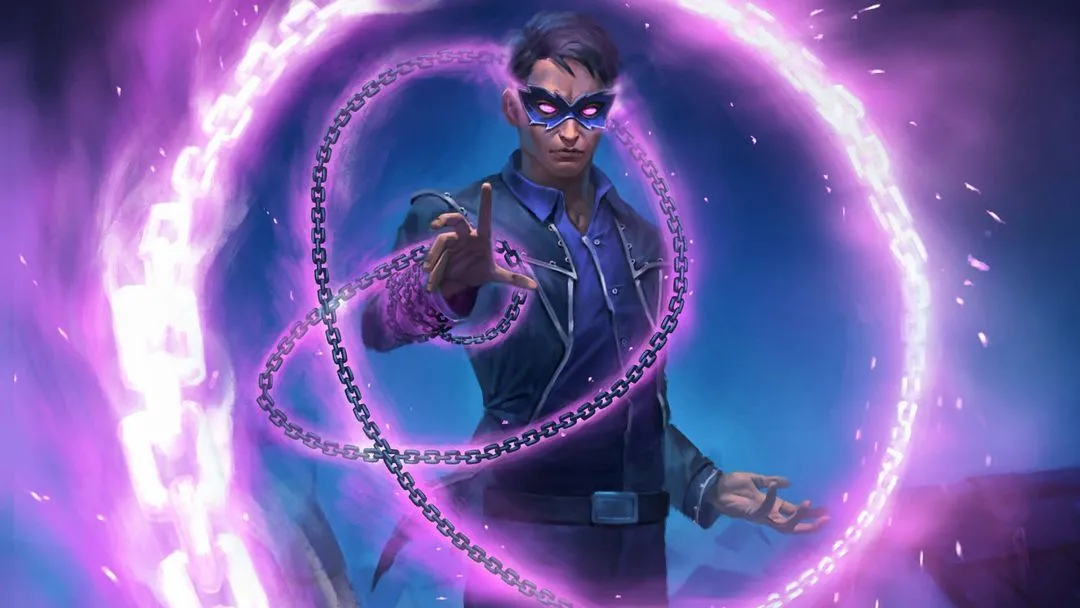
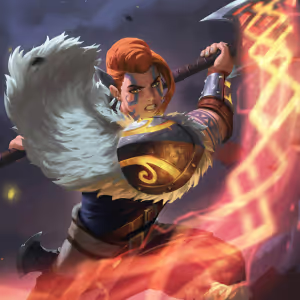
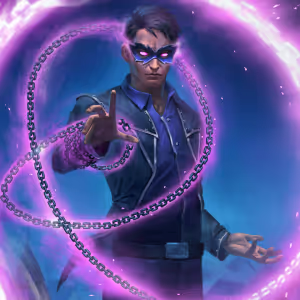
After completing their trials, the champions are rewarded with a portion of their god’s power, living among mortals with divine abilities.

Scroll down

What’s new

No items found.

Trailer

POWERFUL CARDS

No items found.

The Story so far...

Story
1
UNLOCKS
16 Aug
Selena's Trial
Story is locked
Locked story icon
Story
2
UNLOCKS
16 Aug
Pallas' Trial
Story is locked
Locked story icon
Story
3
UNLOCKS
16 Aug
Neferu's Trial
Story is locked
Locked story icon
Story
4
UNLOCKS
16 Aug
Lysander's Trial
Story is locked
Locked story icon
Story
5
UNLOCKS
16 Aug
Valka's Trial
Story is locked
Locked story icon
Story
6
UNLOCKS
16 Aug
Orfeo's Trial
Story is locked
Locked story icon
Story
7
UNLOCKS
16 Aug
Divine Order: Six Triumphs
Story is locked
Locked story icon
Story
8
UNLOCKS
16 Aug
Divine Order: War Without End
Story is locked
Locked story icon
Story
1
Selena's Trial
Overview

The Story

Selena’s Trial, Part 1: Where You Belong

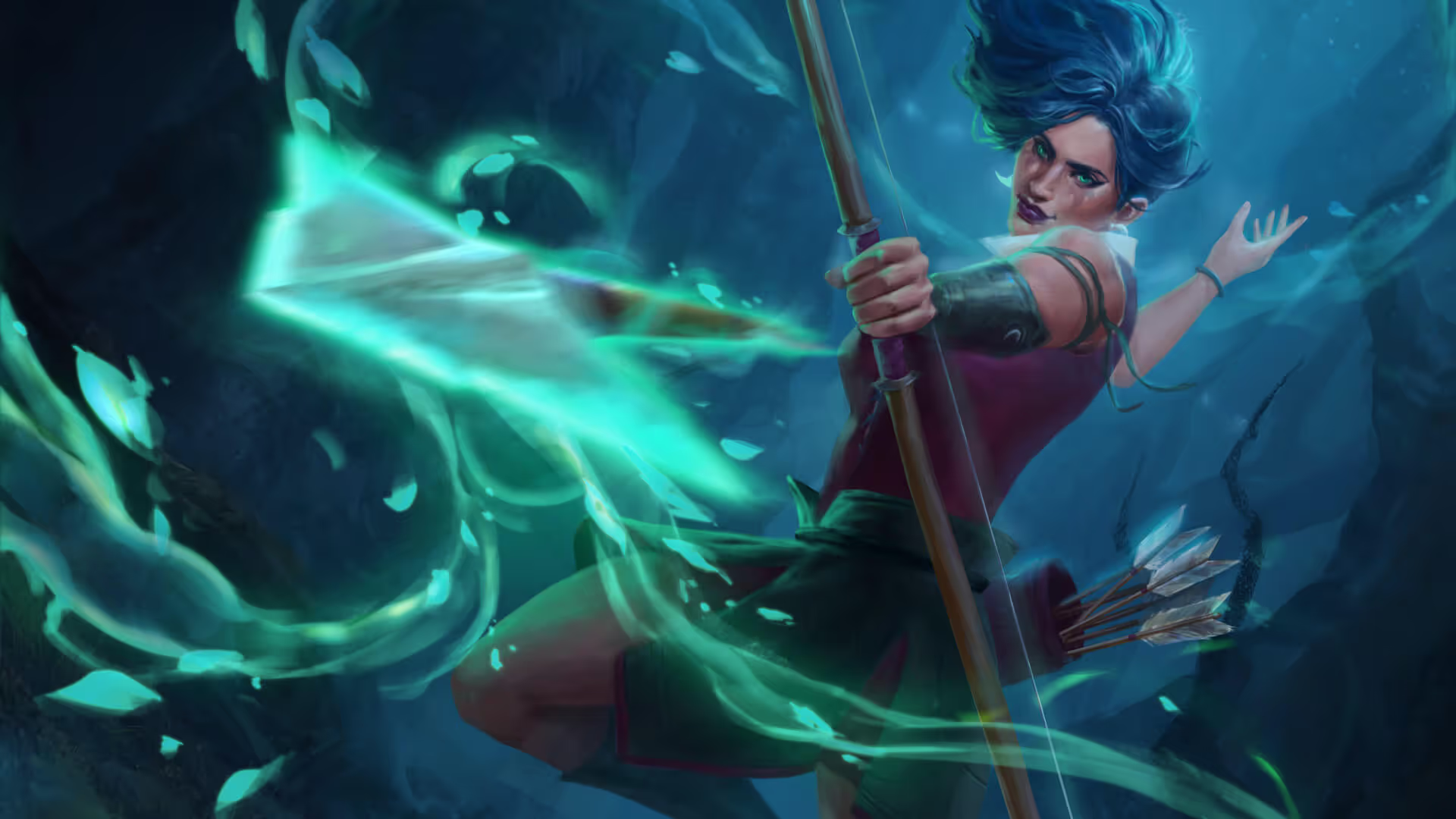
Selena, Champion of Nature, follows the farm-woman named Iphis back to her farmstead. Iphis is the first person Selena has spoken to for days. The champion travels alone—with no one to watch out for, no one to distract her, no one who might accidentally aid her in her divine quest and invalidate her trial.

But the champion of a god cannot live in solitude forever. Iphis found her on the road and begged for her help, telling her of a missing child and a vicious beast. Trial or no, Selena cannot turn the woman away.

The farm-woman leads Selena the front room of the house, a vase shattered on the ground.

“My daughter,” says Iphis, gulping back tears. “Anteia. She’s six. She was alone in the house, mending clothes. We were out in the fields. We heard her shriek—”

Selena examines the wreckage. The vase was lovely, likely a prized possession.

“And you think an animal did this?”

“Yes,” says Iphis. “There’s a lion, a great beast near the size of an ox, that’s been spotted in the hills. Took one of our sheep already. Now it’s taken her.”

Selena frowns.

“This doesn’t look like an animal attack,” she says. “Could someone have taken her?”

“There’s no one here who would do such a thing,” says Iphis. “And no bandits on the roads, not for years. I’m telling you, it has to be that lion.”

Selena examines the tracks around the entrance, but they’re a mess, children and adults and sheep and oxen all muddled up. There is nothing in the mix that looks like a lion’s paws.

“Alright,” says Selena. “I’ll look for her.”

“I’m… I’m sure it’s too late,” says Iphis. “But we’d like to know what happened. And you must slay that beast before it takes anyone else.”

Selena nods, but says nothing.

Not far from the house she picks up a trail, the fresh prints of small feet heading out into the forest.  They’re fainter than a deer’s tracks, pressed into the ground only by the weight of a child, but she’s able to follow them away from the farm, into the hills.
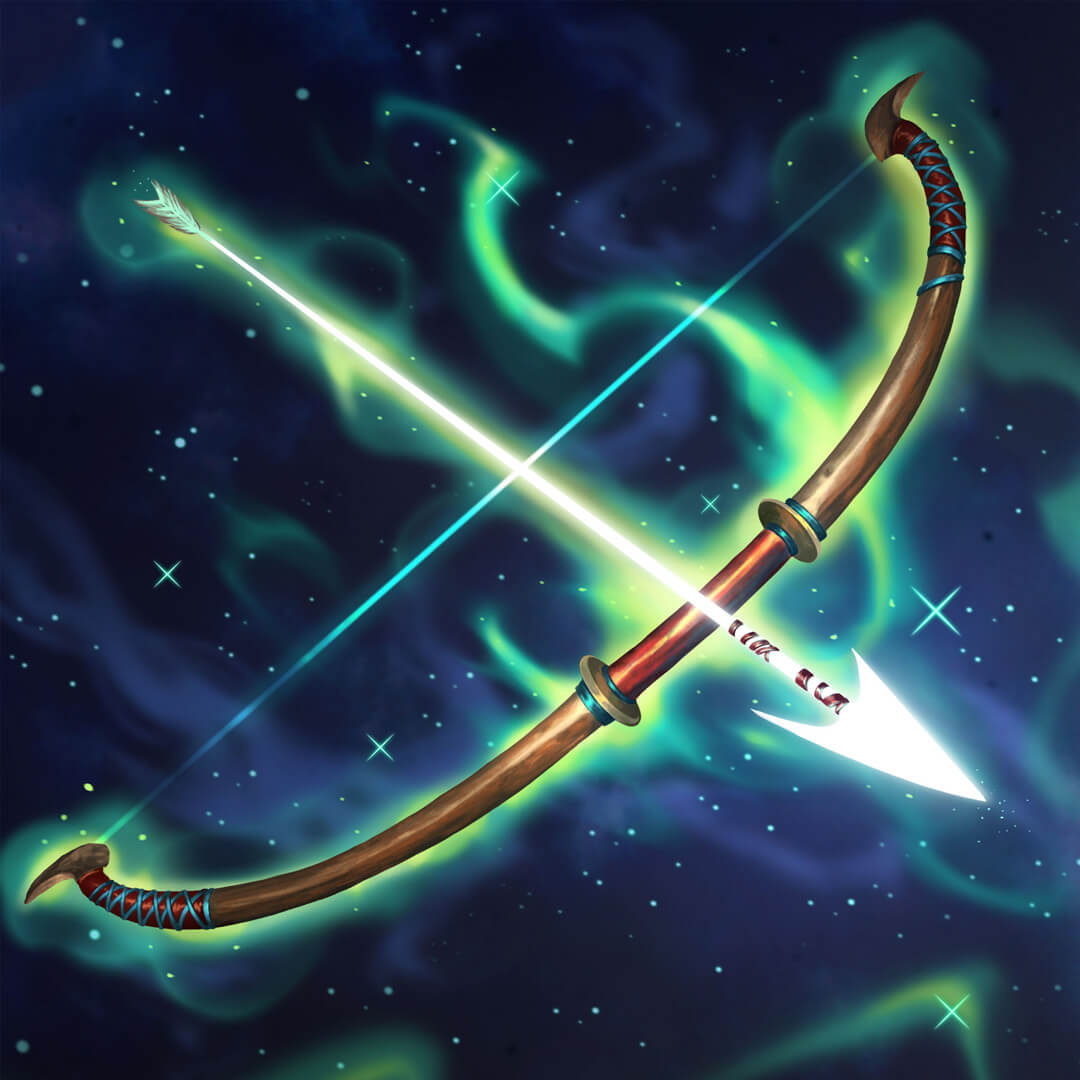
Well up into the hills, the strides lengthen. The child must have broken into a run. Torn shrubs, trampled leaves, a lost sandal—and a paw print the size of a dinner plate.

“Good gods,” breathes Selena. She strings her bow and quickens her pace, moving as fast as she can without losing the trail.

The lion followed the girl, its enormous prints swallowing her little ones, each of its massive strides making ten of hers. She slipped through a thicket, but the lion bounded right over it, and crashed through the next.

The girl’s trail stops at a tall oak tree, the bark of its trunk shredded by claws whose marks reach higher than Selena’s head. The lion’s tracks have trampled all around the tree, prowling in circles, then away…

Selena looks up and sees a small girl huddled high in the branches.

“Are you Anteia?” she asks.

The girl nods. Her face is caked in dirt and streaked with tears.

“I’m Selena. Your mother asked me to look for you. Will you come down?”

“Is it gone?” asks Anteia in a small voice.

“For now,” says Selena. “Come down, and we can leave before it comes back.”

“I can’t,” sobs Anteia.

Selena is about to reassure the girl, to say that any tree you can climb up is a tree you can climb down, when she realizes that the shredded bottom portion of the trunk has no branches at all.

“Jump down,” she says instead. “I’ll catch you.”

With some coaxing, Anteia jumps down into Selena’s arms. She grips Selena tightly, so Selena carries her back the way they both came, with the girl in one arm and her bow in the other.

“You have big arms,” Anteia says quietly.

“I’m an archer,” says Selena, smiling. “It takes a lot of muscle to draw a bow.”

Anteia nods and falls silent again.

“How did you get up that tree, anyway?” asks Selena.

“It had little branches,” says Anteia. “I thought they might break when the lion tried to climb up.”

“That was quick thinking,” says Selena.

“Sometimes I climb trees with my brothers, and they—”

“Sh!” says Selena sharply, and the girl falls silent.

The lion stands on the path ahead of them. It’s not the size of an ox, but it is a massive beast, lean and maned. Anteia begins to shake.

“Get onto my back,” whispers Selena. “I won’t let it hurt you.”

She helps the girl climb around to her back and begins walking sideways, trying to put herself between the lion and the village. The lion watches her the whole time.

Kill it kill it kill it,” whispers Anteia in her ear. The girl’s voice is shaking, her tears hot on Selena’s neck. “Please kill it. It’s so scary. Please.

Selena reaches back into her quiver and feels for an arrow with slightly stiffer fletching than the others. She nocks and draws, shifting her balance to compensate for the small child on her back.

She lets fly, and the blunt-headed arrow hums across the intervening distance and smacks into the lion’s forehead. The beast yowls and flinches away.

“Go on, get away!” yells Selena. “Go! Back where you belong!”

Reluctantly, growling, the lion turns and bounds back up into the hills, away from human settlement.

Selena sets Anteia on the ground and takes her hand, and the two of them walk back toward the village in silence.

“Why didn’t you kill it?” asks Anteia finally, when they’re almost back to the village. “Isn’t that what all those arrows are for?”

“Sometimes,” says Selena. “But sometimes you just have to send a message. Lions eat wild animals, Anteia. They stay away from towns. They only attack people when something’s gone wrong. When they’re too injured or sick to catch their usual prey, or when people have hunted it all.” She crouches to look Anteia in the eye. “Or when a little girl goes running off into the hills on her own, away from all the grown-ups and oxen who could scare the lion away.”

Anteia’s face turns red.

“You broke your mother’s vase,” says Selena. “And you knew she’d be angry. So you ran away.”

“You’re going to tell her!” says Anteia, breaking into sobs.

Selena pulls her close.

“No,” she says. “I’m not. She thinks the lion came all the way down from the hills just to take you away, and she’ll be very relieved when she learns that I got there before it could gobble you up.”

Anteia pulls back, eyes wide, and forgets to cry for a moment.

“Of course,” Selena goes on, “if she thinks that, she’ll tell other people too. Wouldn’t surprise me if they organize a hunt. Good thing, too—can’t have a lion coming down from the hills and snatching children away. I’d bet that lion will be dead within the week.”

“But… but it didn’t snatch me away,” says Anteia. “It stayed up in the hills. It was just that I—”

“That’s right,” says Selena. “So if you tell your mother what really happened, you’ll save that animal’s life. And like I said, she’ll be relieved to have you back, especially when I tell her that there really was a lion. Maybe she’ll be so relieved you won’t even get into trouble. That part’s up to her. But whether you tell her what really happened… that’s up to you.”

Anteia falls silent, and Selena waits.

“I’ll tell her,” says Anteia.

Selena stands up and takes her hand again, and leads the child home.

Selena’s Trial, Part 2: That Which Dwells Within
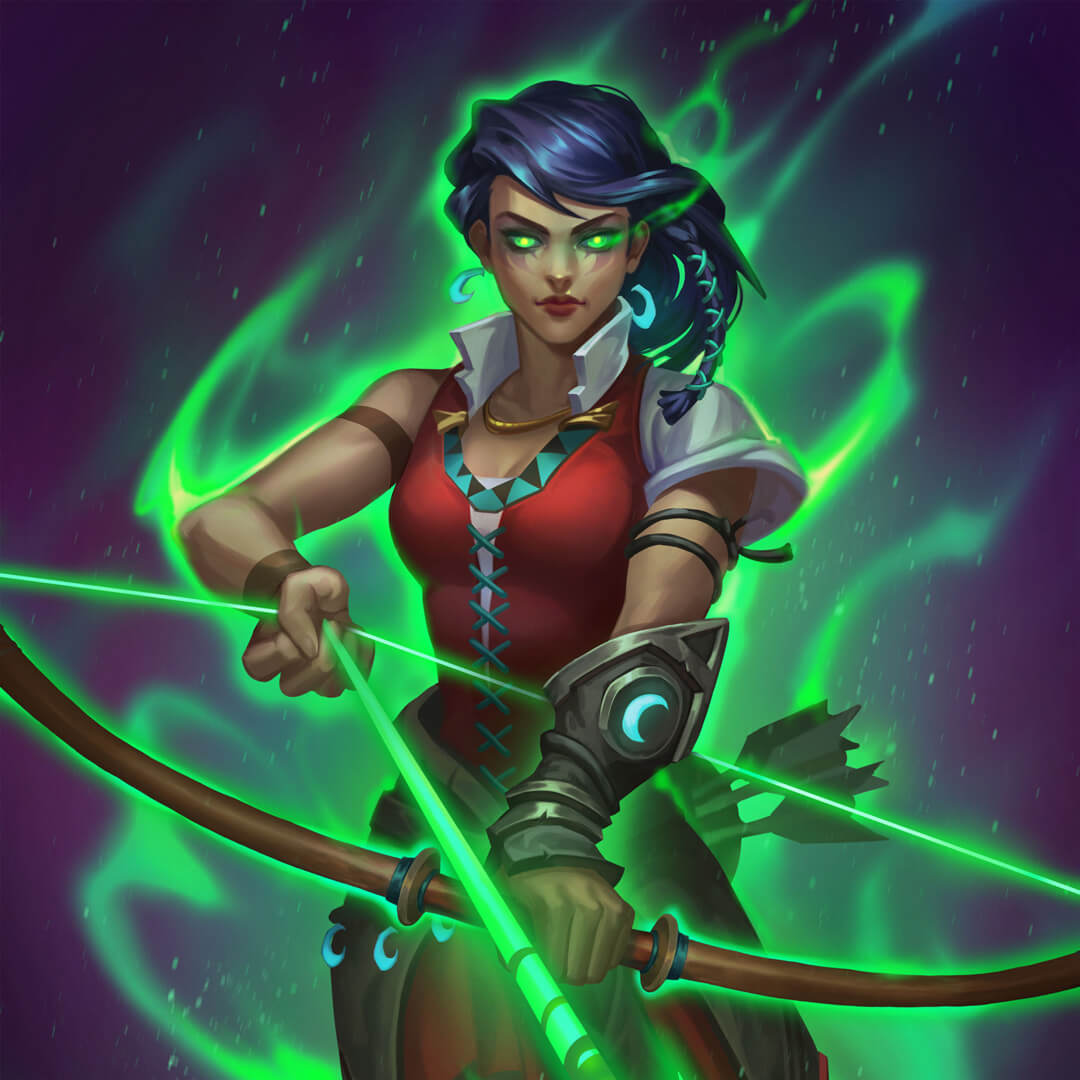
Selena steps carefully through the shattered city of Logophon. Towers of black glass loom, their faces broken. Were they always made of glass, shattered by explosive force? Or were they turned to glass in some arcane cataclysm?

Her footfalls are quiet, but their faint echoes haunt her passage. She does not know what happened here, or whether the infamous mage Antemion was to blame, but she knows that this city is dead. She can hear nothing besides herself—no calling birds, no scurrying rats, not even a breath of wind. Still, she strings her bow and nocks an arrow, carrying it low but ready to draw and fire.

Then she sees it, squatting among the blasted shards of the city, the only structure still intact: the Hall of Antemion. She walks toward it with trepidation in her heart. She has slain cyclops and catoblepas, driven away hydras and subdued charging bulls. All of those were frightening, all of them were difficult, but they were also straightforward. Slay the beast, defend the city, win the day. This time she has no idea what to expect.

You will enter Antemion’s Hall of Mirrors and face that which dwells within, the God of Magic had told her. Discerning its nature is part of the test. Defeat it and return safely.

The entry to the hall is a dark portal, a blackness that discloses nothing. She takes a deep breath and steps inside.

The darkness is all consuming. And cold. Gods, it’s cold.

She steels herself and takes another step into the darkness, one hand outstretched. She can see her hand, somehow. Her footsteps echo within a vast space, its floor smooth and flat, its walls too distant to guess at. Whatever this place is, it is not within the confines of the ugly structure she saw in Logophon.

Other footfalls reach her ears, coming from up ahead. Not echoes, she’s certain, for they have echoes of their own. Selena does not know how visible she is, but she is careful to keep her footsteps measured, to give no sign that she can hear whatever has joined her in this cold emptiness. She keeps her arrow nocked and listens.

Then she sees it, finally. Her footsteps falter.

It’s her. Her reflection. Her pensive expression, her hair, her traveling clothes, her bow, an arrow nocked. A perfect image—but wrong, somehow, in a way she can’t quantify.

Antemion’s Hall of Mirrors. Selena can see no mirror, no surface, but then, what else is there in here to reflect? Selena transfers bow and arrow to one hand. She reaches out with the other, and her reflection reaches too.

Wrong wrong wrong, her brain pulses at her, and she yanks her hand back before she knows what she is doing. The reflection pulls back as well, looking wary and disturbed, one hand still raised as though to ward off a blow. Then she finally sees it.

It’s the wrong hand.

Not a reflection. A double. An illusion, perhaps. Or maybe something worse. The hair on the back of her neck stands up, and she sees her distress reflected in her double’s eyes. That’s why it looks wrong—she only ever sees herself in mirror image. This Selena would look right to anyone else. But not to her.

“By the gods,” she breathes, and her duplicate says it too, in perfect time, almost too quiet to hear. And so does someone to her left, and someone to her right, and—

Selena whirls and sees them. A multitude of Selenas, stretching off in every direction. Whichever way she turns, they turn with her—some facing her, some facing away, alternating. But not mirrored. When she looks one way, they look the other. Every one of them carries her bow in her left hand, the way Selena does. She’s face to face with herself, with a thousand more of her looking on. She shudders.

Slowly, carefully, she reaches out again toward the closest Selena, her palm opposite its reflection. She presses her hand against the other—and it is not the hard, unyielding surface of a mirror, but a warm, flesh-and-blood hand. She moves her hand to the side and clasps the reflection’s hand—her hand, every line and scar the same. Then she reaches past the hand, very slowly, and rests her hand on her duplicate’s shoulder, as its hand reaches to rest on hers, warm and solid and very, very real. Behind her duplicate she sees that the Selenas are paired, facing each other, hands on each other’s shoulders in just the same way, one Selena in each pair peering around its counterpart to look curiously at her. She pulls her hand back.

There’s nothing in here. Just her. Her and her and her and her and her. Face that which dwells within, Elyrian had said. But he had also said defeat it. What defeat? What it? Here she is, facing herself a thousand times, yet she is certain that there is more to the test than this. She studies the closest duplicate, the line of her jaw, the curve of her throat.

—the storyteller finishes the tale of Timonax, who was lonely and wished for his reflection to become real, only to fall hopelessly in love with his duplicate. The Guard trainees drift away in twos and threes.

“I don’t get that story,” admits Selena, as she and her friend Iola walk back to the Guard training barracks together. Iola is radiant in the moonlight, and Selena slouches self-consciously beside her, even though they are alone, and there is no one there to compare them.

“You don’t?” giggles Iola. “What, you wouldn’t at least want to kiss yourself? Just to see what it was like?”

“Ew, no,” says Selena. “Who’d want to kiss me?”

“Hmm,” says Iola. Just hmm, and a sudden sly smile that shines brighter than the moon—

Selena turns her body to one side (a thousand times) and slides past the nearest duplicate (a thousand times), their faces (faces faces faces) uncomfortably close. The next duplicate, the one facing the same way as her, turns the same way (a thousandfold) and slides away (a thousandfold) as a new duplicate (gods, so many!) steps forward to face her. If it were a dance, its precision would shame the gods, every single one of a thousand pairs of feet stepping in time…

almost.

Selena blinks in surprise, then frowns at the clueless look on her duplicate’s face. She backs up, watches her duplicate get farther away until it nudges up against the next, just as her own back presses against the one behind her. She whirls to one side and stops… and one set of footsteps stops ever so slightly out of time.

She weaves quietly through the crowd of reflections, turning so they can pass, stalking closer and closer to the out-of-step sound. Then she sees another Selena weaving toward her, bow in hand, expression serious, just like all the rest, and she knows in her gut this one is different. This one is wrong.

Selena raises her bow, and a thousand Selenas raise theirs too, each pointing at another Selena who looks just the same. A thousand bow-strings creak as she draws back. Or are they all the same bow-string? The expression on her duplicate’s face is the same as hers—just as determined, just as scared. Its arrow aims for her heart.

What if she’s wrong? Is this one different? Or is it just her, like all the others? She is pointing an arrow at her own heart, and she knows she will strike true.

Selena looks her duplicate in the eye, and in one moment of perfect clarity, she knows that this is the false reflection.

She exhales and lets fly.

Selena’s Trial, Part 3: One More Outrage
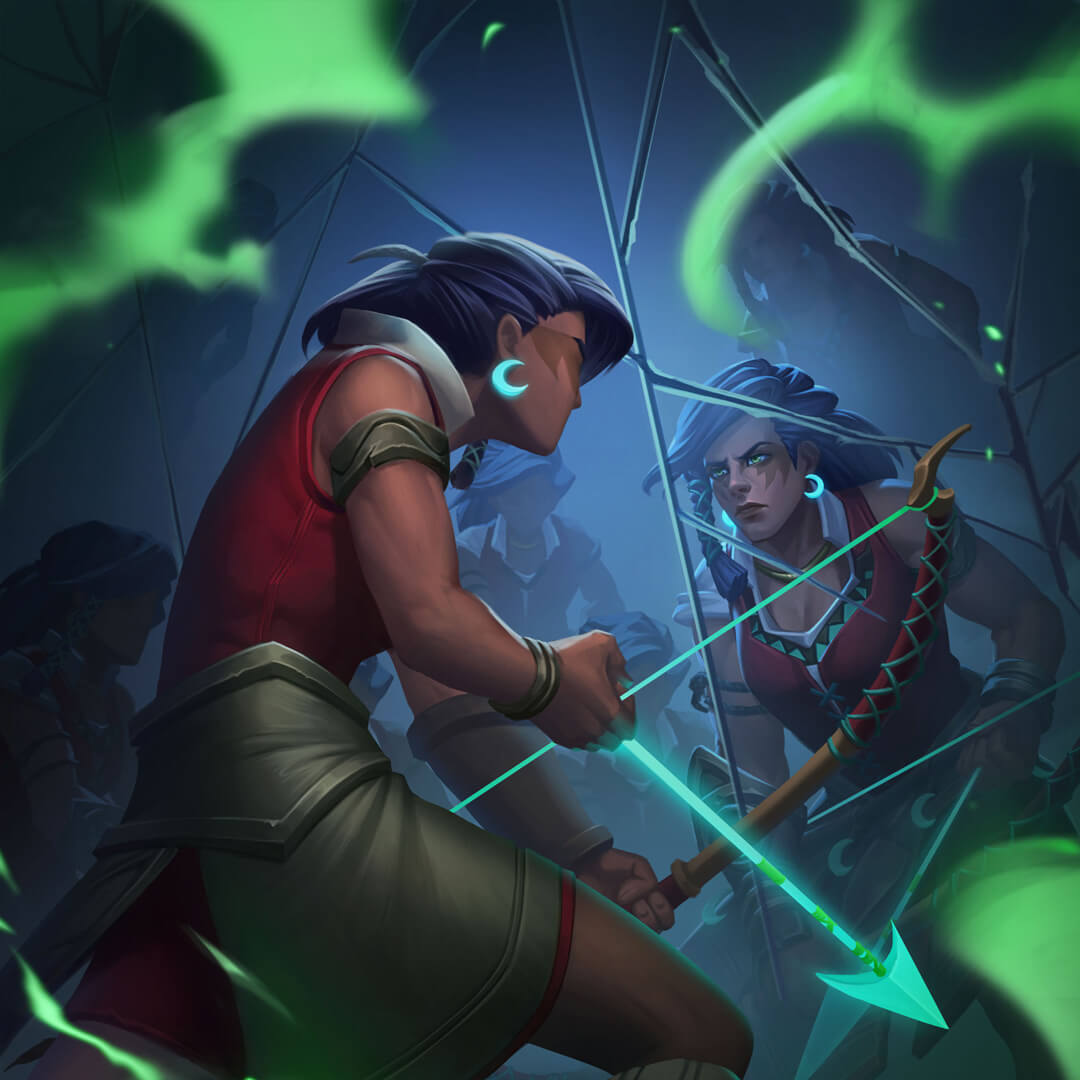
Selena lets her arrow fly as her duplicate—her false duplicate, her enemy—does the same. Selena’s arrow shatters the duplicate’s in midair and keeps flying. Around her, a thousand arrows strike true, and a thousand flesh-and-blood Selenas grunt in pain and fall to the smooth floor, her own arrow sticking from every lifeless breast. If she had picked the wrong target—but she did not.

Selena’s arrow, her true arrow, strikes—not through her duplicate’s chest, but through the surface of a mirror. Her duplicate’s eyes flash with blue-green light, and then her reflection flies apart. Cracks shoot through the whole room, floor to ceiling, as pieces fall away. The other Selenas’ bodies fly apart too, all of them, until she is alone again, breathing heavily, on the verge of tears. The room is still dark, the floor smooth, but now she can see gaping chasms and walls of black, jagged glass in the gloom around her.

There is the slightest sound behind her, and she whirls, another arrow already nocked.

The thing still wears her face, but it has dropped all pretense of imitation. Its misshapen body glows with sickly light, its movements unnaturally swift, its limbs moving with horrifying, boneless flexibility. It holds her bow, but the bow is part of it, the string a tendon stretched between two hideously long fingers. It staggers forward on clawed limbs, their number changing as it grows and absorbs them at will.

Selena looses an arrow at the monstrous thing, but it twists out of the way.

“Too sssslow,” it hisses. It splits her face with a ghastly grin and fires back. She twists to take the arrow in her left shoulder, and gasps in pain as it strikes flesh.

Chittering with satisfaction, the twisted reflection halts its charge and skitters to one side like a crab, pulling another arrow from within itself. Gods, what now? It’s too fast, she’s too slow, and now she’s wounded as well.

There is a chasm behind the monster, a jagged blackness cut through the floor. She has no time to think, only to act. Selena drops her bow and lunges at the thing with all her strength. She slams into it, and it topples backward, over the edge, with a scrabbling of mercurial limbs. Selena manages to catch the lip of the chasm with one hand. She grunts with the effort as the thing’s twining fingers catch hold of her ankle.

Selena looks down to see her own face looking up at her, her own body dangling above the darkness.

“Sssslow,” the thing growls. “Brrrroken. Weeeeaaaak.”

“Go to hell,” she gasps. She kicks it in the face, its talons digging into her flesh. She keeps kicking, until at last its grip loosens and it falls into the dark, screaming in her voice long after it is lost from sight. The scream ends in a distant sound like breaking glass, and the arrow in Selena’s shoulder vanishes.
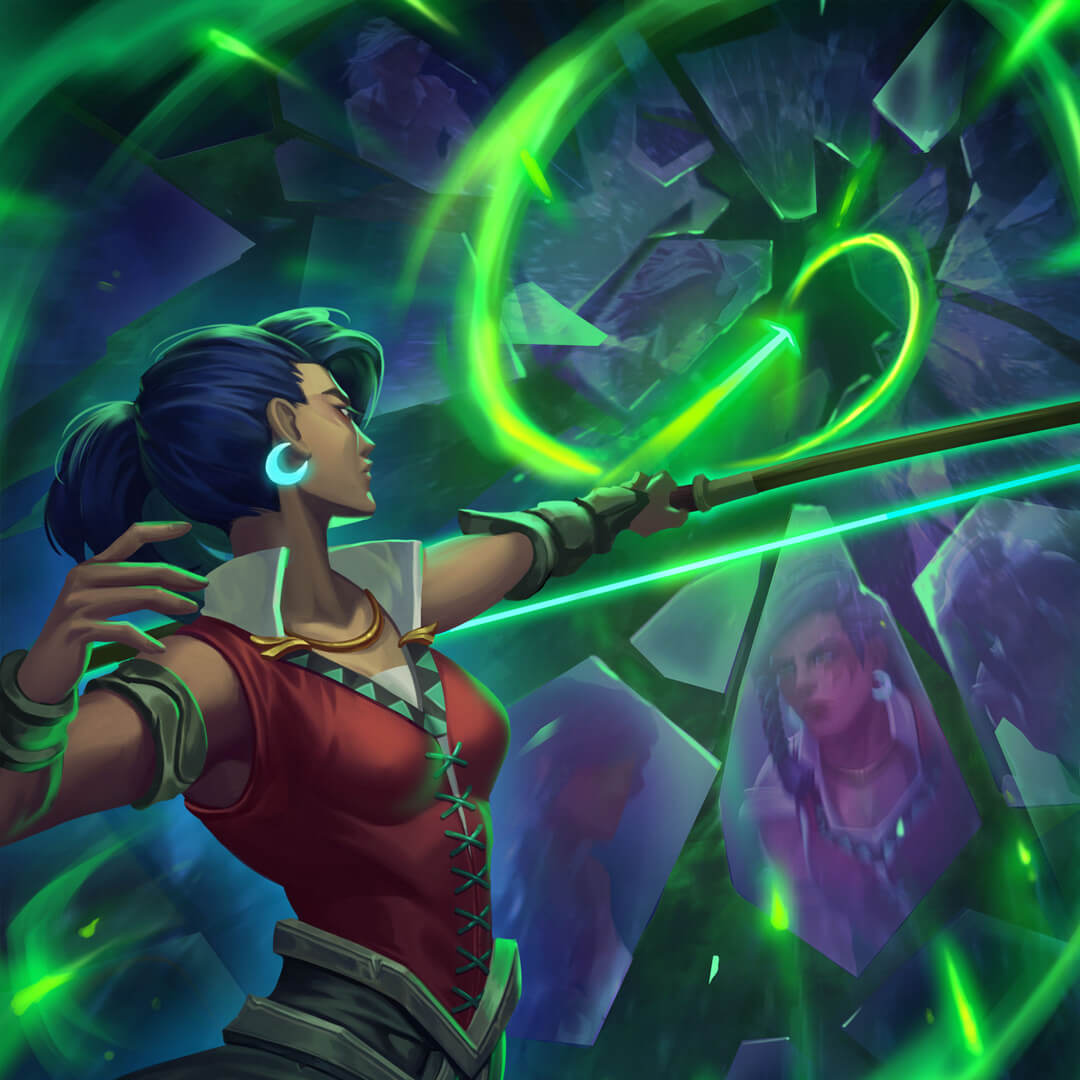
Selena pulls herself most of the way up with her right hand, then grits her teeth and flexes the muscles of her left shoulder. She cries out in pain, echoing in the emptiness, but manages to pull her body up over the edge and back onto the smooth glass floor of the chamber. There is an exit now, a blinding light the shape of the door on the outside of the hall. Selena lays there for a moment, breathing, trying to banish the image of the horrible thing from her mind.

Then she rises, collects her bow, and staggers for the exit. She emerges into the broken, lifeless city of Logophon, finds a fallen column, and sits heavily. She is steeling herself to clean and bandage her wound when there is a rush of wind and a sound like rustling leaves.

Selena looks up to see a woman standing before her with glowing green eyes and faun’s ears.

“Aeona!” she gasps, and tries to rise, but the god of nature holds out a hand.

Sit,” says Aeona. “I will heal you.

Aeona gestures, and Selena feels the flesh of her shoulder knit back together. The blood on her skin dries, flakes, and blows away on a sudden breeze.

“Thank you,” says Selena, and for a moment champion and god look out over the ruined city.

Aeona sighs, a very human sound.

I am sorry you had to face that,” she says.

Selena shrugs, her left shoulder still stiff.

“It was a trial,” she says. “I expected it would be difficult.”

Difficult, yes,” says Aeona, her voice full of sudden fury. “But Elyrean need not have tormented you with that ancient monstrosity. It is one more outrage for which I owe him vengeance.

Selena turns, disturbed at her god’s venomous tone.

“Do you hate him so?” she asks quietly. “In the stories, you often work together. As siblings… and as friends.”

Aeona gestures to the half-shattered black glass towers that slump at strange angles around them.

Do you know what happened here?

Selena shakes her head.

This was once a thriving city,” says Aeona. “A place of learning and of peace, ruled by the benevolent wizard-king Antemion. But then Elyrian made Antemion a demigod.

“A demigod?” says Selena. “Antemion was Elyrian’s proxy in the Demigods’ War?”

Mmm,” says Aeona. “So you know that much, at least. Yes. Over a thousand years ago, the gods cut out a portion of our power and set it upon mortal champions.” She glances over at Selena. “Not merely blessed, like you, but infused with a part of our divinity. The demigods. It was our last hope for peaceful coexistence, but the demigods themselves chose war.

“Was this place destroyed in the war?” asks Selena.

After a fashion,” replies Aeona. “When the armies marched, Antemion could not bring himself to rouse his peaceful people to battle. Instead, with the power of Elyrian upon him, he sought to create new life. A new species, to fight the war for him.”

“That’s horrible,” says Selena.

Yes,” hisses Aeona. “The life he created was a mockery.” She pauses, the weight of thousands of years seeming to settle on her. “When at last he had perfected his unnatural creation, he sought to multiply it in his Hall of Mirrors. The result was a disaster that turned the towers to glass, trapped the abomination in an endless reflection, and killed every last one of Antemion’s beloved, peace-loving people.”

Aeona looks down at Selena, her eyes as wild as a winter storm.

It is true that Elyrian and I were friends,” she continues. “There is magic in the natural world, in its elegance and simplicity. He once understood that, and we created wonders together.

The Goddess of Nature holds out her hand, and a rose blooms in her palm. It blossoms, thrives, withers, and dies, all in the space of moments.

“But those days are long past. The god of magic is our enemy, my champion. Do not trust him.

Selena nods, but says nothing.
Story
2
Pallas' Trial
Overview

The Story

Part 1: Is There No Solace?

The Anubian’s strides are long and purposeful, and Pallas struggles to catch up.

“Pardon me,” says Pallas, walking up beside her.

Neferu, Death’s champion, turns her head sharply to look at them.

“I was hoping we might walk together,” says Pallas apologetically. “Just for a short while.”

“Walk wherever you’d like,” says Neferu, without warmth.

“We haven’t been properly introduced,” says Pallas.

The Anubian woman regards them seriously. She seems like the sort who does everything seriously.

“Neferu of the Red Sands,” she says at last. “Champion of Death, General of the Pharaoh’s Army. But you knew all that.”

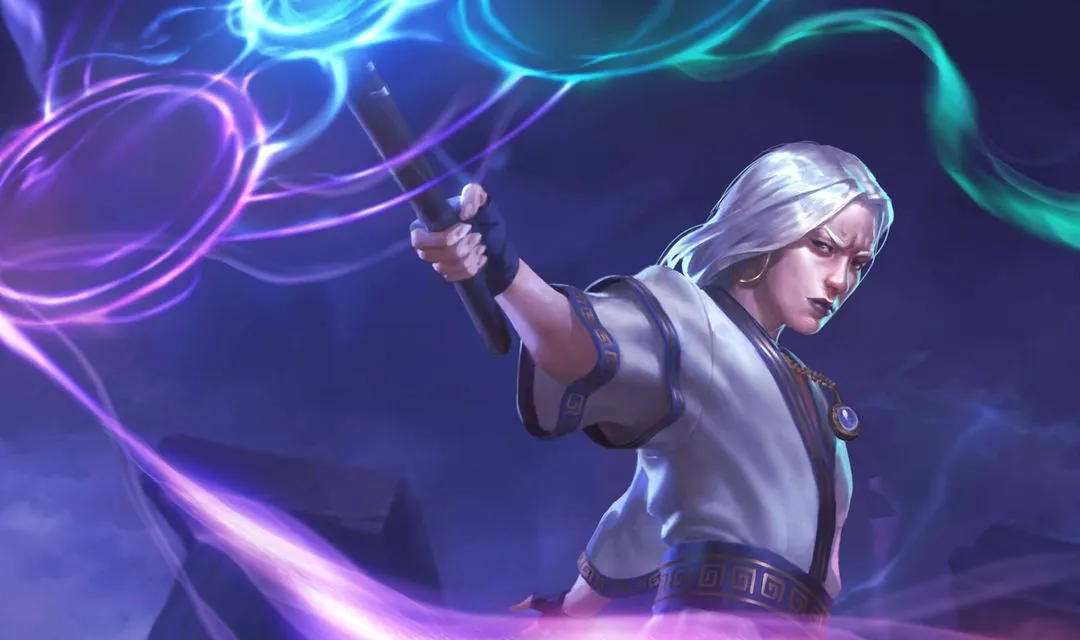
“I did,” they reply cheerfully, sticking out a hand. “I’m Pallas. Champion of Magic, if we must, but I prefer just Pallas.”

Neferu glances at the offered hand, but does not take it. Pallas lets it drop.

“Whatever it is you want,” says Neferu, “I’d take it as a courtesy if you got around to it.”

“Oh,” says Pallas. “Of course. I was just hoping, since I helped you find your trial, that you might be willing to—”

“Helped me?” asks Neferu, incredulous. “How do you figure?”

Pallas blinks.

“Well,” they say, more carefully, “I told you that the First Pillar could be found in the Thanakris Desert, a piece of information that I took, from your reaction, to be novel.”

Neferu stares at Pallas.

“Do you always talk like this?”

“Like what?” says Pallas. “I mean, yes, this is how I usually talk, but I’m curious what you’re referring to.”

“With all those… commas,” says Neferu. “Conditionals, qualifiers, supporting evidence. You talk like a sophist.”

“Ah,” says Pallas. “The sophists at the Academy teach us to talk like them. They seem to feel it’s terribly important. They call it ‘Rhetoric’ and make it mandatory to graduate.”

The ghost of a smile seems to haunt Neferu’s lips, just for an instant.

“Anyway,” says Pallas. “You professed not to know the location of the First Pillar. Although we are not allowed assistance during the trials, we can accept help along the way, and so I disclosed to you what I knew about the Pillar’s location. I find myself unsure how to reach my own trial, and I hoped you might help me in return.”

“No,” says Neferu. “Three times.”

“Three?” says Pallas, raising an eyebrow.

“No,” says Neferu, “because unlike you, I’d be helping the person who got their trial from my own, far less merciful god, and that seems foolish in the extreme.”

“Reasonable,” says Pallas. “And sufficient in itself, honestly, if you don’t want to—”

“No again,” says Neferu, “because I don’t know anything about reaching the Underworld.”

“Hm,” says Pallas. “I was told you’ve actually been there.”

“I have,” says Neferu. “But I got there the old-fashioned way. Took a sword to the head.”

“Ouch,” says Pallas.

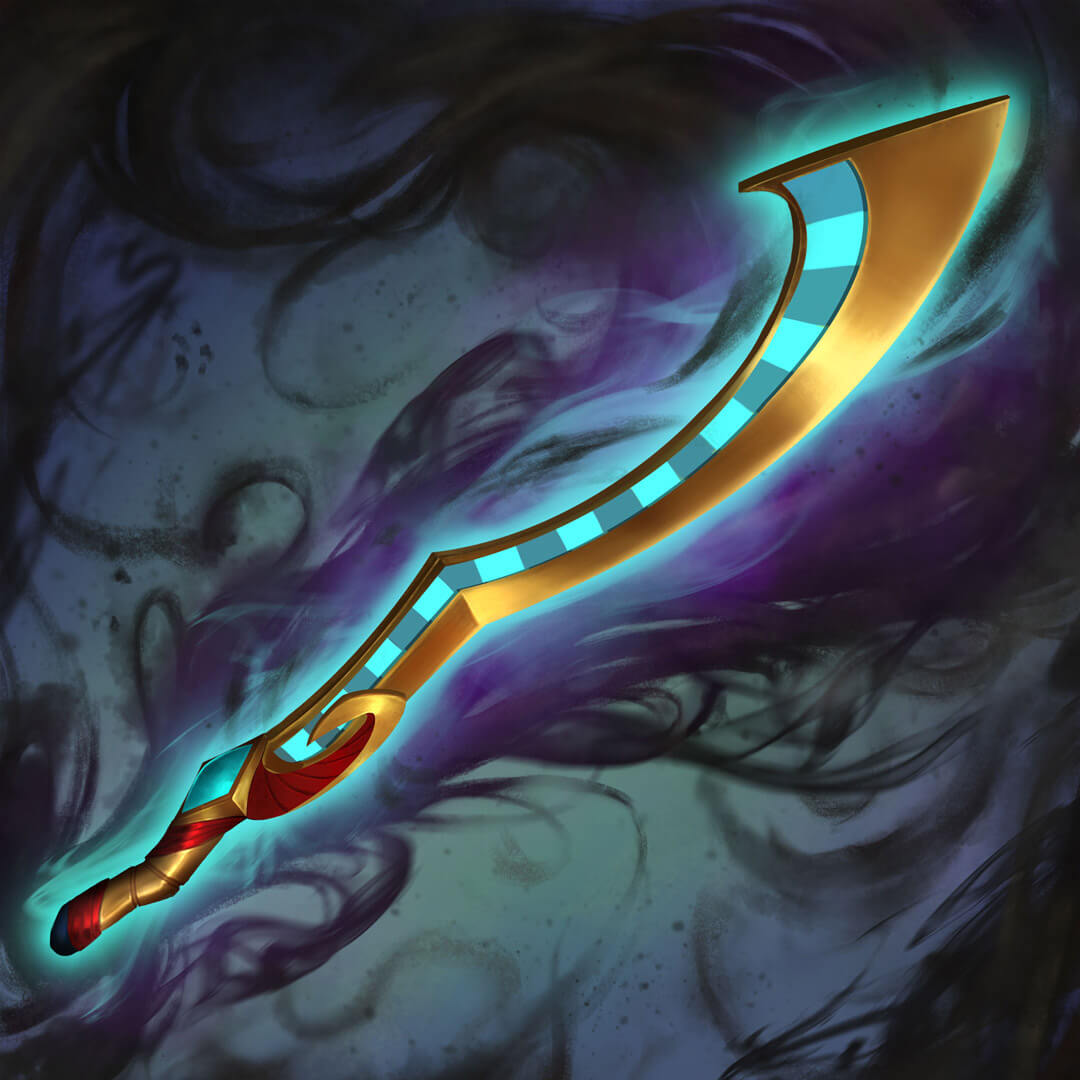
“I can help with that,” says Neferu, patting the curved khopesh at her side, “but I don’t figure you’d be interested.”

“Not really, no,” says Pallas. “Alright, that’s two. And, again, more than enough reason—”

“And no a third time,” says Neferu, “because your ‘new information’ didn’t help me in the slightest.”

“It didn’t?” replies Pallas, crestfallen.

“I’ve traveled the Thanakris,” says Neferu, “and I’ve never seen anything that looked like a Pillar of Creation.”

“You have?” says Pallas. “Polydora’s Geography of the Known World says the desert is impassable.”

“I’m sure that’s what Olympian travelers told her,” says Neferu. “What would they know?”

“I don’t know if Polydora consulted any Anubians,” Pallas admitted. “Although if she did, I suppose there is every chance they would keep the desert’s secrets.” They frown. “If the desert is passable, can’t you just go look for the Pillar?”

“The desert is vast,” says Neferu, “and my people stick to specific routes. Obviously this pillar isn’t on any of those routes or I’d know about it. And I’m not about to go wandering off into the Serpent’s Heart looking for it. So it’s no help.”

Pallas blinks, memory suddenly stirring.

“The Serpent’s Heart?” they echo.

“It’s what we call the most dangerous part of the desert,” says Neferu impatiently. “Nothing can live there for long. The only way I’d risk it is if I knew exactly where I was going.”

“There’s an old scroll…” says Pallas, thinking furiously. “It’s mostly nonsense, about the supposed details of how the gods made Eucos—”

“You think it’s nonsense?” asks Neferu, seeming genuinely shocked. “That’s… blasphemy.”

“Thaeriel might say so,” Pallas replies. “And perhaps Malissus would as well. But Elyrian would hardly punish me for questioning that which can be questioned. As I said back in the Arena, the story contradicts reality. The world is round, and the sky is an infinite space, not a flat cloth that needs to be held up by a pillar. These are well supported and widely accepted facts.”

“It sounds like you don’t put any stock in this story,” says Neferu.

“I didn’t, previously,” says Pallas. “But the God of Light just told us to our faces that this place exists, so I’m willing to reexamine my assumptions.”

“Fair,” says Neferu. “You really don’t have to help me, you know.”

“I know,” says Pallas. “So this scroll, the Eucogenesis, is supposed to have been handed down by the gods themselves. It teaches that there are seven Pillars of Creation. The First Pillar is supposed to hold up the sky, and the gods set dragons to guard it so that no one would undo their work.”

“Dragons?” echoes Neferu. “Plural? Thaeriel only mentioned one dragon.”

“That’s what the myth says,” replies Pallas, shrugging. “Thaeriel would know better, I suppose, and he always tells the truth. Although…”

“What?”

“The God of Light has been known to lie by omission,” says Pallas. “In some stories, anyway.”

“Great,” says Neferu. “Does your Eucogenesis say anything about where this pillar is?”

“I’m trying to remember the exact wording,” says Pallas, mentally scanning through the scroll. “It says the First Pillar is located… ‘where the pharaoh’s gaze pierces the serpent’s heart.’ It never made any sense to me, but if the Serpent’s Heart is a place…”

“It is,” says Neferu. “This ‘pharaoh’s gaze,’ though… I’m not sure what to make of that.”

“Perhaps it just means you need a pharaoh to find it?”

“Ha,” says Neferu. “That would be lucky.”

Pallas cocks their head.

“Would it?”

“Oh,” says Neferu, shaking her head. “No, not really. Kidding.”

Neferu tenses, as though steeling herself for something painful.

“Thank you,” she says finally. “That… does help.”

“You are most welcome,” says Pallas.

“I still can’t help you with your trial,” says Neferu quickly.

“I understand,” says Pallas. “Your reasoning makes sense to me, and even if it didn’t, it’s your decision, of course.” They hesitate. “I was wondering, though…”

Neferu exhales impatiently.

“Yes?”

“What’s it like?” asks Pallas. “Being dead?”

Neferu thinks for a moment.

“Boring,” she says finally. “Except when it’s harrowing. So… a lot like being alive, really.”

Pallas laughs, then sobers.

“Is there no solace there?” they ask quietly. “No Fair Meadows, no Hall of Heroes? I never took Xenagon’s Thanology for fact, but if you’ve actually been there—”

“There’s the Blessed Rest,” says Neferu. “But only Anubians go there, and even then only a handful of them.” She frowns, seeming suddenly to realize just how bleak that sounds. “Look… I only saw the Anubian afterlife. It was everything I expected, Sothek and Anhotep and my heart weighed against a feather. I didn’t think anything of it, but… maybe the Olympian afterlife is down there too. I wouldn’t know.”

Pallas nods, a lump forming in their throat.

“You’re worried about someone in particular,” says Neferu quietly. “Gods, I’m sorry, I’m being boorish. You helped me even though you didn’t have to, and now you’re looking to me for reassurance and I’m giving you nothing.”

“I prefer knowledge to comfort,” says Pallas. “Always.”

“I’m afraid I don’t have much to offer on either count,” says Neferu. “I… lost people too. My whole squad fell in battle that day. The others weren’t in the Blessed Rest with me, although they died every bit as bravely. I don’t know what became of them, or why.” She shakes her head, seeming suddenly much older. “So… Thank you, again. And I’m truly sorry I can’t help you in return.”

“I appreciate that,” says Pallas. “I suppose I’ll see for myself soon enough. Still not ready to try the quick way, though.”

“Can’t say I recommend it,” says Neferu. “Good fortune in your trial. I think I can get away with that much, at least.”

“Good fortune to you as well, Neferu of the Red Sands,” says Pallas.

“Just Neferu is fine,” she replies. She holds out a hand. “Farewell, Pallas.”

Pallas shakes her hand, and the champions go their separate ways.

Part 2: Down to the River

Pallas, Champion of Magic, pauses at the mouth of the cave and eyes the greenish mist seeping out. Ominous. Very ominous.

But then, this entire quest is ominous. You will descend into the Underworld and face champions of my choosing, the Goddess of Death said. Defeat them, or remain there forever. She had at least confirmed that they could be defeated. What she hadn’t done was tell Pallas how to actually get to the Underworld, which had necessitated a lengthy but enjoyable library visit. Now they are here—at one of the few known gates to the Underworld, armed with the knowledge of how to get in. And out again, hopefully, if all goes well.

Pallas reaches into their purse and fishes out a large coin, a golden funerary obol stamped with a skull. They sigh and put the coin in their mouth. It is cold and heavy on their tongue. They take a deep breath, their nose itching at the scent of sulfur, and step into the cave.

The darkness in the cave quickly grows oppressive, and Pallas sets a trio of magelights swirling around them to light the way. The lights’ usual blues and purples turn sickly in the pale green mist.

The sound of languidly flowing water grows louder up ahead as Pallas follows the winding cave down to the river.

***

“Come on, Pallas!” says Keno. “I’m going down to the river to catch frogs.”

“We have lessons in less than an hour,” says Pallas, looking up from a book and squinting at the shadows outside. “We’d miss them.”

“Then we’ll miss them!” the lanky boy replies. “Come onnnnn!”

“I like lessons,” says Pallas. “Besides, I’m already in trouble.”

Pallas has been censured for unauthorized spellcasting again, this time for inadvertently creating a sizable sphere of complete silence on the edge of the commune green in an attempt to secure a little peace and quiet. The elders say it should fade soon, although they’ve been saying that for a few days now.

“Fine,” says Keno. “You won’t tell on me, will you?”

Pallas considers.

“No,” they say finally. “Have fun.”

And then Keno is gone.

***

Pallas sits by the murky underground river and waits, the golden coin uncomfortable in their mouth. They do not have to wait long. A flat-bottomed skiff emerges from the mist and slides to a halt beside them, and a gaunt, robed boatman steps out without a word. The boatman’s face is concealed by a hood, and he carries a long oar.

The boatman tilts his head as though listening, and Pallas’s heartbeat suddenly pounds in their ears. They flinch and point to their mouth.

The boatman reaches up, parts Pallas’s lips with cold, skeletal fingers, and takes the coin.

“Your fare,” says Pallas, running their tongue over their teeth to get the taste of the coin out of the mouth. “I think you’ll find I’m expected, down below.”

The boatman stares for one long moment, then nods and steps aside. The boat does not sway when Pallas steps in and sits, nor when the boatman boards and takes his place at the stern. The boat glides gently from the shore, cruising through the green, murky waters of the River of the Dead.

***

“Lessons in a few minutes, Pallas.”

Pallas looks up from their book once more to find Nemyra, an adult mage who often rounds up the children for lessons.

“I’ll be there,” says Pallas, as though they already knew, although in fact they’d been engrossed in their reading and might well have missed midday lessons without the reminder.

Nemyra frowns.

“Have you seen Keno?” she asks.

Pallas considers for a moment, then shakes their head.

“Hm,” says Nemyra, frowning. “Wonder where he’s gotten off to.”

Pallas shrugs and goes back to their book, and pretends that they do not feel guilty.

***

“Don’t suppose you get many passengers like me,” says Pallas. “Alive, I mean.”

They’re nervously filling the silence, a habit they’ve mostly shaken during their years at the Academy of Mystic Arts. If you’re talking, you’re not learning. One of the only things of value Pallas’s least favorite sophist had ever taught them—a terrible attitude for a teacher, as it happens, but endlessly useful for navigating a variety of other difficult situations. But there is something about this cavern, the chill mist rolling off the river, the boatman who is certainly no living mortal standing still and silent behind them, that discomfits them intensely.

The boatman does not respond, so Pallas rolls a bit of their robe nervously between their fingers and peers down into the river. Down in the murk, there are wispy little water plants—no. Not plants.

Hands. Human hands, grasping at the boatman’s oar but unable to find purchase. Then the murk parts, and Pallas makes out a face beneath the water, pleading for help—

***

Lessons are done for the day and the sun is low in the sky when the sounds of shouting and crying rouse Pallas from another book. For a moment they assume it is some simple scuffle among the children, but then they hear adult voices in the tumult. They frown and close the book.

There is a group of adults coming from the direction of the river, carrying something together. All of them are grim-faced. Some of them are crying. One of them, Keno’s father, wails and tears at his clothes. Pallas wants to turn away, but they cannot.

Pallas catches a glimpse of the adults’ burden, finally, and sees what they already know they must—

***

The boat lurches to a stop on an unremarkable bit of shore obscured by mist, jolting Pallas from their unhappy memory. They look sharply at the boatman.

“Is this it?” they ask, as lightly as they can, but the boatman still does not respond. “I see.”

With a nod of thanks, Pallas steps out of the boat, their sandals crunching on a beach of rough volcanic sand. The boat shoves off without a sound, leaving Pallas alone on the shore.

“Hello?” says Pallas. They raise their voice, but it is swallowed by the mist. “I am Pallas, Champion of Magic, and I am here to face my trial.”

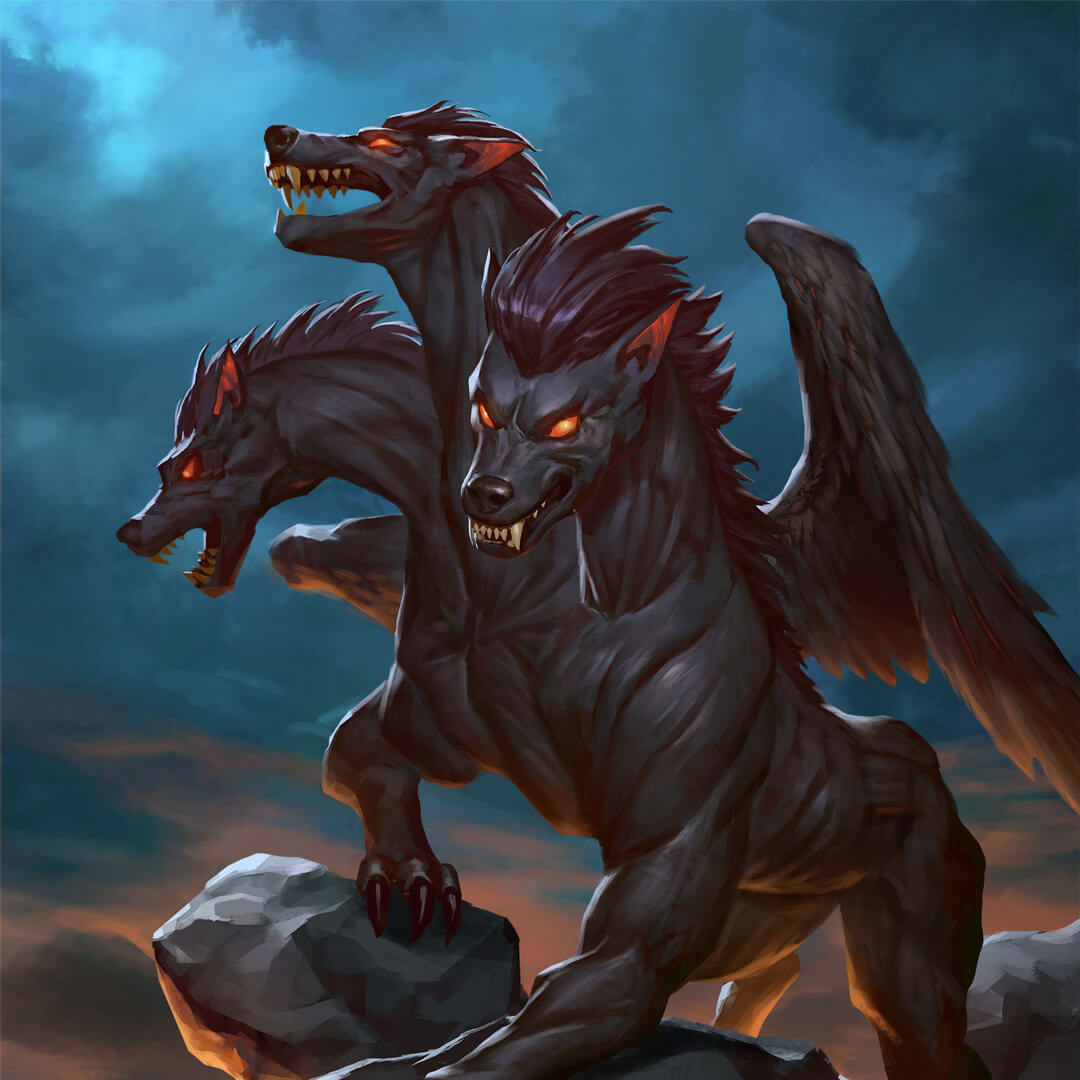
Then a huge shape looms out of the mist, a three-headed monstrosity with six red eyes and two vast black wings. The Guardian of the Underworld regards Pallas hungrily, then lets loose a blood-curdling howl from all three throats.

Thick fog swirls up from the ground, coalescing into spectral humanoid shapes, then taking on more specific forms, with hands, eyes, faces—familiar faces. Elder Procris. Grandfather Taikon. They arrange themselves in a loose phalanx. At the forefront is a small shade, a child, dripping with muddy water that seems to come from nowhere.

“Hello, Pallas,” hisses Keno. “You should have been there, that day. You should have saved me.”

Pallas lifts their chin.

“I am sorry,” they say, voice wavering. “I regret it deeply. But I wasn’t there, and I couldn’t save you. I’ve long since made my peace with that.”

Your peace?” wails Keno’s shade. “What about mine?”

“I will do what I can,” says Pallas. “Let’s begin.”

As one, the shades rush forward to attack.

Part 3: What You Carry With You

Pallas thinks quickly as the phalanx of shades rushes toward them. Their task is to defeat the shades—as well as, possibly, the three-headed Guardian of the Underworld—and they still have no idea how exactly to do that.

A quick blast of flame shoots from their fingertips and sails harmlessly through the shades’ spectral bodies—no surprise there, but good to confirm. A psychic attack likewise does nothing—spirits have will, but their sense of self is limited. The shades keep coming.

Pallas is hesitant to use necromancy here in the House of the Dead, but it really is the only way to deal with spirits. Just another reason why the Academy’s ban on necromancy is so foolish. Even staid, hidebound Thaeriel lets his priests study how to banish spirits. Fortunately, Pallas has never been one for obeying rules, and knows more than a few spells of necromancy.

They reach out with their magic, into the realm of ghosts, and shred the shades with spectral talons. The ghosts scream as they are torn apart. Behind their fading forms, the Guardian grins with all three mouths.

The shades rise again from the gray, volcanic sand and resume their attack.

Even in death, they may fall, the Goddess of Death had said. But how?

The shades are too close now, and Keno’s shade rakes one spectral claw across Pallas’s arm. The sleeve is unharmed, but the arm goes numb in a wave of searing cold.

Pallas stumbles backward and casts a ward spell against spirits—more necromancy, technically, but of a purely defensive variety—and a wall of blue-white light springs into being between them and the shades. The shades crash against it and tear at it with their claws, ripping holes that knit closed as fast as the shades can open them. That won’t hold forever, but it gives Pallas some time to think.

“It’s your fault,” growls Keno’s shade, through the veil of light. “Your fault I’m dead.”

The other shades are speaking too, about whatever failings of Pallas’s they can point to that might have made their lives harder or their deaths swifter. Pallas finds this easy to ignore, after a lifetime of practiced inattention to bad-faith criticisms. Keno… is harder to dismiss.

“You should have told them where I was,” says Keno. “You should have come and looked for me.”

“Be quiet,” says Pallas. They create a sphere of perfect silence around themself and sit down to think, watching the shades soundlessly rip into the ward-wall. A few small, ragged holes have formed that will not seal, so Pallas doesn’t have much time left.

Physical attacks of any kind seem to be out, including magical ones. The shades have no form, no substance. Mental attacks likewise. And spiritual attacks—well, it’s no surprise that hadn’t worked, is it? Ghosts can’t die, only be banished to the afterlife, and that’s where they already are. Banish them, even utterly destroy them with death magic, and they will only reemerge here, by the river.

Keno’s face is twisted with rage, his hands curled into claws that rip into Pallas’s ward spell. Another few seconds and the shades will be through.

“Your past is what you make of it,” Pallas mutters suddenly—something they’d once been told by Grandfather Taikon, whose shade is silently clawing holes in Pallas’s ward spell even now. “You choose what you carry with you.”

Pallas stands, eyes clear. They drop the ward and the zone of silence, and in the moment before the shades reach them, they speak a potent spell—not of necromancy, but of transmutation. Their specialty, the art of making things what you wish them to be. It doesn’t usually work on spirits, but here, in this place…

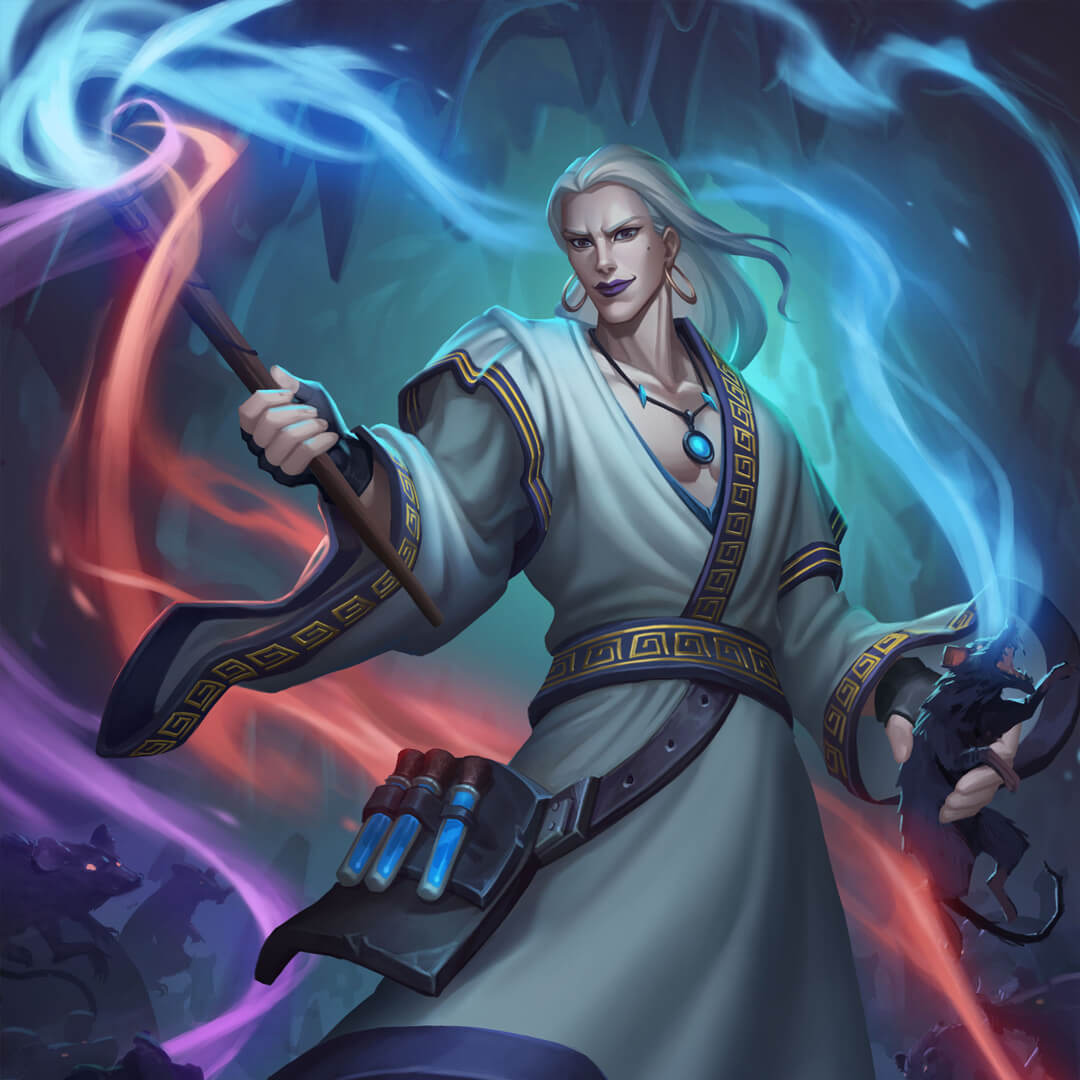
Every single one of the shades shrinks and solidifies, condensing into a perfectly ordinary rat. Behind them, the Guardian of the Underworld vanishes, replaced by three rats with their tails tangled together, squealing in protest. Pallas mutters a quick spell, an old sailor’s charm, to undo the knot, and the three rats skitter off together.

Pallas bends down and reaches out toward the rat that was once Keno’s shade.

“I truly am sorry,” says Pallas. “I wish I had been there that day. I wish I’d broken my word and told them where you were. But I didn’t. I can’t offer you that, not now. All I can offer is my genuine regret… and a chance to see the world again, for a little while.”

The rat’s nose twitches, and it stares up into Pallas’s eyes for a long moment. Then it skitters up Pallas’s arm and perches on their shoulder.

“Go on, shoo,” says Pallas to the remaining rats, who scatter into the mist.

They turn back toward the river—only to find the menacing, horned figure of Malissus herself, the Goddess of Death, blocking their way. Here, in the seat of her power, she is vast and personal all at once, the coldness of Death masked by an all-too-human smirk.

“Hello, my lady,” says Pallas. “You’re not going to make me actually kill the rats, are you? Look at them—they’re thoroughly routed.”

“The task is done,” says Malissus dismissively. Then she nods to the rat on Pallas’s shoulder. “But that soul is mine.”

“This,” says Pallas, petting Keno’s fur, “is a perfectly ordinary living rat. It does not belong in the Underworld.”

Malissus grits her ivory teeth.

“Fine,” she says. “But its true form is that of a shade, and if you try to transmute it again—”

“I know,” says Pallas. “It will revert, and then presumably it will wind up back here.”

“Death will not be denied.”

“Not forever, anyway,” Pallas agrees, with what cheer they can muster. “Did you know what I would do?”

“I was hoping you would die,” says Malissus. “Now get out of my realm. And tell Elyrian that whatever he’s planning… it’s not going to work.”

Pallas blinks. Elyrian has told them nothing about the purpose of the trials, nor about what comes after.

“Is he planning something?” they ask. “More than usual?”

“Ask him yourself,” says Malissus. “This contest is a sham. We all know it. If there’s a point to all of this, Elyrian and Thaeriel haven’t seen fit to reveal it. Not even to you, apparently.”

“Apparently,” says Pallas. “Thank you, my lady. Your realm’s hospitality is as lacking as one would expect, but I do believe I have learned something.”

“Of course you have,” says Malissus acidly. “The boatman will be along shortly.”

Then she is gone, vanished into the mist. Pallas sits down by the river to think, absentmindedly petting the rat on his shoulder. Together, they wait for the boat that will return them to the land of the living.

Story
3
Neferu's Trial
Overview

The Story

Part 1: The Balance in Blood

By Kelly Digges

The broad-bottomed Anubian merchant boat has finally docked and cleared customs. Neferu, Champion of Death, looks around warily as she steps off the boat and into enemy territory.

This city’s people call it Syrapolis, named after its conqueror, but Neferu’s maps call it by its traditional Anubian name of Djafu. Neferu wonders if there are any in the city who still know that name, after a hundred years of occupation.

The oldest buildings in the city are made of Anubian stonework. Many of the people in the streets are Anubian, but all of them dress like Olympians. The place is a hodgepodge, and it makes Neferu’s hair stand on end.

Neferu is wearing a nondescript white cloak, but it does not fully conceal her Anubian armor, and Olympians and Anubians alike turn their heads to gawk at her.

You might have disguised yourself a little more thoroughly, says a voice in her head. Takhat the Forgotten, the first woman pharaoh of Anubia, whose statues were smashed and her name erased from history after her death. Also a necromancer, a murderer, and Neferu’s constant companion since they escaped together from the land of the dead. Neferu owes Takhat everything, but they are not friends.

Like hell, thinks Neferu. I should be sacking this place, not skulking through it like a thief.

Neferu has entered three Olympian cities now as a conqueror and liberator, but this is her first time visiting one as a civilian. Her sword-arm twitches at Olympian faces, Olympian voices, Olympian symbols.

We have a job to do, Takhat replies smoothly. And indeed they do—to find the First Pillar of Creation somewhere in the deepest desert and defeat the dragon that lives atop it. An encounter with the Champion of Magic had supplied Neferu with the clues she needed to find the Pillar’s location.

We have an errand to run, says Neferu. It’s a waste and a distraction, and the sooner we’re done with it, the sooner I can get back to my real work.

We face a sacred trial, given by the gods, says Takhat, gently scolding. I’ve no love for this task either, but don’t get any of your blasphemy on me.

Neferu grunts and lets the matter drop.

She heads for the city’s market, not far from the docks, to buy supplies for the journey ahead. Stalls line a busy market street, selling everything from fresh dates to camel saddles. Many of the wares are familiar to her, more Anubian than Olympian—the Anubian coast yields what it yields, whoever might currently claim it. But the food is prepared in a mix of styles, and the clothing and jewelry are nearly pure Olympian, with only a few grudging concessions to the sand and heat. And the soldiers who patrol the streets in scattered two and threes… their swords and shields are certainly Olympian.

Neferu browses the stalls, buying dried fruit and meat, a spare pair of sandals, some climbing gear, and an expensive compass. Water will come last, along with a donkey or a camel to carry it. The merchants eye her clothing with suspicion, but they take her coin readily enough.

It almost doesn’t feel like occupied territory, thinks Neferu. Most of these people look… happy.

Neferu feels Takhat’s shrug ripple through her shoulders as she watches a pair of Olympian soldiers step into an alley.

They probably are, says Takhat. A city’s memory stretches only as far back as its people’s, and these people were all born under Olympian rule. Probably a lot of them consider themselves Olympians.

Well they’re wrong, replies Neferu, giving a glare and a coin to an Olympian fruit-seller. This is Anubian territory. We built this city. They stole it. A long time ago, sure, but that doesn’t make it theirs.

I’m just wondering

Takhat breaks off as the sound of yelling reaches Neferu’s ears. A woman and two men… coming from the alley where the Olympian soldiers went. The sound pierces the din of the market, but everyone looks away, pretending not to hear.

Not wise, says Takhat, but Neferu is already stalking toward the alley.

She rounds the corner to find two soldiers with their backs to her, and a young Anubian woman cornered against one wall of the alley. The woman’s basket is on the ground, its contents scattered. She is yelling at them to stop, to leave her alone, to bother someone else.

Before Neferu realizes what she’s doing, her khopesh is out and swinging toward the nearest guard’s back. The woman’s eyes go wide.

“Don’t!” she yells, just in time.

Neferu adjusts her grip and strikes the man on the head with her pommel, shooting the woman a glare. He groans and falls on his face. The other soldier, an Olympian, whirls to face her, but Neferu sweeps his legs out from under him and whips her khopesh down to rest against his lips.

“Not a sound,” she tells him.

“Are you out of your mind?” the woman growls at her. “These are the Archon’s soldiers! Do you know how much trouble I’ll be in?”

“I… I thought they were accosting you,” says Neferu.

“Of course they were!” says the woman. She hurriedly gathers her wares back into her basket. “Happens all the time. Raise enough fuss and they’ll go bother someone else. You don’t actually pay them, do you?”

“I’m from out of town,” says Neferu. “I’ve never dealt with them.”

“Then maybe you shouldn’t have interfered.”

“Why didn’t you want me to kill them?” asks Neferu.

“Good gods, you are from out of town,” says the woman, staring at her. “If a soldier turns up dead somewhere and they can’t find the killer, they round up five civilians from that district and execute them.”

“That’s barbaric,” says Neferu.

“It’s the law,” says the woman with a shrug. “Hardly ever happens, these days. Do they still blind commoners in Anubia for looking at the Pharaoh uninvited?”

The man on the ground reaches for his sword. Neferu kicks him in the head, and he goes limp.

“I don’t know,” says Neferu. “I’ve never seen the Pharaoh.”

“Well, look at him sometime and find out!” says the woman. “If you really want to help me, give me a boost so I can get away. And do not follow me.”

Bewildered, Neferu lets the woman use her as a support to tuck her basket up on the roof of the adjacent building and climb up after it.

Neferu hears shouts from outside the alley. Not much time.

“Wait!” says Neferu.

The woman peers down at her from the roof.

“Help me up at least,” says Neferu. “I don’t want to fight my way out of here.”

“Sure seemed like you wanted to fight,” the woman mutters, but she reaches down. “Hurry.”

Neferu sheathes her khopesh, tosses her own basket of goods up onto the roof, and runs up the wall to grab the woman’s hand. The woman pulls her up onto the roof with a grunt, then shoves her away.

“Go,” she says. “You’re trouble, and I want none of it. You run, I’ll hide, and may I never cross your path again.”

The woman turns to leave. In the alley below, someone has found the unconscious soldiers, and says a prayer of thanks that they’re both alive.

“You won’t have to hide for long,” says Neferu.

The woman turns back.

“What in the hells does that mean?”

“I’m going to liberate this city,” says Neferu. “You’ve—you’ve heard of the conquest of Mukhnod?”

“The butcher of Munos!” hisses the woman, drawing back. “Good gods, you’re her?”

“The butcher—what? My name is Neferu.”

“I know who you are,” says the woman. “You massacred the Munosians. Brought in Anubians to replace them.”

“Olympian lies,” says Neferu. “We killed only those who fought us, ejected the Olympians who surrendered, and left the city in the care of its rightful inhabitants. We liberated Mukhnod.”

“Liberated,” says the woman. “Under an Anubian governor, no doubt.”

“Of course,” says Neferu. “Don’t you want to be part of Anubia again?”

“We already have an archon,” says the woman. “Why should we trade him for a pharaoh, and pay the balance in blood?”

Neferu pauses at that.

“What if I liberated this city and let its people choose?” she asks finally.

“Choose what?” asks the woman. “Their governor?”

“Whether to rejoin Anubia or remain independent.”

“You’re not serious,” says the woman. “Your pharaoh wouldn’t allow it.”

“I am,” says Neferu. “I will guarantee your independence. Against the Olympians, and… against Anubia, if necessary.

What in the gods’ names are you saying? Takhat’s voice demands in her head. Neferu ignores her.

“Tell the people here,” says Neferu. “Say that I’m coming, and the choice will be yours.”

The woman stares at her.

“I have to go,” she says finally. “I’ll… I’ll think about it.”

The woman turns, vaults across another alleyway, and ducks down into a courtyard.

You shouldn’t make promises you don’t intend to keep, says Takhat.

“I didn’t,” says Neferu.

You all but declared yourself pharaoh back there, says Takhat, and there is a hint of admiration in her voice.

“We can talk about it later,” says Neferu. “For now, let’s get out of here.”

Takhat says nothing, and Neferu bounds across the rooftops, toward the city’s edge.

Part 2: An Impossible Task

Neferu, Champion of Death, trudges across the desert, her sandals crunching on sand that is already hot in the midmorning sun. Behind her walks her donkey, an irritable creature laden with the bulk of Neferu’s water and food. White robes billow around Neferu, protecting her from the worst of the sand and sun.

Ahead of her, an edifice of red sandstone rises from the desert sands. This side of it is natural rock, but the far side—she hopes—will guide her way.

You really think this is where your friend’s nursery rhyme is pointing? asks Takhat, the forgotten pharaoh whose soul resides within Neferu.

“Yes,” says Neferu. “And they’re not my friend.”

Pallas, Champion of Magic, had given Neferu the clue that now guides her. She is still not quite sure why. Pallas is not her friend, and she gave them nothing in return.

By the time they round the outcropping, the sun is high in the sky. They see, in profile, the weathered but still recognizable face of an Anubian pharaoh.

“The Eye of Nakhtorheb,” says Neferu reverently. “Eighth Dynasty. After your time, I suppose.”

I told you, I know Nakhtorheb, says Takhat, her irritation evident. He and I played shakh, back in the Blessed Rest.

“He had delusions of grandeur, claimed to be the son of Thaeriel and Malissus—”

I know all that.

Neferu nods toward the monument.

“After he conquered the coast, he had this monument built. The Eye of Nakhtorheb, a huge bust of himself made out of stone. One eye socket was hollow, just like one of his—the eye he claimed he had given to Malissus. The other eye was made of gold, to represent how Nakhtorheb’s vision was blessed… blessed by Thaeriel. Of course.”

Of course, Takhat replies with distaste. Even the directions to our trial bring glory to the God of Light.

As she approaches the giant stone head, Neferu sees that the gold has long ago been plundered. But the broken pharaoh’s empty eyes still point out into the desert. Where the pharaoh’s gaze pierces the serpent’s heart, Pallas had told Neferu. Somewhere out there, in the deepest desert Anubians called the Serpent’s Heart, stands the First Pillar, and this statue’s eyes are locked on it. She is certain of it.

Neferu rests in the shade of the outcropping until the worst of the midday heat has passed, then prepares for the difficult journey ahead. She turns to the donkey, who has finished its allotted portion of hay and is trying to fish more out of the saddlebags.

“Let’s get going,” says Neferu. The donkey brays in protest, but follows.

***

The Serpent’s Heart has no boundaries as such, but by the end of the second day of travel Neferu knows that she is deeper in the desert than she has ever been. There is nothing out here, the Eye of Nakhtorheb long since vanished behind them, only the compass needle keeping them on their path.

On the third day, the donkey lies down and does not get back up again. Neferu swears and begins to unload what remains of their water.

You’re far too soft-hearted, says the pharaoh in her mind. If you’d killed and raised this beast as soon as we got it, we wouldn’t have needed to bring hay.

“There isn’t much left to carry,” says Neferu. “Let’s just let the dead… rest.”

You need to save every bit of your strength, Takhat counters. And the dead don’t need to rest. They are your allies, Neferu. Let them help you.

Neferu calls upon an upwelling of death magic, and feels the right side of her face twist into Takhat’s mummified grin.

The donkey’s corpse rises, eyes glowing green, and follows Neferu further into the desert in silence.

***

On the morning of the fourth day, Neferu glimpses something in the distance, a tall, straight slash from the ground to the sky directly in their path. There is nothing to compare it to, no other point of reference in this endless desert.

“You see it?” she asks, voice hoarse. “It’s real?”

I see it, replies Takhat. I can’t tell how far away it is.

By nightfall, the thing in the distance is clearer. Dark shapes that seem to be birds wheel around it, lit by the setting sun, their size impossible to judge.

***

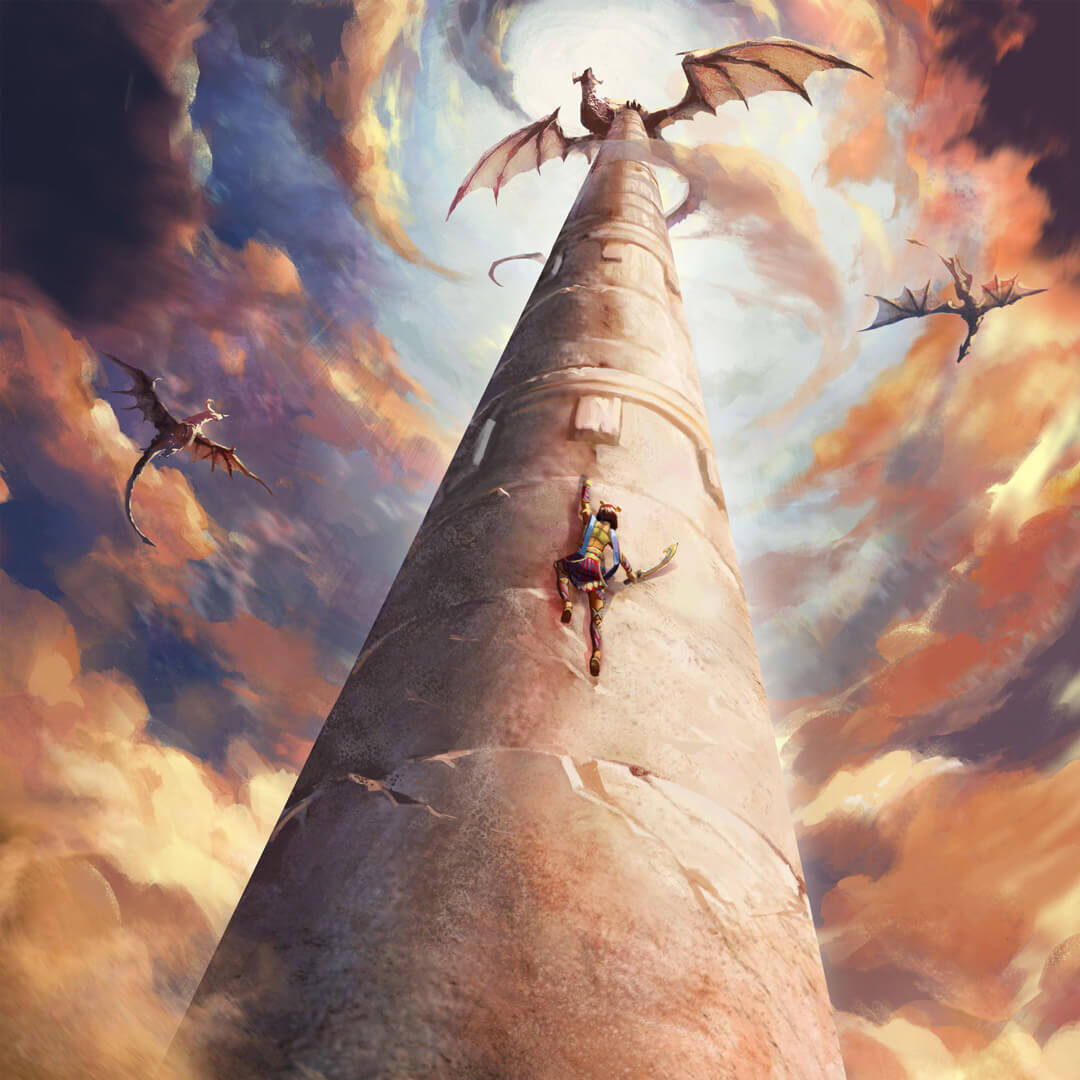
It is midday on the sixth day when they finally reach the First Pillar of Creation. It is impossibly tall, made of gleaming white stone. The shapes flapping around the Pillar have resolved not into birds, but into dragons with gleaming white scales that circle the Pillar several hundred feet up.

“Climb it,” croaks Neferu, “Sure.”

It can be done, insists Takhat. The trials are fair. The other gods wouldn’t allow Thaeriel to pose you an impossible task.

“Seems like they allowed him to pose me a damned difficult one,” says Neferu.

She changes back into her usual clothing, eats and drinks more than her daily ration, and prepares the climbing gear. After some hesitation, she straps her khopesh to her belt. She has to fight a dragon once she’s up there, after all.

The surface of the Pillar seems to be ordinary white stone, weathered by the years, with plenty of cracks where she can put her hands and feet. She can only hope it stays that way as she ascends.

“I’m ready,” says Neferu, and begins to climb.

Part 3: Strength, Even in Death

Neferu doesn’t bother to keep from looking down. She can feel how high up she is, in the wind whistling past her, the dragons wheeling behind her, the distant flat horizon encircling her.

She is hundreds of feet up the sheer side of the First Pillar of Creation, with hundreds more to climb. She does not know how long she has been climbing. The sun has not moved in the sky since first touched the Pillar, as though time is standing still, as though Thaeriel himself wishes to watch her climb. And to watch her fall, no doubt.

Not a chance, you shining bastard.

Just keep climbing. Move a hand. Move a foot. Check your footing. There. Now the other hand.

Ignore the fact that your hands are numb. Ignore the fact that each movement seems harder than the last, that your strength is failing, that the dragons are making closer passes as you rise higher.

Neferu’s foot slips from its place, and she barely catches herself with one hand, her scalp prickling with the rush of adrenaline.

I can’t do this.

The thought hangs there for a moment, hundreds of feet above the desert sands, before Neferu forces her hands and feet back into position.

Yes, you can, says Takhat—Takhat, who was told she could never rule, who killed her four brothers and became Anubia’s first woman Pharaoh despite at all. Takhat, for whom each supposed impossibility just another obstacle to overcome. Takhat, who died for it in the end. You can do anything.

Can’t murder our way out of this one, says Neferu ruefully. This is stupid. My body doesn’t have the strength to do this. I don’t think anyone’s does. I’m going to fall, and we’re going to die again.

Neferu has been dead before. She met Takhat in the Blessed Rest, the afterlife of the worthy dead, and the two women escaped the underworld together and returned to Neferu’s body. Now they are blessed by the Goddess of Death, and Neferu has no idea what will happen if they die.

Neferu grips the Pillar tightly, thinking of the generations of Anubians before her who have died in this desert. Of their resolve, their strength, even in the face of death.

Their strength. Even in death.

Takhat, she thinks desperately. Call them.

Who? asks Takhat.

All of them, says Neferu, grinning wildly.

Takhat cackles inside her head.

Yes. Now you’re thinking like a pharaoh.

Neferu again feels the rush of death magic, the twisted grin of Takhat’s mummified face replacing her own.

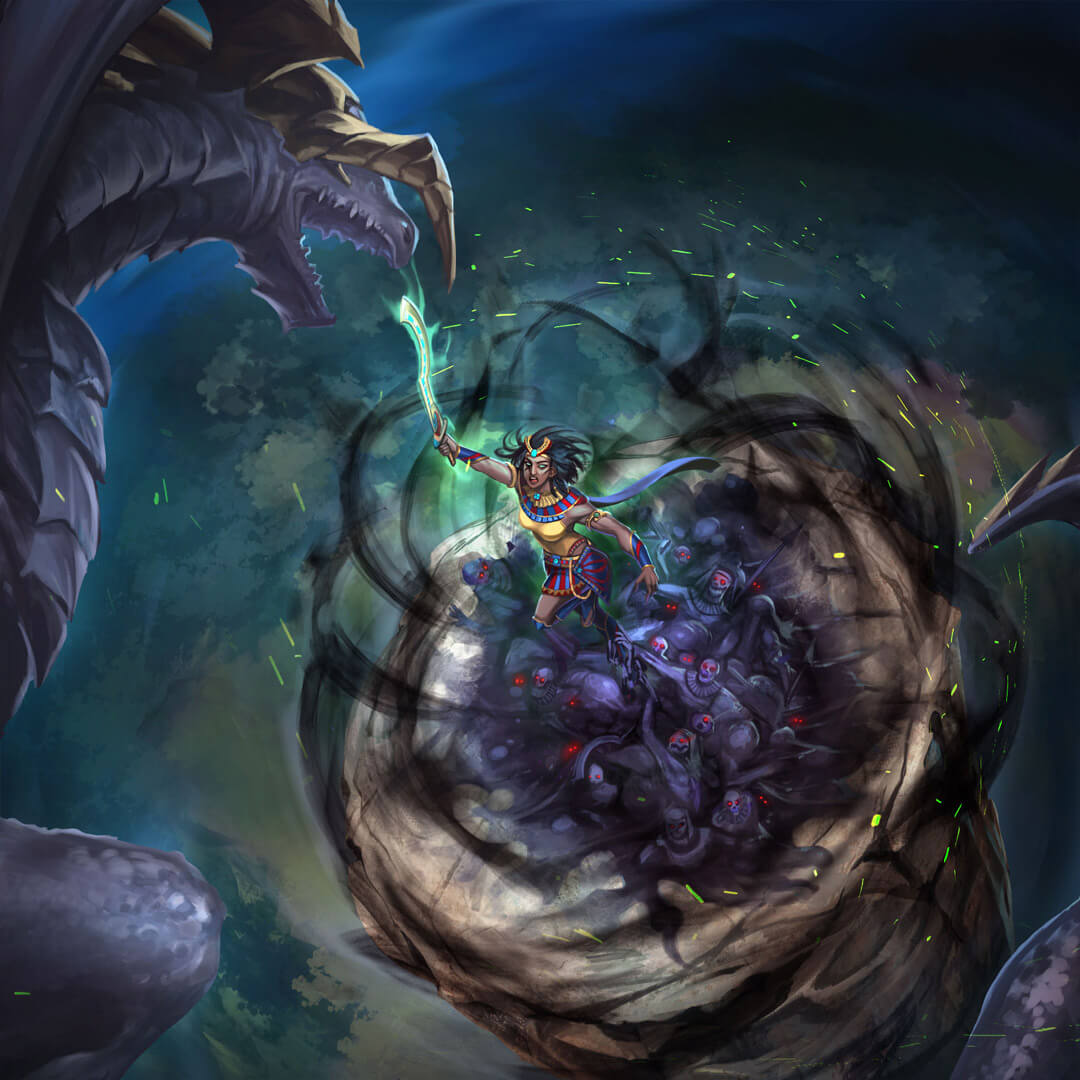
Her arms are shaking now with the effort of holding herself—or is that the Pillar shaking? She risks a glance down and sees them coming. All the desert’s dead, human and otherwise, rising hundreds of feet to meet her in a massive, ever-growing column, a monument to rival the Pillar itself.

She lets go of the Pillar as the column of dead rises to meet her. Mummified hands catch her gently and bear her up toward the sky.

The dead used to wait on us, in the palace, says Takhat. People competed for the glory of eternal servitude to the pharaohs.

This isn’t servitude, Neferu replies. They lend me their strength.

Ah, says Takhat. Not thinking like a pharaoh quite yet after all.

Neferu smiles.

We’ll see, she replies in her mind.

The desert stretches out below them. They are up so high now that Neferu can see its boundaries—the coast to the west and south, the rocky hills of the outlying Olympian states to the north, the blue ribbon of the River far to the east, surrounded by farms and monuments. From up here it all looks so small. Neferu draws her khopesh and steels herself for battle.

The dead bear her to the top of the Pillar, where a huge gold and white dragon awaits, bigger than the others. It roars at her, and Neferu yells a battle cry and leaps onto its neck.

Neferu’s climbing sandals hook between the dragon’s scales, and she wraps her arm around one of its horns. The dragon shakes its head viciously, trying to throw her off, but she holds firm. Its claws and wings cannot reach her.

With a roar of rage, the dragon vaults off the Pillar and into the empty sky, whirling like a windblown seed.

Neferu grits her teeth against the rush of air and focuses on the dragon, ignoring the sickening blur of ground and sky around her. She pulls herself forward against the wind and lodges herself between the dragon’s horns.

With a grunt, she drives her khopesh into the dragon’s brain. Its gleaming body goes limp.

The nauseating spin becomes a plummet, the dragon’s dead wings catching the air just enough to keep it from falling straight.

The ground is still very far away, but rushing up to meet her at terrifying speed.

Neferu smiles.

She grips the dragon’s temples and speaks the words of living death. The dragon’s eyes turn green as strength returns to its dead limbs. It levels its flight, Neferu’s khopesh still lodged in its skull.

Finally thinking like a necromancer, at least, says Takhat. Well done.

“To the Grand Arena,” Neferu tells the dragon. “That way.”

The dragon turns and flies, steady and silent. Behind them, the Pillar glows golden-red as the brooding sun finally sets.

Story
4
Lysander's Trial
Overview

The Story

Part 1: That is the Light

By Kelly Digges

The man with golden scars emerges from the forest, weary but content. He is Lysander of Parthon, sole champion of the God of Light, and he is carrying a writhing, reeking goat on his shoulders. He grunts with effort as it struggles, but he is strong enough to hold it.

The gnarled old goatherd lets loose a cry of delight at the sight of him, and Lysander smiles. He sets the goat down and shoos it into the pen, which the goatherd closes behind it.

“That’s the last one, isn’t it?” asks Lysander.

“That’s all of them, praise the Light!” says the goatherd. Temmos, his name was. “Thank you, Champion. Likely would’ve lost a few to the wolves overnight if you hadn’t come along.”

“Of course,” says Lysander. “Kadmos, ready to go?”

Lysander’s son is grimy and bruised, having gone after a few of the goats himself, but he must have arrived with his last charge well before Lysander did. He has his own armor back on and Lysander’s prepped and ready.

“I’m ready,” says Kadmos. He is a man now, too proud for childish outbursts, but Lysander recognizes the irritation in his tone.

Lysander dons his armor as Temmos thanks them both again.

“Please,” says the goatherd. “How can I repay you?”

The man already fed them a lunch of fresh roasted shanks from one of the more cantankerous escapees. He called it “a warning to the others,” and swore that goats were smart enough to get the message.

“Pray,” says Lysander. “That’s all I ask. If we had not been here, no doubt Thaeriel would have sent another to aid you.”

“I’ll give proper thanks,” says Temmos. “Goodbye, and good fortune in your quest.” He turns to lecture the goats about their wickedness as Lysander and Kadmos walk away.

Kadmos is restless, his pace quick, but he says nothing.

“Go on,” says Lysander finally. “Let’s hear it.”

“It’s just…” Kadmos shakes his head in frustration. “I don’t feel like you’re taking this seriously.”

“What makes you say that?” asks Lysander.

“It’s late afternoon,” says Kadmos. “We’ve barely gone three miles today. At this rate we’ll be to Tartessos by springtime, if we’re lucky.”

“It’s not as bad as that,” says Lysander. “We’ve made a few extra stops, that’s all.”

“A few,” snorts Kadmos. “Father, you’re the Champion of Light, but you spent most of today chasing goats through the woods. Plus half of yesterday rebuilding a stable, and the day before that resolving some ridiculous village dispute—”

“People look to me for guidance and aid,” says Lysander. “That’s to be expected, surely.”

“Is your duty that onerous?” asks Kadmos. “Is that it? Do you wish you were back in the hinterlands, scraping wolf pelts and harvesting wild honey and wearing that hideous beard?”

“Sometimes,” says Lysander. He rubs his hand along his bare jaw. “Well, not the beard. But I do miss the simplicity of it all. Today was a taste of it, that’s all.”

“A taste that cost us nearly a day of travel,” insists Kadmos. “You said yourself that if we hadn’t been here, Thaeriel would’ve sent someone else.”

“But we are, and he didn’t,” says Lysander. “He sent us, to this place, on this day. We can’t look the other way when people need help.”

“Thaeriel didn’t send us,” says Kadmos. “Auros gave you your trial, and you know damn well he doesn’t give two figs about that man’s goats.”

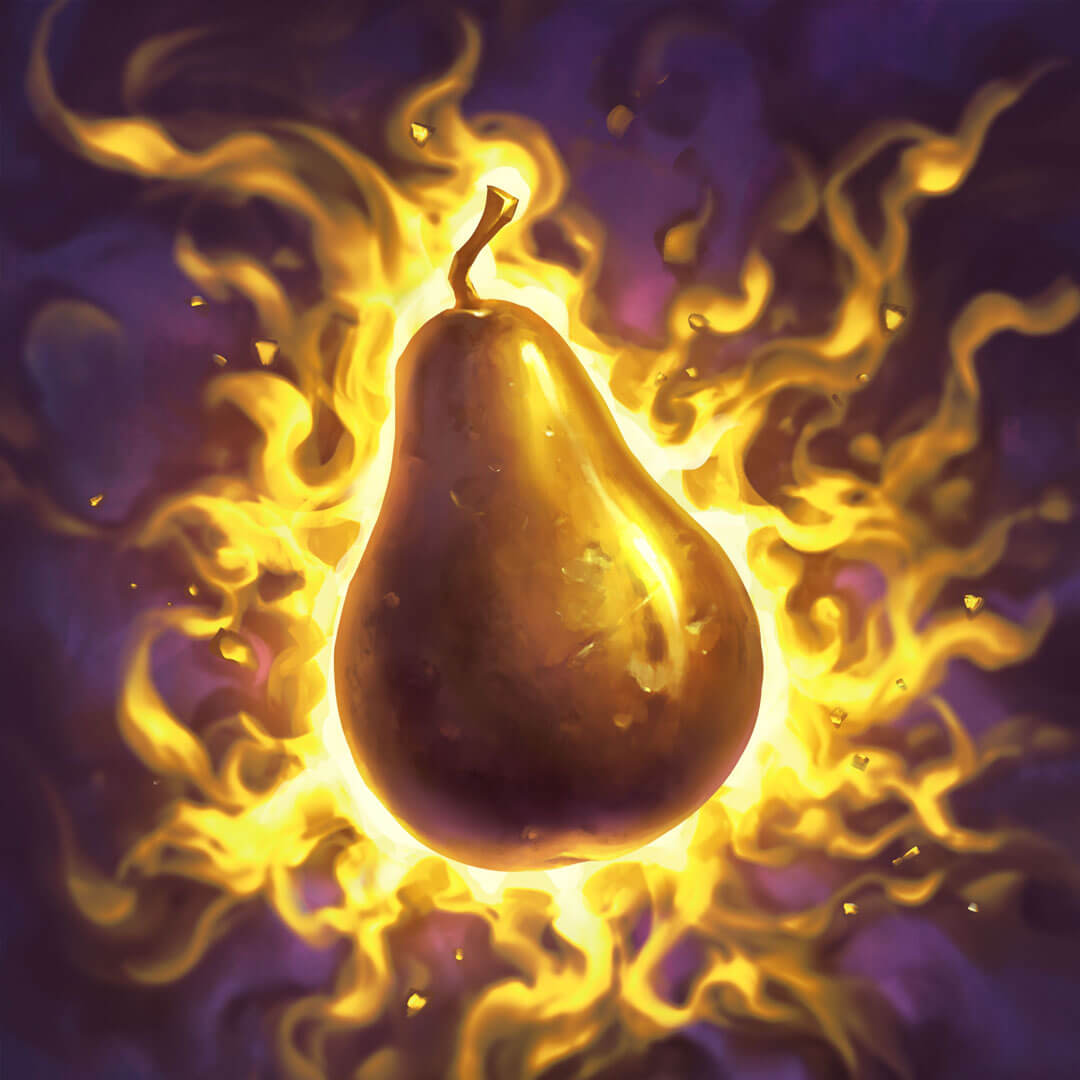
The booming voice of the God of War still echoes in Lysander’s head. Your trial is to retrieve the Golden Pear of Tartessos and bring it here. It is guarded, but that should be no problem for a man of your capabilities. You have fought Tartessians before, after all. Does that mean the Tartessians themselves guard it? Or one of their monsters, like the one that killed him once before? Lysander does not know, and will not know, until they reach the village on the outskirts of Tartessos where the Pear supposedly waits.

“It was Thaeriel who proposed the trials in the first place,” says Lysander. “But the philosophers can debate who moved who. We were here. We had a choice. I chose. And as for the delay, nobody in that arena said anything about hurrying. We don’t know whether finishing our trial first has any bearing on the outcome.”

“That’s my point,” says Kadmos earnestly. “We don’t know. You’re the greatest of the champions, serving the greatest of the gods.” Lysander frowns at that, but Kadmos presses on. “You’re on a divine quest. Surely that’s more important than stopping to help every goatherd and stablehand along the way.”

Lysander stops and lays a hand on Kadmos’s shoulder.

“Son,” he says, “I am the Champion of Light. My duty is to spread the Light in the world. To heal, to defend, to teach, to help. To lift people up and show them what we can do for each other. That is the quest. That is the Light. I’m more worried about one man’s livelihood than I am about some golden fruit, no matter who told me to go get it. Clear?”

Kadmos nods, though his face is still clouded with doubt.

“Come on,” says Lysander, clapping him on the back. “Let’s get moving. You’re right, we do have some time to make up. Race you to Lemythia?”

“Lemythia!” says Kadmos. “Father, that’s got to be twenty miles from here—hey, wait up!”

Lysander smiles as he sets a steady pace, his son’s footfalls following close behind.

Part 2: No Friends in Tartessos

Lysander and his son Kadmos pause on a ridge overlooking a small settlement of ramshackle structures.

“I’ve heard of places like this,” says Kadmos. “They call them farming camps. Tartessian soldiers who get too old or injured to go to war get sent to grow food instead. Half the time they don’t even know how.”

“Looks like this particular settlement is getting along fine,” says Lysander, nodding at lush fields of barley and well-tended orchards. One large tree at the center of the orchard looms above the others, and Lysander nods toward it.

“That’s where our Golden Pear is waiting, I’d wager.”

“Do you really think it’s here in this little place?” asks Kadmos. “Along with these ferocious guardians it’s supposed to have?”

Lysander shrugs.

“That’s what the stories say. Wish we knew more about the guardians, though.”

The two men make their way down the ridge, to a building marked by a cracked jug swinging from a rope.

Lysander steps inside the little canteen, Kadmos clanking behind him. Conversation stops as scarred Tartessian men and women look up from their bowls of watery stew and stare at him through the dimness.

Lysander ignores them and sets his spear in the rack by the door. Kadmos stands by the door for a moment, stricken, but Lysander stares him down, and Kadmos deposits his sword and shield as well. When Lysander turns back from the weapon rack, no one is looking directly at him, but their conversations are hushed and tense.

Lysander walks up to the bar and sits at a stool, gesturing for Kadmos to sit beside him. The woman behind the bar pauses in her work—chopping vegetables, from the sound of it—but does not turn.

“Excuse me,” says Lysander. His voice is too loud in the hushed little room.

The bartender grudgingly turns to look at him.

“Some lunch for my son and I, please,” says Lysander. “The stew looks good.”

The bartender nods and turns to get it, but she looks over his shoulder before he departs. Someone coming up behind him. No doubt Kadmos sees them.

“You’re Lysander,” says a gravelly voice behind him. “Lysander of Parthon.”

Lysander turns. The man is clearly a veteran, stiff and war-wounded, with one arm hanging limply at his side. He invokes the name of Parthon with the venom of a grave profanity.

Kadmos tenses, and Lysander puts a steadying hand on his shoulder.

“That’s right,” says Lysander.

The man regards him quietly for a moment, his eyes following the tracery of golden scars that criss-cross Lysander’s body, a gleaming mortar filling the cracks where a daemon’s weapon broke him. A Tartessian daemon.

“I was there,” says the man at last. “At Parthon. At the Battle of the Broken Gate.”

“Is that what you people call it?” Kadmos asks sharply. “We call it the Daemon Siege.”

The man shrugs.

“Then I greet you as one veteran to another,” says Lysander. He glances at Kadmos and smiles. “As does my son, in his own way.”

“Listen, I…” says the man. He rubs his limp arm with his good hand, as though trying to work the life back into it. “I saw what you did, at the battle. You faced down that daemon all alone, and… I don’t think there was another soldier on that field who would’ve done the same. I know I wouldn’t have.”

“I did what I had to do,” says Lysander. “What my soldiers needed me to do. And as I’m sure you’re aware, it was only by Thaeriel’s intervention that I survived.”

The man nods. Perhaps he is thinking of Tartessos’s patron god, Auros, who would never rob one of his champions of a violent death.

“Anyway,” says the man. “You’ll find no friends in Tartessos, but anyone who was there that day… Well, you’ve earned our respect, at least.”

“Your soldiers fought just as bravely as ours,” says Lysander. “And no doubt we both lost many friends that day.”

The man nods, hesitates, and says, “Name’s Matygus.”

“Well met,” says Lysander, and the man returns to his seat.

Kadmos shoots Lysander a disbelieving glance. Respect, in Tartessos! Lysander shrugs at him as the bartender arrives with two wooden bowls of greasy mutton stew

“Thank you,” says Lysander. The bartender nods and turns back to her chopping. Lysander appreciatively slurps a bite of hot stew. It is bland, but hearty. He sets down his bowl and turns back to Matygus.

“I’m here looking for something,” says Lysander. “I was hoping you might answer a few questions.”

The man looks to his companions, and one of them gives a barely perceptible nod of encouragement.

“Depends what it is,” says the soldier. “But you can ask.”

Lysander smiles.

“I have come on a divine quest from Auros himself, in search of the Golden Pear of Tartessos,” he says. Behind him, the bartender stops chopping, and the patrons all grow still. “Legend places it very near this village. I’m told it’s guarded—”

“Father!” grunts Kadmos. Lysander whirls.

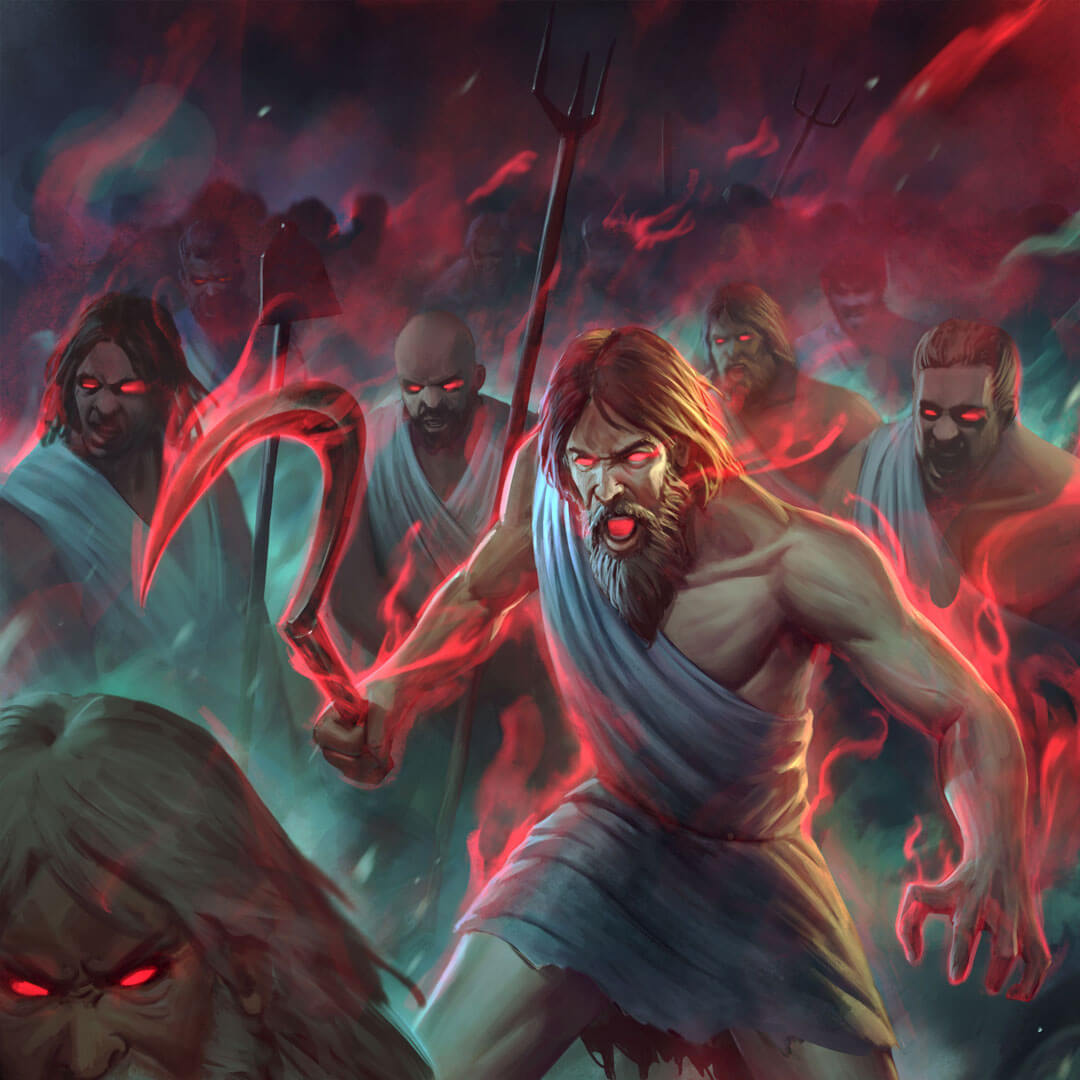
Kadmos has the bartender by the arm, her knife held back a few inches from Lysander’s neck, a fresh cut welling up on Kadmos’s arm. Red, fiery light spills from the woman’s eyes.

Lysander turns back to the other patrons to find them rising from their seats, gripping cutlery and furniture, eyes aflame.

“War’s blood,” swears Lysander. “They’re the guardians. Kadmos, come on!”

Kadmos knocks the knife out of the bartender’s hand.

Lysander,” hiss the patrons of the bar in unison. “The God of War offers you this challenge. Defeat the guardians and seize the Pear.

Then, as one, they lunge forward.

Lysander and Kadmos fumble for their weapons and rush outside, but more red-eyed townsfolk are already converging.

“Come on!” barks Lysander, and charges back up the ridge. He and Kadmos shelter behind the top of the ridge, and Kadmos looks back on the village.

“They’re not following,” he says. “Guarding the Pear, I’d guess.”

“Good,” says Lysander. He crouches and pulls a cloth robe from his traveling pack. “Remember, you’re not allowed to help. No matter what happens, you have to stay up here.”

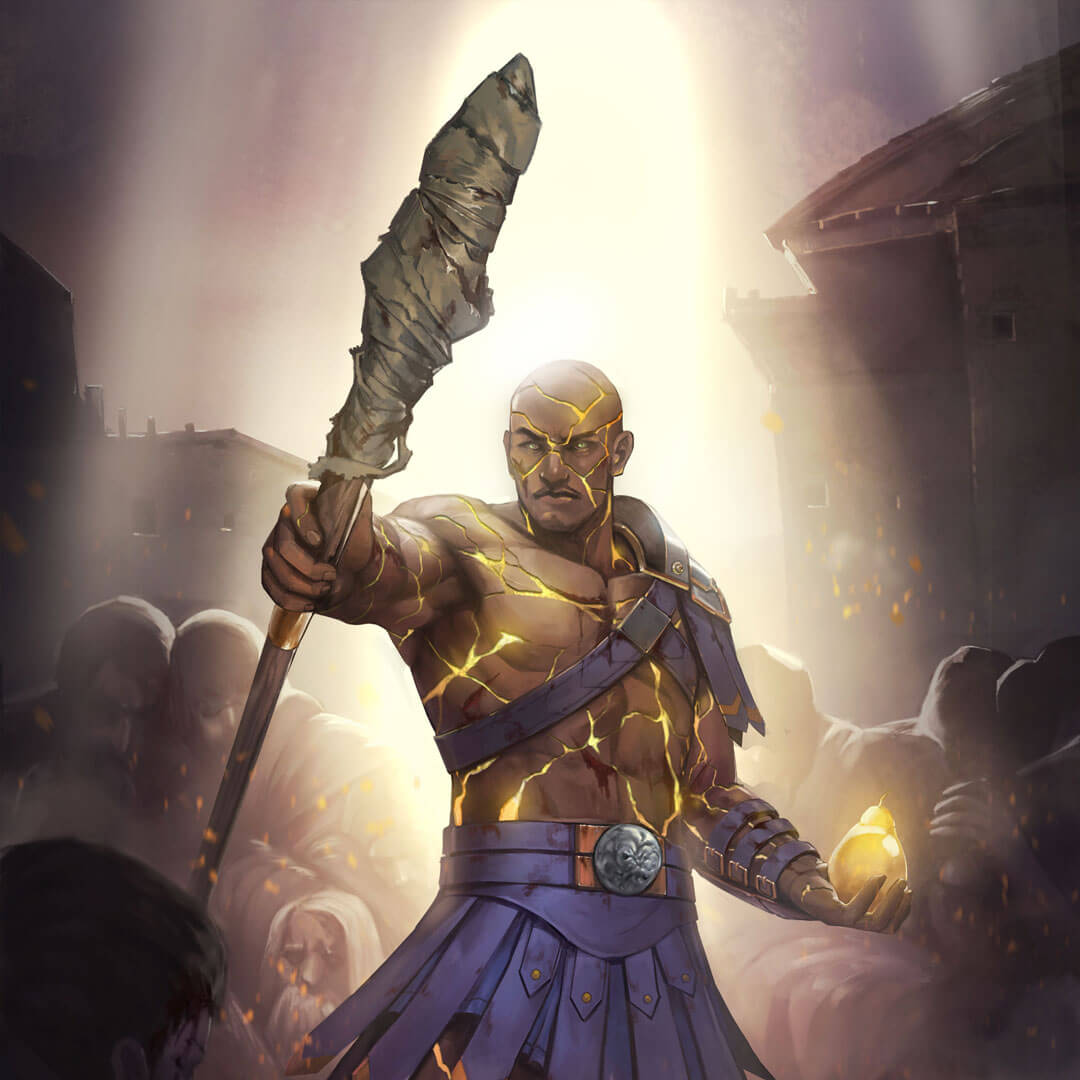
Lysander begins to wind the robe around the blade of his spear.

“There are at least fifty people down there,” says Kadmos, not looking back. “They’re not in their prime, but they’re soldiers, and they’re under some kind of battle trance. This won’t be an easy fight.”

When Lysander has wound the entire robe around the spear’s blade, three layers thick, he begins to bind it with leather cords.

“Father, they’re getting out their old weapons,” says Kadmos, finally looking back. “You should get down there before—what are you doing?!”

Lysander stands, holding a spear that is now little more than a badly weighted staff.

“I will fight them, and I will win,” says Lysander. “But I won’t kill them.”

“They will fight until they are dead, or you are! It’s despicable that Auros has done this to them, but I don’t see how he’s left you any choice.”

“I will not murder innocent people,” says Lysander firmly.

“There are no innocents in Tartessos,” says Kadmos, his eyes full of remembered rage.

“We can talk about that later,” says Lysander. “Now give me your shield.”

Kadmos hands over his shield, but keeps a grip on it for a moment.

“Father. There are too many of them. If you pull your punches out there, you’ll die.”

“Then I’ll die in the Light!” says Lysander, wresting the shield from Kadmos’s grip. “Now get out of my way.”

He shoulders his son aside.

“Father,” says Kadmos, his voice gone quiet. Lysander turns. “I’ll… I’ll pray for you.”

Lysander nods, then turns and breaks into a charge.

Part 3: No Matter How Righteous

Lysander twirls his staff to sweep an assailant’s legs out from under her, turns to block another’s rusty sickle with his shield, takes a cudgel blow to the back from yet another. He gasps and grunts with exertion and pain. His opponents, their eyes blazing with the red light of the war god’s blood rage, fight in eerie silence.

He turns and keeps moving, still outnumbered ten to one. The dozens of combatants he’s knocked out of the fight litter the ground of the little village. Some of them are unconscious, others still trying to drag themselves toward him. There will be bruises and broken bones, but Lysander does not think any of them are dead.

The enemies still standing are a mix of those too tough to go down easily and too slow to catch up with him earlier. He dodges the tough ones, big farmhands and agile hunters, and takes down a few more of the slow, the old and infirm, with swift strikes to the knees or ankles. He winces at the crack of bones. They’ll live, he reminds himself. Gods willing, they’ll live.

At last there is only one combatant facing him, a massive man in a blacksmith’s apron who has taken a dozen blows from Lysander’s staff. Lysander is bleeding from several wounds, his right foot dragging, numb from the knee down after a hard hit from the blacksmith’s hammer. Lysander backs up desperately, looking for anything that might help.

He bumps against a wall, then ducks as the blacksmith punches. The man’s huge fist tears through the wooden slats.

Lysander spins and backs inside the building—the smithy. He limps into the forge, knocking over tools to slow the man down. Lysander crouches behind the anvil and begins to push. Gods, it’s heavy!

The man walks up, hammer in hand. He sees Lysander behind the anvil, grins wickedly, and raises his hammer.

Lysander pushes hard, and the anvil tumbles off its little plinth and onto the man’s leg with a clear and sickening snap. The man howls in rage, but the leg is quite broken, and he can’t get the anvil off.

Lysander edges around the fallen smith and limps back out into the village square, supporting himself with his staff. Some of the townsfolk still try to crawl toward him, but he shoves them away and makes his steady, painful way to the orchard.

In the middle of the orchard, in a little clearing, is a large, gnarled old tree. As Lysander draws closer, he gasps. The tree’s bark is burnished bronze, its leaves delicate silver foil with a tracery of organic veins. And there, nestled in the branches, is a single large pear, supposedly made of pure gold. The tree’s bronze branches bend under its weight.

Lysander reaches up and plucks the Pear. It comes away as easily as any ripened fruit, though it is far, far heavier in his hand.

He walks back to the village slowly and cautiously, unsure if the blood rage will persist now that he has the Pear. But the villagers in the square are groaning and crying out. The madness of Auros has lifted, and only pain remains.

Lysander waves for Kadmos to come down from the ridge, and the younger man does so at a run, bringing their packs with him.

“Father, you’re hurt!” he says. “The Pear…”

“I’ll be fine,” says Lysander. “And… yes. I have it. I think I’d better carry it, in case that counts as part of the trial.” He takes a pack, puts the Pear inside, and slings it over his shoulder. “Help me tend to these people, will you?”

“Tend to them?” says Kadmos. “You’re serious.”

“Son, I just walked into this village and incapacitated every person in it,” says Lysander. “They need medical attention, and we’re the only ones who can provide it.” He nods to the field of groaning wounded. “Focus on the least injured first, especially anyone conscious who says they have healer’s training, so they can help with the rest.”

Kadmos sets his jaw, but nods.

By late afternoon the village looks less like a battlefield and more like a military hospital. The walking wounded help those whose recoveries will be more protracted. Hopefully by harvest most of the farmers will be back on their feet.

Lysander grimaces as he splints the barkeep’s broken leg. He does not look at her. As he finishes his work, she nods coolly to him. Lysander stands to find the man from the canteen standing behind him, fresh bruises and a black eye on top of his older war wounds. Matygus, his name was.

Matygus pulls Lysander to the side of the village square, his face serious. Lysander waits for him to speak.

“Why did you do that?” the man asks at last. “Why spare us? Why stay to help us? You must have no love for Tartessians, and we… we tried to kill you.”

“You were not in your right minds,” says Lysander. “Killing you would have been a crime.” He sighs. “Thaeriel is not Auros. No offense to you or your patron, but the Lord of Light asks that his followers walk a narrower path.”

The man nods, still looking troubled.

“You have the Pear?” he asks.

Lysander nods.

“Good,” says the man. “The tree grows one each year. Usually the priests of Auros come and harvest it, and thank us for our pious contribution.”

“I hope that won’t cause a problem this year,” says Lysander. “Auros himself charged me to retrieve it, but I can try to return it if you think his priests won’t understand.”

“No, no,” says Matygus. “I don’t think that’s necessary, but…” He hesitates, looks around, and lowers his voice. “It is not lost on us that Auros would have condemned us to die in its defense, while the Champion of Thaeriel spared our lives. When the priests come to take next year’s Pear… perhaps we’ll remember that.”

“Please, don’t borrow trouble on my account,” says Lysander. “And if you do find yourselves suffering because of what I did here, if there’s anything I can do to help, you may reach me by sending word to Parthon.” He smiles. “Or by praying, I suppose.”

Matygus shakes his head, though Lysander cannot tell whether it is because he will not pray to Thaeriel, or because they must not speak of it.

“I said earlier you would find no friends in Tartessos,” says Matygus. “Well. Next time I think you might.”

“I would be honored,” says Lysander. He glances around—at the fresh wounds the villagers bear, the dark looks some of them shoot his way, the sun creeping lower in the sky. “Nonetheless, I think it would be best if I were on my way.”

Matygus nods, lips pursed, and clasps Lysander’s arm. Lysander gathers up Kadmos and sets off, with no other goodbyes to say.

The two men walk in silence for some time, Lysander still limping and leaning on his spear. He wants nothing more than to rest, but he cannot stay in that village after what he has done. Kadmos helps him where the road gets rough, seemingly lost in thought.

They stop for the night, only a mile or two down the road, and it is only after Kadmos has caught a rabbit for dinner and gotten it roasting that he says more than a word or two.

“What you said on our way here, about the Light…” says Kadmos at last. “I think I understand now. It’s not about glory. It’s about integrity. About doing the right thing, even when it’s not easy. Especially then. Thank you, and… I’m sorry for not seeing it sooner.”

Lysander claps him on the arm.

“You see it now,” says Lysander. “That puts you ahead of most people, no matter how righteous they may seem.”

Later, as the sun sets, Lysander sits alone by the fire and prays.

“Lord Thaeriel,” he murmurs. “I have done as Auros demanded. I have the Pear.”

Then the Light consumes him, and his god’s voice chimes within him.

“YOU HAVE DONE WELL. RETURN, AND CLAIM YOUR REWARD.”

“My lord, I…” He falters. “I must confess, there is doubt in my heart. All this violence, for a golden fruit? For glory? It seems… petty.”

“IT IS VITAL. RETURN. HAVE FAITH. IN TIME YOU WILL UNDERSTAND.”

“I’ll return as fast as I can,” says Lysander. “But I’m afraid I’m in rather bad shape.”

“I WILL SET THE LIGHT UPON YOU. YOUR WOUNDS WILL HEAL.”

“Thank you, lord,” says Lysander. “And if you could—that is, if you see fit—set your Light upon those villagers as well.”

“IF THAT IS YOUR WISH.”

The booming voice pauses, and for a moment Lysander imagines that he hears a hint of rebuke.

“THEY ARE AUROS’S CREATURES, LYSANDER. YOU NEED NOT HAVE RISKED YOUR MISSION ON THEIR ACCOUNT.”

“My lord?”

Then Thaeriel himself steps out of the Light, a gentle smile on his face, shining like the sun. He lays a hand on Lysander’s shoulder, spreading healing warmth.

“Mercy is laudable,” he says. “Pity is not. Do not confuse them.”

Then the Light fades, and the sun sinks below the horizon, and Lysander is alone with his thoughts.

He sits for some hours afterward, watching the fire dwindle to embers.

Story
5
Valka's Trial
Overview

The Story

Part 1: The Same Road

By Kelly Digges

Valka, Champion of War, hefts a large backpack onto her broad shoulders and looks to her companion.

“Ready?”

Oddi is shorter and slighter than Valka, a poet and singer rather than a warrior. Perhaps that is why they get along. Where other men struggle to prove themselves her equal, Oddi is content to prattle on about history and record her glorious deeds. Oddi carries only his lyre in its traveling case and a small pack of skaldic supplies—spare strings, paper and ink, whatever else it is a bard needs to ply his trade on the road. Valka carries everything else.

“When you are,” says Oddi, in a cheerful voice he knows perfectly well she finds grating.

Gods, he’s like a child, she thinks, though her own son Aram seldom annoys her on purpose. Like someone else’s child.

They have at least three days of walking ahead of them. Valka is no stranger to walking long distances, but she much prefers to have the deck of a longboat beneath her feet. Ah well.

Valka turns to leave their campsite—and sees another man blocking her path. She would swear to the gods he hadn’t been there a moment ago.

The man is slight like Oddi, but beyond that there is little to say about him. He is neither thin nor stout, neither tall nor short, his skin not especially dark or pale. His unremarkable face is half-hidden behind a domino mask. If he removed it, Valka might not be able to spot him in a crowd. A chain winds around one of his arms and trails off to end in midair in an eerie purple glow.

Orfeo. The Champion of Deception.

Valka sets one hand on her axe.

“What do you want?” she asks, with all the warmth of an ice floe.

Orfeo smiles and spreads his hands in greeting, as though her welcome had been anything other than a threat.

“Well met, Valka of the Valknir,” he says, in a smooth, quiet voice that she is irritated to find herself straining to hear. “I can’t help but notice we’re traveling in the same direction.”

“Are we,” says Valka. It is not a question, but Oddi treats it as one.

“We are,” chimes Oddi, “at least for a while. The Cave of Lethenon is in Pyrenia, east of here. His trial is in the Arkmonian forest, east and north. It’s the same road for nearly two days’ travel.”

Thanks, Oddi.

“So?” says Valka.

“You are fortunate enough to have a companion in your journeys,” says Orfeo, “but I am alone. If you ask me—”

“I didn’t.”

“—this is a rare opportunity for two champions of the gods to become better acquainted.” Orfeo smiles. “Or, at the very least, for me to at last hear the legendary tales of Oddi Haroldsson.”

The gods know Oddi will be tempted by the prospect of a fresh audience.

“Go jump off a pier,” says Valka. “I’d just as soon kill you as look at you, but under the circumstances I’d happily settle for neither.”

In fact she has no idea what would happen if she tried to kill a fellow divine champion—whether one or both gods would stop her, whether champions can even die, or what the pantheon would do in response. Her uncertainty only makes her angrier.

“Alright, alright,” says Orfeo, backing away. “I’ll trouble you no more. Fare well on your journey, and may the best champion win.”

“I will,” says Valka. “And if I get even a hint that you’re interfering with my journey, I will kill you, divine champion and all.”

“I have no doubt,” Orfeo says, still smiling, and walks away.

Valka watches him go until he rounds a corner, then sits heavily, fuming.

“That was… strange,” says Oddi. “I wonder what he wanted.”

Valka shrugs.

“Who cares? Nothing good.”

“You’ve met him before?” asks Oddi, in the probing tone he uses when extracting the details of a story.

“No,” says Valka. “Just saw him in the Arena like the others. Why?”

“Oh, no reason really,” says Oddi, in his there-is-definitely-a-reason voice. “You were just very hostile with him is all. I thought maybe there was a tale there.

Valka stands back up, stepping close to Oddi and looking down on him, using her height against him in a way she seldom does. There is no fear in his round grey eyes, but now there is no mirth either.

“He is the Champion of the Goddess of Deception,” she says flatly. “I’m not giving him a chance to get in my head, and I’m sure as hell not sleeping anywhere near him.”

“Fair enough,” says Oddi.

Valka steps back.

“In fact, I won’t rest easy just knowing he’s on the same road as us,” she says. “Is there another route we can take?”

Oddi groans.

“Yes, but it’s rougher and more circuitous. It would add at least half a day to our route, and a fair amount of hardship to boot. I’m sure—”

“We’ll do it,” says Valka. “Come on, it’ll be fun. You’ve traveled all over the Northern Sea with me, you can’t be afraid of a little hike.”

“I didn’t have to walk across the Northern Sea,” says Oddi. “Gods, my feet are going to fall off.”

“Maybe if you behave yourself I’ll carry you,” says Valka, and walks away before Oddi can decide whether she’s joking.

Part 2: Shadows Unfolding

Valka, Champion of War, steels herself to enter the Cave of Lethenon alone. Oddi, her traveling companion and herald, has come this far with her, but here she must leave him behind.

“I’ll be right here when you return,” he says quietly. “Waiting to hear the glorious tale of your triumph.”

“It’s just a shadow,” says Valka, with false bravado. “How glorious can it be?”

You will enter the Cave of Lethenon and face the shadow within, the Goddess of Deception had said.

“As glorious as I make it sound,” says Oddi with a grin. “Good hunting.”

Valka nods and steps into the Cave of Lethenon. She carries her axe in one hand. In the other she holds a large torch, which barely keeps the dark at bay. Strange rock formations twist the shadows from the torch and the echoes of her footfalls, playing tricks on her. Her breath mists in the cool subterranean air. Somewhere, water drips in an irregular rhythm.

She heads deeper into the cave, as the walls vanish into darkness around her and the ceiling gets higher. Weird shapes loom in the darkness, too regular to be rock. She moves her torch closer to one.

Chains. Burnished gold chains, with links the size of her hand stretch between the floor and the ceiling, seeming to emerge from the rock itself. Many of them lean at weird angles, but all of them are pulled tight, as though the floor of the cave is dangling from its ceiling.

What…?

She reaches out toward the nearest chain, but before she can touch it, she hears something besides her own footsteps and the dripping water. It sounds like… breathing.

Valka whirls. In the darkness, she can just barely make out a small black shape with purple eyes. It stares at her unnervingly, its wispy tail swishing back and forth.

“You’re just a little kitty,” she says.

The cat lunges at her, its shadows unfolding, and now it is a panther made of darkness, a vicious cat-thing with its maw spread wide.

Valka swings her axe as she steps out of the thing’s path, but her axe slides right through the shadowy creature without hurting it. No resistance at all, as though the creature weren’t even there. Of course.

The shadow lands without a sound and turns to leap again, but Valka is already there. She speaks a prayer to Auros, God of War, and swings. Again, the axe passes harmlessly through the shadowy beast, and this time it swipes at her.

Pain blossoms on her forearm, and she looks down to see a bright upwelling of blood from three deep, parallel scratches. Real enough when you want to be, aren’t you?

She tries the torch this time, jamming the fire into the thing’s face. The creature’s form wavers as the flame passes through it, and it shakes its head unhappily, but when she jumps back to avoid its counterstrike she sees no permanent effect.

Valka swears and backs away, brandishing the torch. Now what?

The shadow-cat advances on her, more cautious than she’d expect for something that’s apparently invulnerable. The torch doesn’t harm it, but maybe it hurts enough to keep the thing treading carefully.

Valka stumbles backward into a rock formation, then steps around it to put it between her and the shadow. The cat prowls forward, and its inky body slides through the rock rather than around it.

She looks past the creature, toward the cave entrance. Try to get past it and out of the cave, to regroup and talk with Oddi and try to think of some way to hurt it? That’s the smart thing to do. The safe thing.

Nobody sings songs about people who do the safe thing. They do tend to live longer, though.

“No, damn it,” she says aloud. “Auros chose me. And you—you’re not even a beast. You’re a shadow, barely there. I will not run from a lie.”

The cat of pure darkness prowls forward, teeth bared.

Part 3: Back Against the Wall

The Shadow of Lethenon advances on Valka, Champion of War. It is made of pure darkness, and just as impossible to hurt. But the wounds on her arm prove that it can hurt her.

Valka backs away from the beast, brandishing her torch to keep it at bay even as it steps through rock formations she has to stumble over or around. It doesn’t like light, but there’s no way it’ll follow her all the way to the cave entrance. What about mirrors? She vaguely recalls one of Oddi’s songs about a clever hero who used a mirror to illuminate a cave…

She backs into something, and this time it is one of the huge golden chains that stretch from the ceiling to the floor. The chain is warm against her back, far warmer than the air around it. Like the other chains, it is pulled tight, stretched at an angle between the ceiling and the floor.

Valka steps around the chain, ducking under it, keeping her eyes on the shadow. Gods, next time she might stumble.

The cat-thing steps around the chain too.

Valka blinks, and then a smile spreads across her face.

She looks down at her axe, blessed by Auros and consecrated with the blood of a traitor. Pretty sure this can cut through anything, she’d said, back in the Grand Arena. Time to put that boast to the test.

She looks around to find another chain and angles toward it. When she’s almost there, she whirls and strikes the chain.

The axehead cleaves through the golden chain. The chain whips free, knocking Valka to the ground. Beneath her, the earth seems to shift and rumble. She shakes her head, dazed.

What in the gods’ name…?

Then the creature is upon her. She staggers to her feet, torch at the ready. Behind the beast, the chain dangles to the floor, all tension released.

Valka shoves the torch toward the creature and tries to run past, but it is bolder now. Its claws dig deep into her thigh, cold shadow and hot blood intermingling. She hisses in pain but keeps going, limping now.

Valka steps on the end of the chain to hold it steady and slices through it again, as high as she can. The severed chain drops to the ground with a clang.

Breathing heavily with pain and exertion, Valka holsters her axe and bends down to pick up the chain. Gods, it’s heavy!

She jams the torch between two stalagmites and hefts the chain with both hands. More than her own height of chain to work with. Plenty.

“Here, kitty.”

The shadow-beast lunges at her, and Valka loops the chain around its neck. The thing makes a startled yelp as the chain pulls tight around its insubstantial throat. Yes.

She can’t wrestle it the way she usually would, getting on top of it and using her weight, because she’s going right through it. But the chain holds firm as the creature writhes and struggles, and Valka is finally able to loop more chain around it and hold it to the floor.

It is some time before the creature stops struggling, and some time more before its breath runs out and its body settles, more solid now, to the ground. Valka sits there for a while longer, just breathing.

Kill it, skin it, and return with its tenebrous hide. So the Goddess of Deception had demanded. Valka doesn’t know what “tenebrous” means, but “skin it” is pretty unambiguous.

Valka pulls out her axe and gets to work, the motions of butchering a beast oddly familiar in this otherworldly place. The thing seems to have no blood, only smooth black muscle the same color as its fur.

At last the work is done. She tucks the hide through her belt, grabs the torch, and limps toward the exit, leaning on her axe for support.

The sunlight up above is impossibly bright. Valka squeezes her eyes shut and keeps limping. Oddi, where are you, you—

“You’re hurt!” cries Oddi. He takes her hand, guides her to a fallen log, and sits her down.

“What’d you expect?” asks Valka, eyes still shut. “It’s more glorious if the monster gets in a hit or two. Desperate odds, back against the wall.”

She sits there with her eyes closed for some time while Oddi fusses over her.

“There was a small earthquake, while you were down there,” says Oddi conversationally. “I worried the cave might collapse.”

“You felt that?” she says, experimentally opening one eye to find the world still dazzlingly bright. “I, uh, think that might have been my fault.”

“Your fault?” he exclaims. “You think? Gods, that’s song-worthy. What did you do?”

Valka tells him about the chains down in the cave as she gets dressed. When she is finished, she finally opens her eyes to see him facing away from her, humming to himself. She clears her throat, and he turns back to her.

“What is this place?” she asks. “What were those chains?”

“I was wondering if you were ever going to ask,” he says, eyes twinkling. “I know a song about it, as it happens.”

“Of course you do,” says Valka. “I’m surprised you didn’t sing it on the way.”

“Well, it’s not a very good song,” says Oddi with a shrug. “It’s one of those boring ones from the Worldforge Cycle. After Auros defeated the Rotted One and lashed it to the Tree of Worlds, Thaeriel and Elyrian set about binding Eucos together.”

“What do you mean, binding it together?”

“All six gods helped create Eucos, right?” says Oddi. When Valka shrugs, he says, more firmly, “All six gods helped create Eucos. But their creations were fundamentally separate. They kept floating apart, like unmoored boats. So Thaeriel and Elyrian met here at Lethenon, beneath the world, to forge chains that would bind the world together and complete the act of Creation.”

“Thaeriel and Elyrian…?” says Valka, shaking her head. The gods who oversee truth and knowledge are not known for keeping to the shadows.

“They wanted to keep their work hidden, lest mortals learn the secrets of creation,” says Oddi, who is the sort of person who can get away with using words like lest. “So Ludia cloaked the cave in shadows. Thaeriel and Elyrian departed, but the shadows are still there. With teeth, apparently.”

“That’s an odd trio,” says Valka.

“It is,” says Oddi. “In fact, this is the only story I can think of where those three cooperate. Although… they were standing all together in the Arena, weren’t they?”

Valka shrugs again and holds up the shadow-thing’s hide. In the sunlight she can barely see it, nor can she see her hand underneath it, an impossibility that makes her eyes water.

“Not my problem,” she says. “I got what I came for. Let’s head back to our camp and get on the road tomorrow.”

Valka rises, with effort, and the two of them turn away from the cave, leaving the shadows and the lies behind them.

From the darkness of the cave’s mouth, a figure watches them walk away. And smiles.

Story
6
Orfeo's Trial
Overview

The Story

Part 1: A Few Little Lies

Orfeo, Champion of Deception, does not even bother eavesdropping on the Champion of War and her personal skald as he walks away from their camp. It’s extremely unlikely that they have anything interesting to say.

The chain around his wrist trails after him with just the slightest tug—just enough to remind him that Ludia is always holding his leash.

Valka had proved even bigger than he realized, practically a giantess, a head taller than him and much, much stronger. She could probably pick him up with one hand.

Orfeo had politely offered to travel with her; the Champion of War had impolitely declined. She’d even promised to kill him if he interfered with her journey, and her axe seemed to pulse red, just for an instant, at the word kill. They say she used it to execute the traitor who murdered her father. They say she never breaks her word.

Orfeo saw no reason to tarry after that.

It’s not that he’d expected her to welcome him. The Champion of War is notoriously standoffish, and there is no love between their gods even at the best of times—which these, quite evidently, are not. But there was something almost personal about her dislike for him, an edge to her disdain that he hadn’t expected and isn’t quite sure what to make of. At any rate, he hadn’t lied to her—they were traveling the same direction, and he most certainly would appreciate a chance to get to know one of his rivals. Ah well.

After walking for an hour or so, he settles down for lunch in the brush near a crossroads, out of sight of any travelers on the road. He has no idea how quickly Valka and her bard plan on traveling, but avoiding them will be easier from behind than from ahead.

He cloaks himself in shadows, part of the divine powers of illusion that Ludia has set on him to complement and extend his repertoire of deception.

He does not have to wait long before the mismatched pair come into view, Valka’s huge strides eating up the distance while the bard struggles to keep up. They pause at the crossroads to consult a map, the bard makes an impassioned plea that Orfeo cannot hear, Valka shakes her head, and then the two of them head off—not on the main road, but on a side road that will take them to Lethenon by a longer route.

The chain on his arm grows pleasantly warm, and Orfeo smiles.

Sometimes, he reflects, all you have to do is show them the knife.

***

Around midday, a wagon overtakes an old man walking along the road. The man does not stumble or hobble, but his pace is slow, slow enough for a wagon full of wine barrels drawn by a single ox to pass him by.

“Ho!” shouts the wagoneer, a strong, weathered woman the same shape as the barrels in the back of her wagon. “Where are you headed?”

The old man puts one hand to his ear, and the woman repeats the question. Two curly-haired youths peer over the barrels to catch a glimpse of him.

“Oh, just down the road to Tolis,” says the old man. “Used to be able to make it there and back in a day, but…” His shrug seems to encompass his frail legs, the muddy road, the world and the gods who made it.

“Don’t I know it,” says the wagoneer. She eyes the old man carefully before patting the seat next to her. “Climb on up. I’m headed that way myself, and I’d be glad of the company.”

And you’re no threat, she does not say.

The man climbs up beside her, gratefully accepting the strong hand she offers.

“I’m Idaca,” she says. “The two in the back are Teres and Lycurgus.”

The old man nods in greeting, too winded by the climb to say anything.

He rides Idaca’s wagon the rest of the day and makes camp with them at night, telling tales to the children while Idaca cooks and singing old songs after dinner in a creaky baritone.

They drop the old man off in Tolis around midday the next day. Only after they have left him behind do the travelers realize that he never gave his name.

***

That evening, a young nobleman rides up to the Bronze Bull, a squat but well-appointed inn built where the road to Arkmonia meets the road to Lethenon. He tosses a silver coin to the stablehand and hands over the reigns. The boy tucks the coin away quickly and takes the horse without a word.

The nobleman walks into the common room, and the inn goes quiet. They get all sorts of visitors here, but not often ones who smell of rosewater and wear silk breeches. A trio of Amazons eye him with particular distrust.

The man walks up to the bar, sets five silver coins on the table, and quietly lists his requirements. The barkeep nods, listening intently, his eyes locked on the coins. They have unfamiliar markings on them, but they are certainly silver. In no time at all the nobleman has a seat by the fire, a bottle of very expensive wine, and a hot meal of roast duck and rosemary bread to enjoy while a room is made up to his specifications. The inn’s other visitors are wary at first, but the man shares the wine, pays the troubadour for a night full of song, and buys a round on the house, and all but the Amazons warm to his presence.

Much later, the nobleman sits by the dwindling fire and smokes a pipe. The door slams open, and a massive northern woman walks in with her herald. Both look a bit bedraggled, and as late as it is, all the barkeep has to offer them is cold turkey cuts and the one remaining room. The herald mutters something about sleeping on the floor.

The nobleman nods deferentially to the pair, who ignore him. They made good time, but they do look tired.

In the morning, before the northerners have risen, the nobleman travels onward. He leaves behind the six silver coins—five in the barkeep’s safe and one stored securely in a bolthole in the stable. It will be several days before the coins evaporate, their magic spent. No doubt someone will be blamed for their disappearance, but that is not the nobleman’s problem.

***

A trio of Amazon warriors approach a hidden guard station at the edge of the Arkmonian forest. They stride confidently, aware that they belong here, equally aware that they will be challenged anyway.

An Amazon scout, one of their menfolk, drops out of the trees ahead of them. Surely there are others nearby.

“Back so soon?” asks the scout. “Thought you were going to be gone a few days.”

The leader of the warriors steps forward, one hand on her hip. The Amazons present a united front to outsiders, but their scouting corps and their warriors share a rivalry that is not entirely friendly.

“Change of plans,” says the lead warrior. “We have information that we need to take directly to the Queen. By your leave, of course.”

The scout’s curiosity is plain on his face.

The lead warrior’s expression softens, and she lowers her voice.

“It concerns the Divine Trial,” she says. “Aeona’s champion may be in danger.”

The scout’s eyes go wide, and he steps aside, with a little more deference than before.

“Any news?” asks the lead warrior casually. “What about that hydra that’s been prowling the woods? Don’t want to get in its way.”

“No news there,” says the scout. “It’s still down in the lowlands gorging itself, as of late yesterday. Past the Old Road, nowhere near the city. We’re still under orders to let it be.”

“That’s a load off my mind at least,” says the lead warrior, with grudging respect. “Thanks.”

The scout turns and watches the trio walk away. He’s a trained tracker, and it won’t take him long to realize that there is only one set of footprints. This information will not prove useful.

***

Orfeo crosses the Old Road, whistling to himself.

He’d told Valka the truth, and what had it gotten him? Rebuffed, insulted, threatened. But everyone else had been so helpful, with a free ride and a night at the inn and directions to his quarry. All for the price of a few little lies.

Part 2: The World Through Their Eyes

Orfeo, Champion of Deception, watches from the shadows as the hydra ambles closer to the dead deer Orfeo has, with some difficulty, laid in its path.

Even in a place as big as the Arkmonian Wood, finding the hydra posed no great challenge. Stopping for directions had practically been overkill. The creature is massive, the size of a cottage, with five necks as thick as treetrunks, ten keen eyes, and five sets of snapping jaws, any one of which could easily bite Orfeo in half. He knows not to cut its heads off—but he prefers more indirect methods, in any case.

The hydra plows a path through the forest as wide as a road, its heads snuffling the air, keeping watch in all directions, and nosing about for something it can eat—which is, evidently, pretty much anything. Orfeo has already seen it hunt down a feeble-looking bear and devour a long-dead goat carcass, which gave him the idea for his present tactic.

One of the hydra’s heads scents the dead deer and begins panting excitedly. It groans and strains forward, which catches the other heads’ attentions, and the whole beast takes a few eager steps to bring it within striking range of the carcass.

That deer has enough arsenic stuffed inside it to kill an entire cavalry division, including the horses. Orfeo tries not to think about the messy process of finding the carcass, dosing it, and moving it into the hydra’s path, which had taken him most of a day all told.

The nearest head takes one leg of the carcass in its mouth and drags it closer. Another head takes one of the other legs, and the two start to tug at it. Orfeo holds his breath.

***

Orfeo sits with his mentor Vettorio in an open-air cafe in Ronella, watching the people and discussing their work. They speak just loudly enough to hear one another, and they refer to the Guild only obliquely.

“You know, many people believe that anyone in our line of work must be utterly lacking in empathy,” says Vettorio. “And it’s true some are—no doubt you can think of a few. But they are blunt instruments, suitable only for street-level work. To rise in our organization takes considerable understanding of the human condition. You must understand what lies in other people’s hearts. See the world through their eyes.”

Orfeo nods. He looks bored, half-listening. In fact he is bored, terribly bored, at yet another of Vettorio’s didactic lectures about the philosophy of deception. But he is fully listening, well aware that a lecture can swiftly become a test, and tests in the Guild can prove deadly.

“Take that man, for instance,” says Vettorio, without gesturing or even looking at the man in question. “In the purple cloak. See him?”

Orfeo scans the crowd and picks the man out. He is impeccably dressed, but he does not carry himself like nobility. A high-ranking servant, probably. Orfeo studies the man for as long as he dares, then nods, prepared to answer the inevitable quiz about the man’s height, his features, his bearing, his route.

“What’s he feeling?” asks Vettorio. “No, don’t look at him, you’ve seen enough.”

“Feeling?” asks Orfeo, keeping his eyes off the man. He does not furrow his brow, but the question is bizarre.

“Yes. His mood. His desires.” Vettorio studies Orfeo’s face intently. “You may look again, if you need to, but keep it quick.”

Orfeo does look, briefly. The man is only walking, but his strides are long and quick, his direction sure.

“He’s… in a hurry,” Orfeo says slowly.

“Is that a feeling?”

“Urgency, then,” says Orfeo. “He needs to get somewhere.”

“Why?” asks Vettorio. “Is he running late?”

Orfeo thinks back to the way the man held himself. Upright bearing, good posture. Hurrying, yes, but not moving with unseemly haste, not drawing attention to himself, not glancing at the clocktower. He wore a shoulder-bag at his side, one arm curled around it to steady it, to… to protect it.

“He’s worried about whatever he’s carrying,” says Orfeo finally. “It’s valuable. He wants to get where he’s going before something happens to it.”

“A keen assessment,” says Vettorio. “I concur. Shall we test our theory?”

Vettorio gestures, and a bodyguard appears at his side, seemingly from nowhere. Vettorio whispers a few words in her ear, and she departs as quickly as she arrived.

“We’ll keep talking for a while,” says Vettorio. “When we get home, we shall see what your empathy has gained us…”

***

One of the other heads swings low over the carcass and snuffles at it. Then that head shakes and growls and shoves the carcass away, tearing one of the legs off and pulling the other free of the hungriest head’s jaws. That head snarls, but the most alert head sniffs at the carcass again. Now the other heads sniff too, aware now that something is amiss.

One by one, the hydra’s heads turn away from the poisoned deer, and the creature moves on through the woods.

Orfeo stalks after it, his long knife in hand. The knife now seems entirely inadequate to the task at hand.

Orfeo gains ground as it stops to gorge itself on another long-forgotten carcass, this one more to its liking. The same two hungriest heads fight over whatever horrid thing they’re eating, but the others are alert and watchful. Difficult beasts to sneak up on, hydras. But Ludia’s magic is with him even here, muffling his footsteps and drawing shadows around him, and he should be able to—

One of the hydra’s heads sniffs the air, swings from side to side, and stares right at him.

Well, crap.

The heads curl toward him one by one in a cascade of scaly flesh as the thing’s ponderous body turns itself around. Orfeo reflects, as he faces down five heads and one tail all at once, that there’s really no such thing as being “behind” a hydra.

He ducks behind a tree, trying to cloak himself in shadows once more.

The hydra sniffs loudly and roars at him with all five heads. It can’t charge him, not until it finishes turning around, but that hardly matters. Even if he can get close enough to attack one head, the others will be all over him. Unless…

Orfeo sheaths his knife and clambers up the tree.

Part 3: An Intriguing Prize

Orfeo is almost to the top of the tree when the hydra starts to knock it over. One head slams into the trunk with a tremendous crack, and the tree shudders and lists.

He times his moment as best he can and jumps into the tangle of writhing necks and snapping jaws. One set of teeth misses him by inches as he slams onto a scaly neck just behind another of the hydra’s heads and grabs on to the bony ridges above its eyes. That head tries to shake him off.

What do you see? he wonders. Are you five, sharing one body? Or one, with heads no different from my arms and legs? Or something in between? He realizes, unpleasantly, that he doesn’t even know whether the heads have brains in them. That would have been good to look up sometime before now, as he clings to one of those maybe-brainless heads and tries not to die.

One of the other heads lunges to bite him, but the head he’s clinging to is thrashing around, and the other head’s teeth sink into its neck somewhere behind him. The head he’s on hisses and snaps at the other, which hisses back, and then the confrontation ends. That’s… interesting.

He reaches inside the hydra head’s mind with Ludia’s magic. He senses a dim awareness, perhaps, of the other heads, their movement in space. But this head cannot see through their eyes, cannot hear whatever dim desires pass through what passes for their minds.

How fortunate.

Orfeo presses his hands against the bucking creature’s temples and prays to Ludia for strength. He could not cloud five minds at once, could not make the whole hydra see or think something that wasn’t true. But one… Yes. That he can do.

Enemies, he thinks at it. The others are enemies, predators, thieves. That one bit you! They aren’t attacking the annoying little creature on your back. They’re attacking you. They’ll kill you. Stop them!

The head’s eyes glow purple. It seizes one of the other heads by the neck and sinks needle-sharp teeth into its throat, shaking and growling until that head goes limp. The others rear back and hiss and roar, but none of them will attack it back. They see the truth—that it is they, that they are it—and so they hesitate.

Orfeo’s new ally does not hesitate. One by one, with Orfeo still hanging on to its neck, it mauls the other heads, snaps their necks, bites ragged holes in their throats until they stop moving and sag to the ground. The heads are not cleanly severed, and can’t grow back.

Orfeo draws his knife and lifts the spell. He lets the hydra head see, just for a moment, what it has done. It lets loose a keening wail, followed by a roar, and moves to smash him against a tree.

He sinks its knife into its eyeball and shoves it deep, piercing the brain—there is a brain in there, he can feel it—and twisting. The hydra hisses and writhes, and Orfeo leaps off. He lands smoothly on his feet as the last head crashes to the ground behind him and the hydra’s body falls limply to the ground.

Orfeo glances at the sun.

He still has time for another stop, if he hurries.

***

The Champion of War has already descended into the Cave of Lethenon when he arrives, cloaked again in shadows. Valka’s herald, Oddi, sings to himself, practicing a ballad about a glorious victory she hasn’t even won yet. Fraud.

There are two kinds of bards in the world, Orfeo reflects. There are keen observers of the human condition who are exceptionally difficult to fool… and then there are the ones who just like the sound of their own voices.

Orfeo slips past the bard and into the cave. Ludia’s blessing pierces the all-consuming darkness. As he descends, the cave’s natural rock formations are criss-crossed by huge golden chains that run from floor to ceiling. Orfeo has never seen anything like them, save in a few old paintings.

He finds the Champion of War locked in battle with a shadowy cat-thing, flailing at it uselessly with that much-vaunted axe of hers. She’s stumbling backward against the rocks and chains, already wounded, and Orfeo realizes that he might be witnessing her end. The thought should cheer him—she is his rival, after all, and this trial was designed by his own god—but he feels only pity.

Then some idea lights up Valka’s eyes, and before Orfeo can guess what it is, she slashes her axe clean through one of the golden chains. The ground lurches, and by the time Orfeo has found his footing again, Valka has freed the other end of a length of chain and looped it around the cat-thing’s neck.

He watches as she strangles it and butchers it, its hide coming loose in her hand as a cloak of diaphanous shadow. Even his sight, enhanced by Ludia, cannot see through it. An intriguing prize, made all the more intriguing by the fact that Ludia herself assigned this trial.

Orfeo hides as Valka limps back to the surface. He examines the chains and the beast’s body, then follows her.

He listens from the cave mouth as the bard explains the supposed history of this place, about chains that bind the world together and some unlikely-sounding collaboration between Ludia, Thaeriel, and Elyrian.

Why would Ludia send Valka, an enemy, here, to this place? Why give her a trial that itself contained all the tools to defeat it? Why show her that her axe can cut even that which the gods have bound? Why let her walk away with a cloak that will hide her even from Ludia’s champion?

Orfeo does not know why Ludia wanted Valka to see this, or whether she wanted Orfeo to see it too. Whatever game his god his playing, she has not seen fit to share it with him.

He looks down at the chain around his wrist, which binds him to Ludia’s will. He looks at the cloak, a void that can stymie even Ludia’s mastery of shadows. Whatever the game, Ludia is not the only one playing.

In the shadows of the cave, Orfeo smiles.

Story
7
Divine Order: Six Triumphs
Overview

The Story

All six gods once again stand in the Grand Arena, a gleaming edifice that exists in both the mortal world and the divine realm of the gods. Six champions stand before them, their trials complete, ready for whatever awaits.

There stands Thaeriel, God of Light, crowned with golden sun. Before him is his champion Lysander, whose body is run through with veins of pure gold that shine in the Light. He clutches a golden pear, his expression unreadable.

Beside Thaeriel is Elyrian, God of Magic, robed in stars, and before him his champion Pallas. Pallas stands at ease, and a rat sits on the shoulder of their flowing robes.

On Thaeriel’s other side is Ludia, Goddess of Deception, the Lady of Lies, a discordant pairing none can reconcile. Her champion Orfeo is tied to her by a long silver chain wrapped around his wrist. If he has brought any prize from his trial, it is not evident.

Across the Arena, arrayed like a thunderhead, stand the other three gods. Malissus, Goddess of Death, all ash and bone, stands in the center in smirking challenge to Thaeriel. Their loathing for one another is palpable, made all the sharper—or so the scribes say—for the fact that it once was love. Malissus’ Champion, Neferu, stands before her but apart, as though insensitive to her god’s presence. She arrived in the Arena astride an undead dragon, a creature once blessed by Thaeriel and now debased beyond redemption. It sits beside her, motionless, unbreathing, thick black blood still oozing from the gaping wound in its forehead.

Next to Malissus is Aeona, Goddess of Nature, ferocious in aspect. Sometimes Aeona brings life and laughter, aligned closely with Thaeriel and with Elyrian. But today she stares at Elyrian with a fury that is met only by cool indifference.  Her champion Selena stands before her, her bow stowed away. Where Aeona’s mood is vicious, Selena’s is only wary—ready for a fight, but not seeking one.

On Malissus’ other side is Auros, the massive, mercurial God of War. Clutched in his fist is his chain of crowns, a reminder to Thaeriel and everyone else of the kings and queens who have fallen to war and bloodshed. (Ludia has toppled far more monarchs than Auros, but she seldom sees fit to bring this to either Auros’ or Thaeriel’s attention.) Auros’ champion is Valka, whose bold swagger and easy smile are at odds with the uneasy mood in the Arena. Tucked in her belt is a cloak of shadows, visible only in its bizarre, eye-watering absence.

“Welcome back, champions of the gods,” says Elyrian, in a quiet voice that nonetheless carries to every ear in the Arena.

“Six champions,” intones Thaeriel. Malissus rolls her eyes. “Six trials. Six triumphs. All of you have proven yourselves worthy.”

“Yes,” says Malissus. “All of them. So what’s the point? Doesn’t that put us back where we started?”

“Not at all,” Elyrian replies. “Before these trials, we had no champions. Now we have six mortals to represent us in the world, each of whom has proven their worth in a contest of antagonistic purpose.”

Fah,” scoffs Auros. “Not nearly antagonistic enough. If we truly want to know whose champion is strongest, let them fight. The Arena is already prepared.”

Pallas shifts uneasily as most of the other champions seem to size up the competition. Only Valka is unchanged, still posing, still smiling.

“That will not be necessary,” says Thaeriel.

“Nor wise,” adds Elyrian. “We have… an alternative proposal. Not to decide a winner, but to prevent a calamity.”

“Not this again,” growls Aeona.

“I propose,” says Thaeriel, “that we lay our divine power upon these worthy mortals. Let demigods once again walk the face of Eucos.

Thunder crackles and clouds churn as the gods consider this proposal. The champions’ reactions are more muted. Lysander frowns. Pallas’s brow furrows, their face frozen in the faraway look they get when recalling information from old scrolls. Neferu’s expression is calculating, like a javelineer lining up her shot. Valka still just smiles.

“No,” whispers Selena. She shakes her head. “No more demigods. No more wars.” But Aeona is impassive behind her.

The champions look to the trio of angry gods across the Arena from Thaeriel—so obviously arrayed against the Lord of Light, so clearly ready to oppose him. But each, for their own reasons, remains silent.

“To what end?” asks Ludia, fluttering her fan. She says the words like a challenge, but she does not seem surprised by Thaeriel’s proposal.

All eyes turn to Thaeriel, but it is Elyrian who answers.

“I have seen signs in the heavens,” he says quietly. “I tried to tell you, but you would not listen. These signs speak of an apocalypse. Two, in fact. One in the distant past… and another yet to come, a conflict that will make the Demigods’ War seem like a skirmish and shake the very foundations of Eucos.”

“Surely this conflagration can be prevented,” says Ludia.

“It can,” says Elyrian. “But if I am right about its nature, then we cannot prevent it. On the contrary—we will cause it, unless we act now to constrain ourselves. Hold a portion of our power within these mortal vessels, lest we wield that power in violence.”

“Then it is to be another Demigods’ War,” says Auros, his voice hungry with bloodlust. “Our battle would break the world, but theirs could reforge it in fire and blood.”

The would-be demigods stand in silence. Pallas glances at Neferu, but she remains impassive. Lysander is as still as a statue. All of them know that mortal fates bow to divine whim, but to hear the gods discuss one’s own fate, personally, is something very different.

“No,” says Thaeriel. “There is yet no cause for war. These demigods will oversee our domains while we convene a council to determine our next course.”

“Absurd,” says Aeona. “Demigods and divine councils? To prevent a calamity spoken in the stars?” She turns to Elyrian. “Your wanderings have driven you mad, brother.”

“All the more reason, then,” Elyrian replies. “Pallas is eccentric, but they are sane. If I am mad, Pallas will wield my power far more responsibly than I.”

Pallas lifts an eyebrow at that line of argument, but says nothing.

Aeona stares at Elyrian for a long moment, eyes narrowed.

“Enough,” says Thaeriel. “The proposal stands. Choose.”

“Agreed,” says Elyrian.

“Agreed,” says Auros, his chain of crowns rattling eagerly. Valka smiles.

Malissus looks around at the other gods, then down at Neferu.

“You have already broken my rules Neferu of the Red Sands,” says Malissus. “Know this: If you abuse my power as a demigod, an eternity of torment awaits, far worse than anything dreamt of in your little myths. Do you understand?”

Neferu nods, seemingly unimpressed by the promise of eternal suffering.

“I agree,” said Malissus. “Your move, Thaeriel.”

“I’m in,” says Ludia. “Why not?”

Orfeo does not react—but then, he wouldn’t, would he?

The gods all turn to Aeona, who does not speak.

“Please,” says Selena, looking up at her goddess. “This is a mistake. I know what happened the last time. I don’t want to be a demigod. I just want to do the right thing.”

“That Elyrian supports it is cause enough for distrust,” hisses Aeona. “That much is true.”

She leans down to Selena.

Whatever course Elyrian is set on, I must stand against him, she says in Selena’s mind. And with the other gods in agreement, I must do so on the ground he dictates. As I oppose him, you must oppose his champion.

Selena purses her lips, opens her mouth, closes it again, and nods wordlessly. Aeona straightens, her face grim.

“Agreed,” says Aeona.

“Then it is so,” says Thaeriel. The words resonate through the Arena.

Globes of light appear before the gods, each one glowing a different color. The globes float down to the champions and crown them with glory and power.

The pale green of Death surrounds Neferu, the ruined face of the mummified pharaoh Takhat flickering beneath her skin. The bright green of Nature bathes Selena, and she seems even more attuned, more rooted, more present. The royal blue of Magic suffuses Pallas, who seems to pulse with unseen power. The golden-white of Light illuminates Lysander, his veins of gold shining from within.  The purple of Deception limns Orfeo, whose features grow more indistinct, his outline blurred. The red of War envelops Valka, her axe and her tattoos burning with one fire.

The six demigods stand transfixed, their bodies frozen as their mortal minds attempt to comprehend even this small sliver of the power of the gods.

Neferu is Death, not only the embalmed dead of the Anubians but the funerary rites of every culture on Eucos, the sand in the hourglass of every mortal span, the constant hum of lives too many to name and too small even to see passing beyond the veil and entering Malissus’ realm to join the endless procession of every thing that ever died. They are all hers, in the end.

Pallas is Magic, present in everything from the smallest particle to the largest star, indivisible by the small taxonomies of mortals who grasp at the truth like children trying to catch a waterfall. They are everywhere at once, particle and wave, ephemeral and eternal, acting and acted upon in an endless cycle that will ripple through the universe until the end of time and beyond it.

Selena is Nature, the subtle and confounding realm of beings who are surrounded and constrained by every other divine domain—dependent on the sun, bounded by mortality, buffeted by unnatural forces, reliant on strife and trickery to survive—yet who constantly defy the gods themselves by being messy, mortal, and alive. The other gods do not understand their interdependence, cannot comprehend that any other god forsaking their domain would extinguish this one forever.

Orfeo is Deception, and finally he understands it—not the clumsy artifice of mortals but the fundamental unknowability of truth, the inescapable treachery of language, the tenuous shadow cast by reality upon the senses, even those of the gods. Mortals lie and think they know the truth, but all knowledge is fiction in the hidden gardens of the cosmos.

Valka is War, not only the march of armies and the push of oars, but every struggle for survival, every contest that one must win and another must lose, from the squabbling of birds over the choicest branch to the brutal strife of nations fighting for their way of life. To exist is to struggle, to struggle is to strive, and where people band together in common purpose, it is inevitably so they can combat something even greater than themselves. It is constant combat, a war without end.

Lysander is Light, the warmth and order that flows throughout the cosmos, the unshakeable laws that govern the movement of the planets and the tangled rules of mortal societies in their vain but noble attempts to emulate that greater order. It is Light that inspires mortals to acts of sacrifice, of compassion, of industry, that neither the cold, heartless cosmos nor the savagery of nature would abide.

“It’s done,” says Malissus. “Now what?”

Thaeriel laughs, loudly and discordantly, and spreads his arms wide.

“Now,” he says, smiling, “it begins.”

A massive golden anvil rises up in front of him, and a huge hammer appears in his hand. Massive golden chains erupt from the ground at the feet of the gods. The chains wrap around the gods and bind all six of them, even Thaeriel himself.

The Arena erupts into chaos.

Aeona struggles at her chains, hissing like a wild beast.

“WHAT IS THIS?” bellows Auros.

“Betrayal,” spits Malissus, staring coldly at Thaeriel.

“An adjustment,” says Thaeriel.

“A necessary one,” says Elyrian.

“WHY CAN’T I BREAK THESE?” demands Auros, pushing against the chains.

“Because you just gave up a portion of your power, remember?” Ludia responds, smiling at him.

Thaeriel hammers at the chains, forging them anew. With each strike, the chains become more solid, more present in the world. With each strike, the gods diminish.

The demigods begin to return to their senses, but their bodies are still sluggish, their thoughts unwieldy. Godhood, even in miniature, sits uneasily on them.

Thaeriel’s hammer pounds on the chains again and again, tightening them around the gods. When he can scarcely lift his arm, he drops the hammer, picks up the last chain, and throws it to Lysander.

Lysander catches the enormous chain. His wits return to him, and he looks down at the glowing chain.

“Lord Thaeriel?” he says. “What do I do?”

“Pull,” says Thaeriel. “Free me.”

“Brother, no!” cries Elyrian. “If even one of us remains free, then it was all for nothing.”

Lysander looks between the two gods. He glances at Ludia, awaiting a barb, but the Goddess of Deception is looking at something else.

“You’re wrong, brother,” says Thaeriel. He turns back to his champion. “Think of it, Lysander. One god. One purpose. One Light, shining throughout the Cosmos. No more War. No more Deception. No more Death.”

“No more Nature!” cries Aeona.

“No more Magic?” asks Elyrian.

“Nature is squalor,” sneers Thaeriel. “Magic is chaos. Life must be ordered by the Light, or it has no purpose.” Thaeriel’s shining eyes lock onto his champion. “Lysander! Now!”

Lysander looks down at the golden chains in his hand. He can feel them, in a way he could not have before. They pulse with cosmic power, fashioned of the raw stuff of creation itself. He is a demigod. The Light shines through him.

Lysander pulls. Thaeriel’s chains begin to fall away.

“Stop him!” says Ludia—not to her own champion, whose chain is tangled with her own, but to Valka, whose red-glowing axe rests in her hand radiating malice and power. “You know what you can do!”

Valka blinks, trying to return to herself.

Thaeriel fixes Ludia with a piercing stare.

“You swore,” he says. “Not even you can break an oath made to me.”

“I swore,” says Ludia, “not to divulge nor hinder your plans as revealed to me. You didn’t reveal this part. Betrayal for betrayal, my brother. Valka! Thaeriel’s chain! Now!”

Finally Valka’s eyes clear, and she lifts her axe.

“No!” bellows Auros to his champion. “Free me! I will deal with him!”

For an instant more Valka stands frozen, torn between the command of her god and her own burning desire to punish Thaeriel—Thaeriel, the god of truth and honesty!—for his deceit.

Lysander pulls, and Thaeriel rises further from his chains.

Valka makes her choice and throws. Her axe tumbles end over end, then cuts cleanly through the chain between Lysander and Thaeriel. Lysander stumbles backward.

With an inarticulate cry of anger, Thaeriel is pulled back into the web of chains. One by one, the gods freeze into golden statues, their power bound by divine chains. The sun goes dark, a sudden eclipse that did not appear on any calendar. A chill wind blows.

Six shocked demigods, alone and unchained, regard each other beneath a broken sky.

Story
8
Divine Order: War Without End
Overview

The Story

The six demigods stand in stunned silence for a moment, and then all of them move at once.

Valka charges forward toward her axe, which rests on the sand of the Arena floor. Orfeo lunges for it too. Neferu calls for her undead dragon and leaps onto its back. Selena nocks an arrow and waits, keen-eyed, for her moment. Lysander stands to block Valka’s way with his spear, his back to Orfeo. Pallas casts a spell.

For Pallas, Lysander, and Selena, time slows to a crawl.

Valka’s foot thunders down in slow motion, sending up a spray of sand that arcs through the air. Orfeo creeps closer to the axe, his silver chain unwinding behind him. The wings of Neferu’s dragon strain against the air, pushing itself into the sky. Selena’s bowstring oscillates in the sudden breeze. All of it is as quiet and inexorable as sand running through an hourglass.

Pallas strolls calmly over to Lysander, and motions for Selena to join them.

“What have you done?” asks Selena.

“We need to talk,” says Pallas, looking paler than usual. “But quickly. This spell, in this place, over this wide an area, is extremely taxing. Even for a demigod, it seems.”

“Why us?” asks Selena.

“Because I trust you,” says Pallas. “And I need your help.”

“Go on,” says Lysander.

“Elyrian wanted this,” says Pallas, gesturing to the frozen gods. “The God of Magic, the keeper of all knowledge, weighed his options and decided to support this wild plan to chain the gods.”

“As did the Lord of Light,” Lysander replies, his face clouded.

“Yes,” says Pallas, holding up a finger, “but he did so on false pretext, apparently hoping to become some kind of God of Everything. And you helped him. Why?”

Selena’s keen eyes fix on Lysander.

“I—” says Lysander, then stops. “In that moment, bathed in the Light, it seemed inevitable. In this moment… I don’t know. I honestly don’t.”

“Aeona didn’t want this,” says Selena. “And she doesn’t trust Elyrian.”

“I know,” says Pallas. “Despite that, I hope that you can trust me. Thaeriel’s plan has failed. Let us act on Elyrian’s wisdom instead, and assume that the current circumstance will, or at least can, avert some cosmic cataclysm.”

Lysander blinks. Valka’s foot lifts. The dragon’s wing begins its upswing.

“You talk like a sophist,” says Lysander.

“So I’m told,” says Pallas.

“You’re saying we should leave the gods chained?” asks Selena. “You think we can sort this out?”

“I don’t know,” says Pallas, leaning on their wand for support. “But it seems that Elyrian believed so—believed it strongly enough to chain himself along with the others. At least let me look into it before we free them to possibly destroy all of creation!”

“No!” says Selena. “The gods are wise. They wouldn’t risk the entire cosmos.”

“Thaeriel just betrayed the others,” says Lysander. “Do you really think they’ll set him free? Or accept it peacefully if we do?”

“…No,” says Selena. She takes a deep breath. “Fine. What exactly are you proposing?”

“I need time,” says Pallas, their breathing labored. “Time right now, to cast a spell that will lock in the gods against Valka’s interference. After that… Time to study what Elyrian saw in the stars. Once we know that, we can decide whether to release the gods.”

“And who’s we?” asks Selena. “You? The three of us?”

“All of us,” says Pallas. “The gods are freed when all six of us will it.”

“No way,” says Selena. “Then you can just say no forever.”

“Majority then,” says Lysander. “Four of us. If you can get the other three onboard, you can overrule Pallas and myself. Pallas? Is that doable?”

“Doable?” says Pallas, frowning. “Yes. But if it only takes four of us, what’s to stop them just freeing their own gods?”

“All or none,” says Selena.

Pallas cocks their head.

“Any four of us can decide to free the gods,” she says. “Until they do, the gods stay chained. And when they do, all six gods go free.”

Pallas thinks for a long moment, biting their lip.

“Agreed,” they say finally. “Majority decides, and it’s all or none.”

“Swear it,” says Selena.

“I swear!” says Pallas.

“What do you need from us?” asks Lysander.

“For now,” says Pallas, nodding at Valka, “keep her busy. If she frees Auros before my spell is finished, I won’t be able to put him back.”

Valka’s charging form still moves forward, inexorable as a glacier.

“Busy,” says Selena. “Sure.”

“Lysander,” says Pallas. “Wait for my signal.”

“What signal?”

“To finish… the spell,” gasps Pallas. “Oaths. Bindings. That’s your domain, not mine.”

“But I don’t know—”

“Time’s up,” says Pallas. “You’ll know. Good luck.”

Pallas sinks to the ground in the center of the Arena. The flow of time resumes, noise and motion crashing back into being around them. Selena falls back, an arrow nocked. Lysander points his spear at Valka.

“Stop!” says Lysander, “or I’ll—”

Valka slaps the spear aside, then slams into Lysander with her shoulder and knocks him to the ground.

Orfeo’s hand closes around the haft of Valka’s axe, but it is burning hot, answering Valka’s fire with its own. He yelps and tosses it aside, and Valka shifts to aim for it. As she passes Orfeo, he snatches something barely visible from her belt—the cloak of shadows she brought back from the Cave of Lethenon. He wraps it around himself and vanishes.

Valka ignores him, and doesn’t even notice that the cloak is missing. She dives for the axe, grabs it, and rolls back up into fighting stance. Lysander is back on his feet too.

Orfeo is gone. Neferu and her dragon have taken flight. Pallas is sitting in the sand muttering. Selena stands at Aeona’s feet, waiting. Only Lysander faces Valka, standing between her and the chained form of Auros.

“What is happening?!” she yells at Lysander. “Your god did this! Why?!”

“I don’t know,” says Lysander. “But Elyrian and Ludia agreed. They cooperated with Thaeriel to chain all six gods.”

“And he betrayed them!” shouts Valka, advancing. “He chained them and freed himself!”

“He is the Lord of Light,” says Lysander uneasily. “He must have a good reason for such drastic action.”

“Tyrants always do,” says Selena, loud enough for the others to hear.

“Enough talk!” yells Valka.

Valka charges straight toward Auros, the Crownbreaker, who topples kings. Auros will know what to do about Thaeriel’s treachery.

Lysander sets himself, and she prepares to body-check him again, but at the last minute he drops to the ground. She stumbles over him, sprawls into the sand, gets up, and keeps running.

Pallas keeps sitting, keeps muttering. A glowing glyph takes shape, hovering above the ground in front of them.

Neferu’s dragon slams into the sand in Valka’s path and knocks her aside with one huge, taloned hand.

“The gods will remain chained!” shouts Neferu.

What?” spits Valka, rising to her feet again. “Your goddess didn’t want this!”

“No,” says Neferu, smiling. “But I do.”

Valka tries to sprint past the dragon, but it shifts into her path. She swings her axe and splits its head down the middle in a spray of rotten gore, and the creature’s body flails wildly. Neferu jumps off to land in the sand and draws her khopesh.

“I don’t care about Malissus,” says Valka. “But I will free Auros.”

“As though he would leave his favorite sister in chains.”

“Get out of my way,” growls Valka.

“Make me,” says Neferu.

“Alright,” says Valka, and charges.

Neferu kicks sand in Valka’s face, but Valka keeps coming, snarling and inexorable even half-blinded. She slams into Neferu and knocks her to the ground.

Then Lysander is on Valka’s back, his spear haft around her neck. Valka can’t get a clear shot with her axe, so she drops it and flips Lysander over her head. She tosses his spear aside and puts him in a headlock. Lysander claws at her arm, but can’t get free. Neferu stays between Valka and Auros, but doesn’t intervene.

“Lysander! Now!” shouts Pallas, their voice wavering, still focused on the glyph.

“Now what?” grunts Lysander, straining against Valka’s arm.

“Take your spear and—” Pallas begins, then turns and sees Lysander’s predicament. “Oh.”

Pallas looks around helplessly, and their eyes settle on Neferu.

“Help him!” yells Pallas. “If you want the gods to stay chained, I need him!”

Neferu looks at Pallas for a long moment, then lunges forward and sweeps her khopesh toward Valka’s head. Valka’s eyes go wide and she rolls away, but her grip on Lysander loosens. He slips free of her arm as she rolls and looks to Pallas.

“Your spear,” says Pallas, and points to the glyph in front of them. “Your will. Seal the lock.”

Lysander stumbles forward and grabs his spear. Behind him, Valka picks up her axe and rises. Lysander slams his spear into the center of Pallas’s glyph, and the whole glyph goes golden-white. Now he sees the shape of the thing, and Pallas was right. He does know what to do.

Light and Magic ripple outward from the glyph, outlining the chained forms of the gods. The Arena goes quiet.

Valka shoves past Neferu and swings her axe at Auros’s chains, but it bounces off the light that surrounds them. She whirls and advances on Pallas.

“What did you do?”

“Reinforced the gods’ chains,” says Pallas wearily. “It was Elyrian’s will that the gods to be chained, and I want to know why.”

“Free them,” growls Valka.

“I can’t,” says Pallas. “Not alone.”

“The gods will stay chained until four of us agree to free them,” says Lysander. “And when we do agree, the spell will free them all.”

“How dare you?” demands Valka, stabbing a finger at Lysander. “Your god is the one who sought to exempt himself! He’s the one who ought to be locked away!” She glances at the other champions. “Fine. I agree to free all the gods but Thaeriel. Let them decide what to do with him.”

“All or none,” says Lysander.

“The spell’s been cast,” says Pallas. “I can’t change it.”

Valka’s eyes turn red.

“Then die!” she screams, in the voice of War.

Valka raises her axe above Pallas’s prone form. Lysander dives to tackle Valka, but he will be too late.

With a stinging thwack, an arrow knocks the axe out of Valka’s hand. Lysander slams into Valka, and the two of them go sprawling.

The demigods look up to see Selena standing there, with another arrow already nocked and drawn, bowstring pressed against the corner of her mouth.

Valka shoves Lysander off of her and stands up, her eyes back to normal, breathing hard.

“You too?” she says to Selena. “I wouldn’t have thought you’d take their side.”

“I’m not taking sides,” says Selena. “None of this should have happened. We should still be mortals. The gods should be unchained. But not just some of them. A cosmos without Light is little better than a cosmos with only Light.”

Valka studies the other champions. Her expression hardens.

“If you won’t free the God of War,” she says, “then in his name I will wage war without end.”

She stalks over, picks up her axe, and shoves it in her belt, and finally she notices that the cloak of shadows is gone.

“Orfeo!” she yells. “My Valknir will sweep down on the free cities! While you cower in the shadows, we will pull your Guild rats from their sewers and slaughter them in the streets!”

In his hiding place by Ludia’s feet, Orfeo’s fists clench.

Valka stabs a finger at Pallas.

“We will raze your Academy and put your precious knowledge to the torch, and as it burns we’ll warm ourselves by the fire and tell our stories, true stories, the stories we remember forever because we don’t entrust them to fragile, flammable paper.”

Pallas’s face has been home to many expressions, but no one has ever seen it contort, as does now, in plain, simple hatred.

Valka steps toward Lysander, looming over him.

“And finally,” she says, “one by one, we will reduce the great cities of Olympia to rubble. We’ll save Parthon for last, and we will leave no stone upon another. We will take everything, build nothing in its place, until all that remains is an unremarkable patch of rocky coastline haunted by the ghosts of the slain.”

“We’ll fight you,” says Lysander. “Every one of us.”

“Then you’ll die,” says Valka. “Every one of you.”

“What about Anubia?” asks Neferu. “Surely I’ve earned a reckoning as well.”

Gripped by rage, the towering demigod of War stomps out of the Arena and is gone.

Lysander turns to Neferu.

“Thank you for your help,” he says. “Whatever your reasons.”

Neferu’s sudden laughter is cold and disquieting, like a knife sliding from its sheath.

“You know nothing of my reasons,” she says. “I wanted Malissus to remain chained because she took me from my purpose. She sent me running off through the desert on pointless errands for Thaeriel when I should have been commanding my army.”

“Red Sands…” breathes Pallas.

“With Malissus gone, I’m free to finish with the Olympian colonies on the coastline,” says Neferu. “And Valka’s given me something even better. While she burns Olympia’s back yard, I’ll knock down your front gate. And who knows? Maybe she and I can meet up in the ruins of Parthon and she can try to give me that trip back to the Underworld. That would be fitting, I think.”

“Why would you start a war with Olympia?” asks Lysander, stunned.

“You clueless colonizer,” says Neferu. “We’re already at war. Have been for centuries, ever since  Olympian ships arrived to conquer Anubian land and rule Anubian people. Parthon has its comfort and its high ideals, but your wealth was ours first. And it’s been so long you don’t even think of it as stolen."

She smiles a predatory smile.

“I’m not going to start a war, Lysander. I’m going to end one.”

With that, the demigod of Death turns on her heel and departs.

Pallas rises, unsteadily, to their feet.

“Well, that could have gone better.”

Selena approaches Pallas and Lysander.

“Thank you for saving my life,” says Pallas quietly. “Unless you’d like to declare war on us too?”

“Not at the moment,” says Selena, her face grim. “But I can’t promise help, either. Unlike those two, I don’t command an army. I have to go warn my people that war is coming, and I don’t know what they’ll do after that.”

She turns to leave, then hesitates.

“You said four of us have to agree to unchain the gods?”

“That’s right,” says Pallas.

My will is that the gods be unchained,” says Selena, and a portion of Pallas’s glyph glows vibrant green. “There. For whenever the rest of you come to your senses.”

She looks Pallas in the eye.

“I hope you’re right,” she says. “About everything.”

“Me too,” says Pallas.

The demigod of Nature leaves the Arena without fanfare, and Pallas and Lysander stand for a moment in silence.

“Thank you,” says Lysander.

“For what?” asks Pallas.

“For giving me another chance to do the right thing.”

“Did we?” asks Pallas. “Do the right thing, I mean?”

Lysander shrugs.

“It’s done,” he replies. “What matters is what we do next.”

“I suppose so,” says Pallas. “You and I have some dire warnings to deliver.”

“We do,” says Lysander. “And I have defenses to prepare. What will you do?”

“After that… Well, after that I expect I’ll play around with my new powers a bit, figure out what all I can do with a shard of divine power. You should too. We’re demigods now, Lysander, and the gods only know what that really means.”

Lysander glances around at the gods, frozen statues beneath a darkened sky.

“The gods only know,” echoes Lysander. “Let’s hope we figure it out quick.”

Beneath a black sun, the demigods of Light and Magic part ways.