







What It Cost: Every Domain Pays
The plan worked. Nobody who survived it would use the word "victory."
The Garrison had been pinned down for days on end by the time the Academy's mages arrived, and the waves were coming more often. The light of the sun no longer reached the ground directly — the Great Unnamed One hung above them now, a day or two away, close enough that its shadow covered the keep, close enough that people had begun drifting toward desperation and recklessness. Charity had mended more bodies than she cared to count since arriving. Argus had not left the gate. And every person inside the walls understood, whether they said it or not, that they were not holding a position. They were delaying their own destruction.
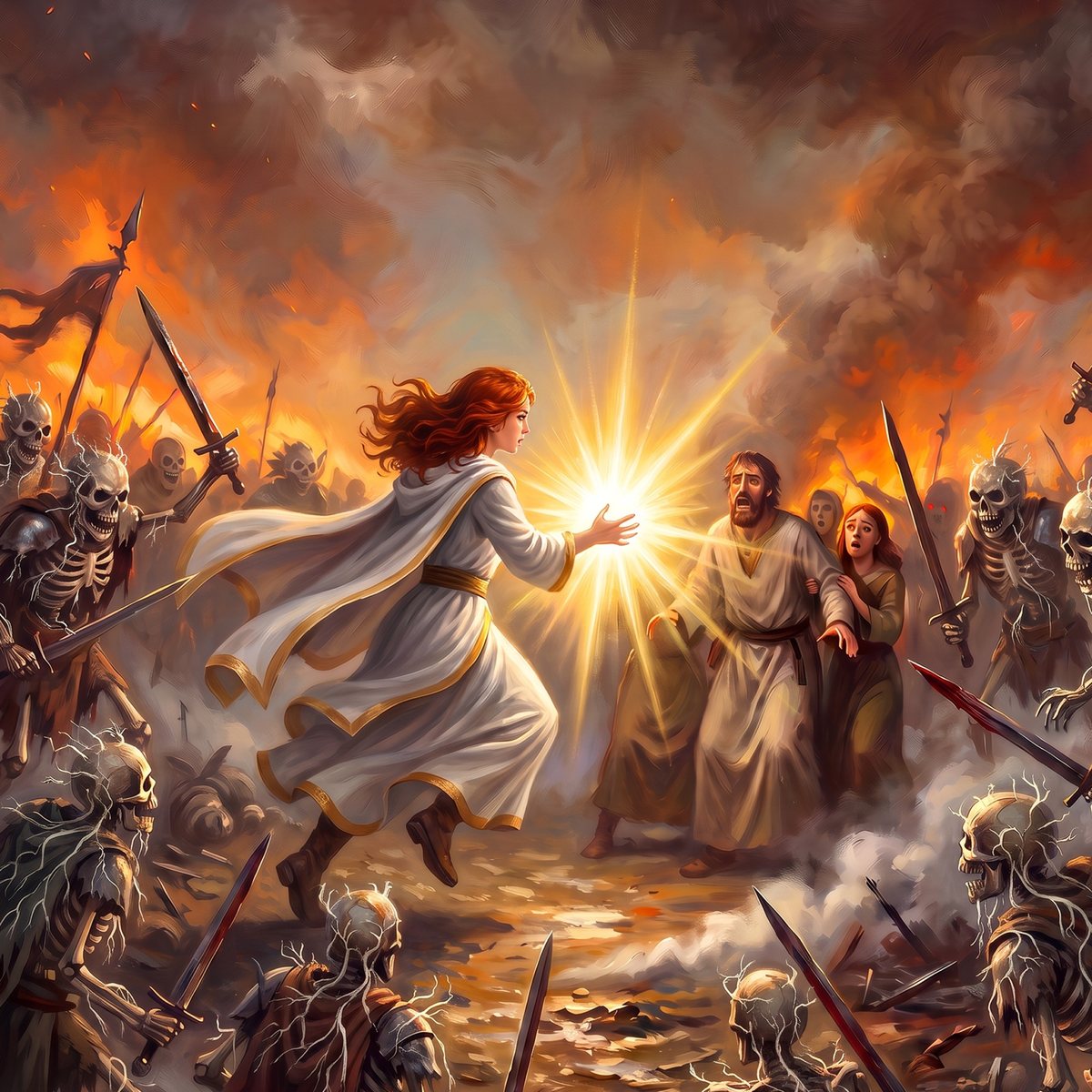
Empowered by Faith
What followed was the greatest battle Eucos had ever seen — and it was not fought in one place. What it left behind was worse than what it destroyed.
Nature — Collapse
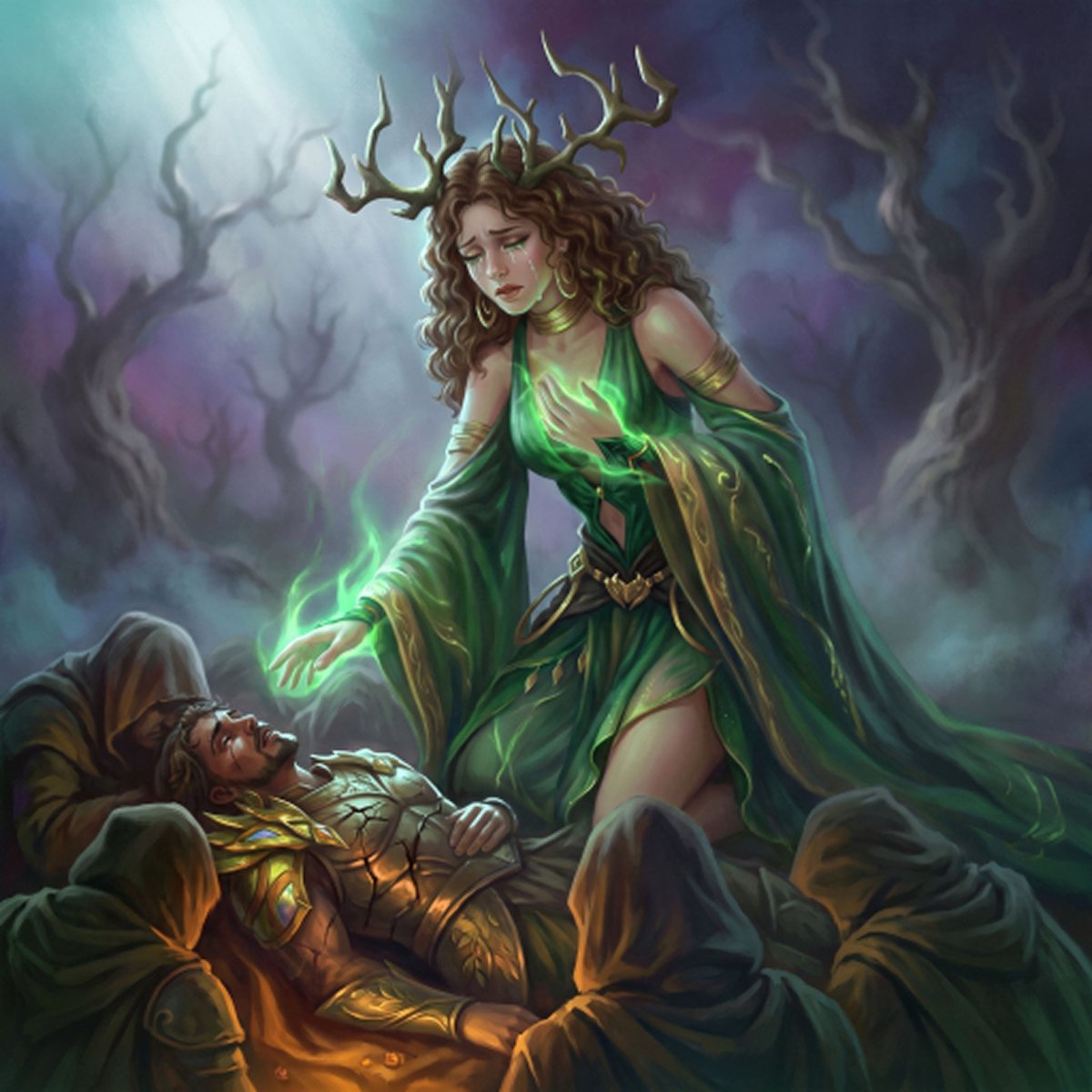
Aeona had been fracturing for months — wilted flowers, wrong-shaped gardens, a goddess driven toward paranoid madness by the horde and its constant hum. By the time Selena and Ulvar found her, she was almost entirely gone.
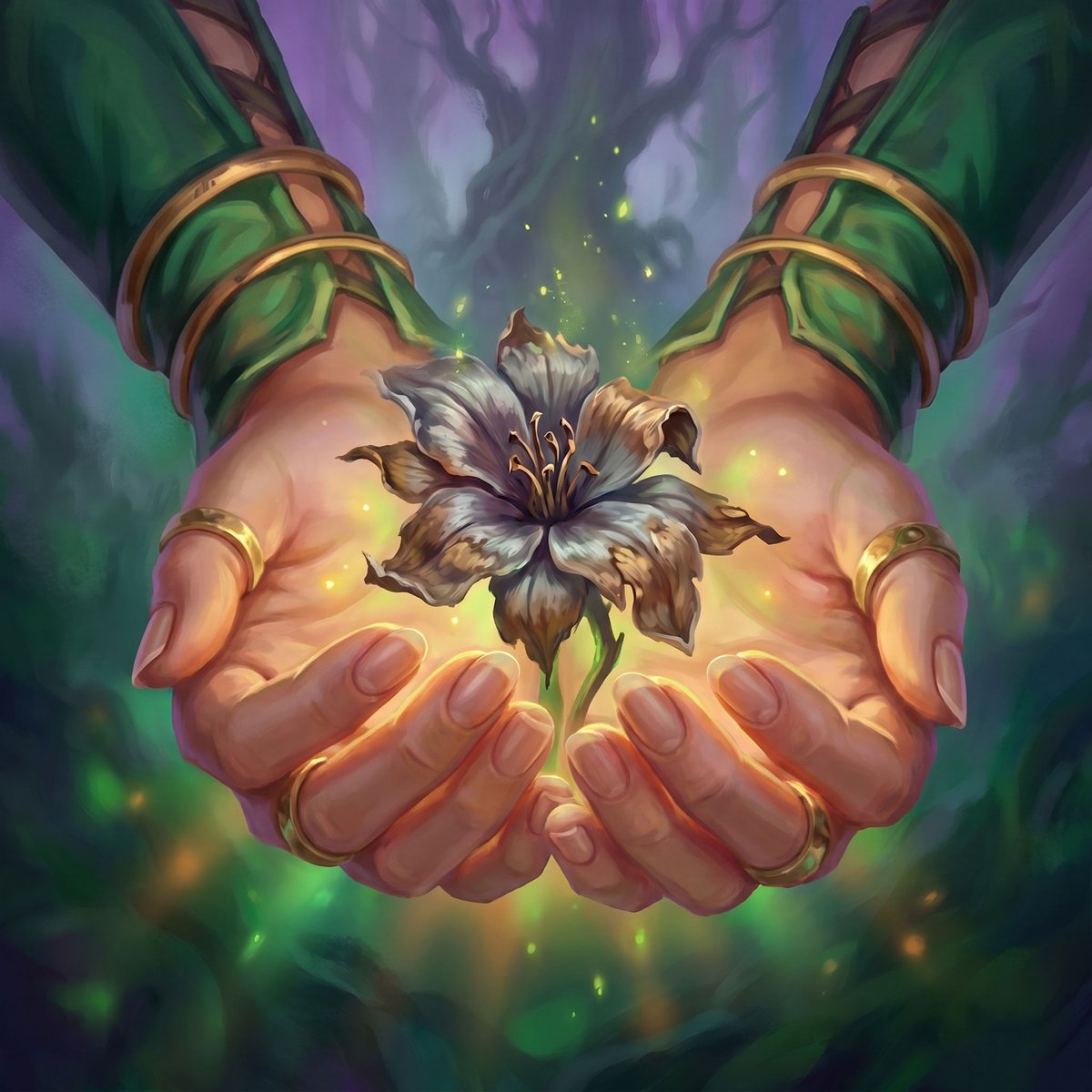
Sorrow
She turned on her own faithful. The two mortals who had devoted themselves most completely to Nature's restoration became her targets, and only Dagan saved them from her wrath. They retreated deep into the wilds, to a glade kept by dryads and still undiscovered by the horde, where Ulvar tended Selena's wounds and tried to understand how a goddess could cast down her most devout. He believed a piece of Aeona remained — otherwise their bodies would already be feeding the fungus. Selena, recovering, spoke of Amazonian salves for maladies of the mind, as if anything could cure a god.
Then Dagan came back from patrol with an Amazon arrow in his shoulder. Selena's sisters were fighting nearby. The three of them rode out and found a battlefield that made no sense: Everborn dead, but also imps and succubi, and Amazons killed by wounds no Amazon weapon had made. At least three forces had converged in those woods. Selena, Ulvar and Dagan threw themselves into the fight beside the Amazons, and when it was done, a gore-covered warden stumbled up to Selena with a warning: it is not safe.
Ulvar and Dagan sensed it first. Shapes started to reveal themselves among the eastern treeline — amorphous and vast, followed by the sound of a tree snapping and falling. From the mass of forms, a sound started to repeat: a discordant note, a pause, then another. It repeated. And again.
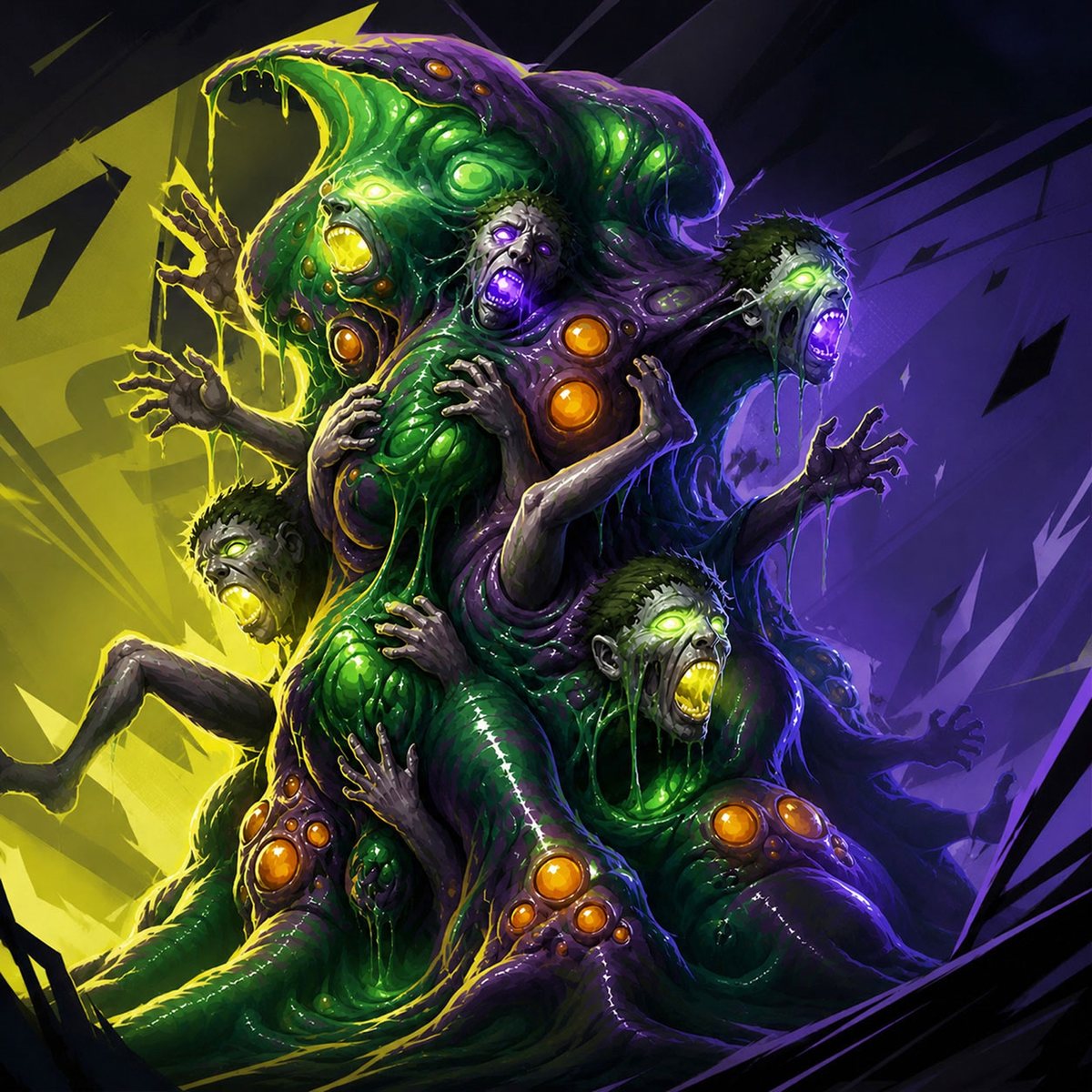
The Amorphous Mass
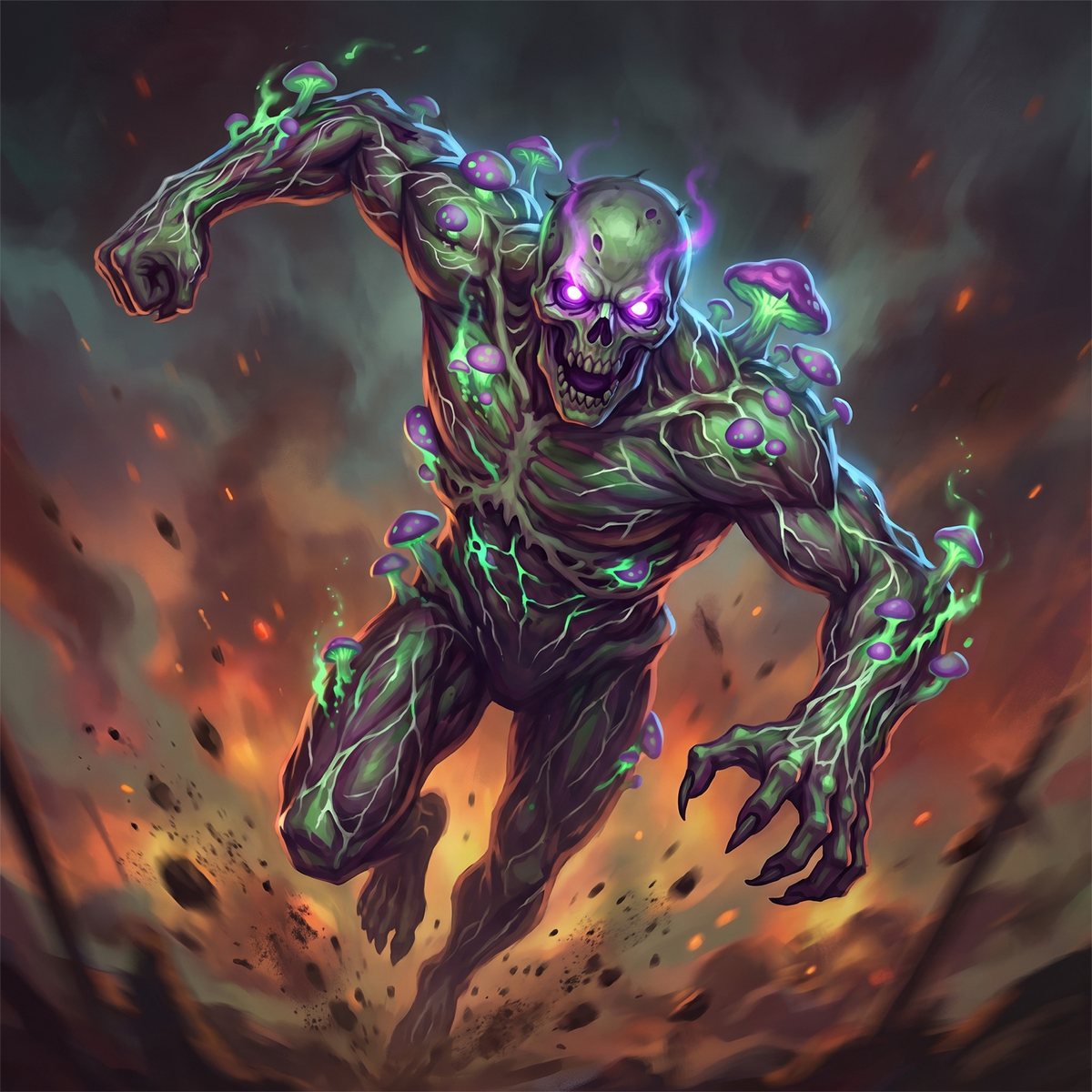
Out from the treeline stepped a familiar shape with unfamiliar characteristics. Warped and overgrown, a great bark-covered branch growing skyward from a body that used to belong to someone they knew. Embedded in the wooden part of what had been his body was a pan flute, half consumed by growth. It no longer played rallying cries or the melodies that punctuated a night of revels. It emitted a dire warning to anyone who could hear.
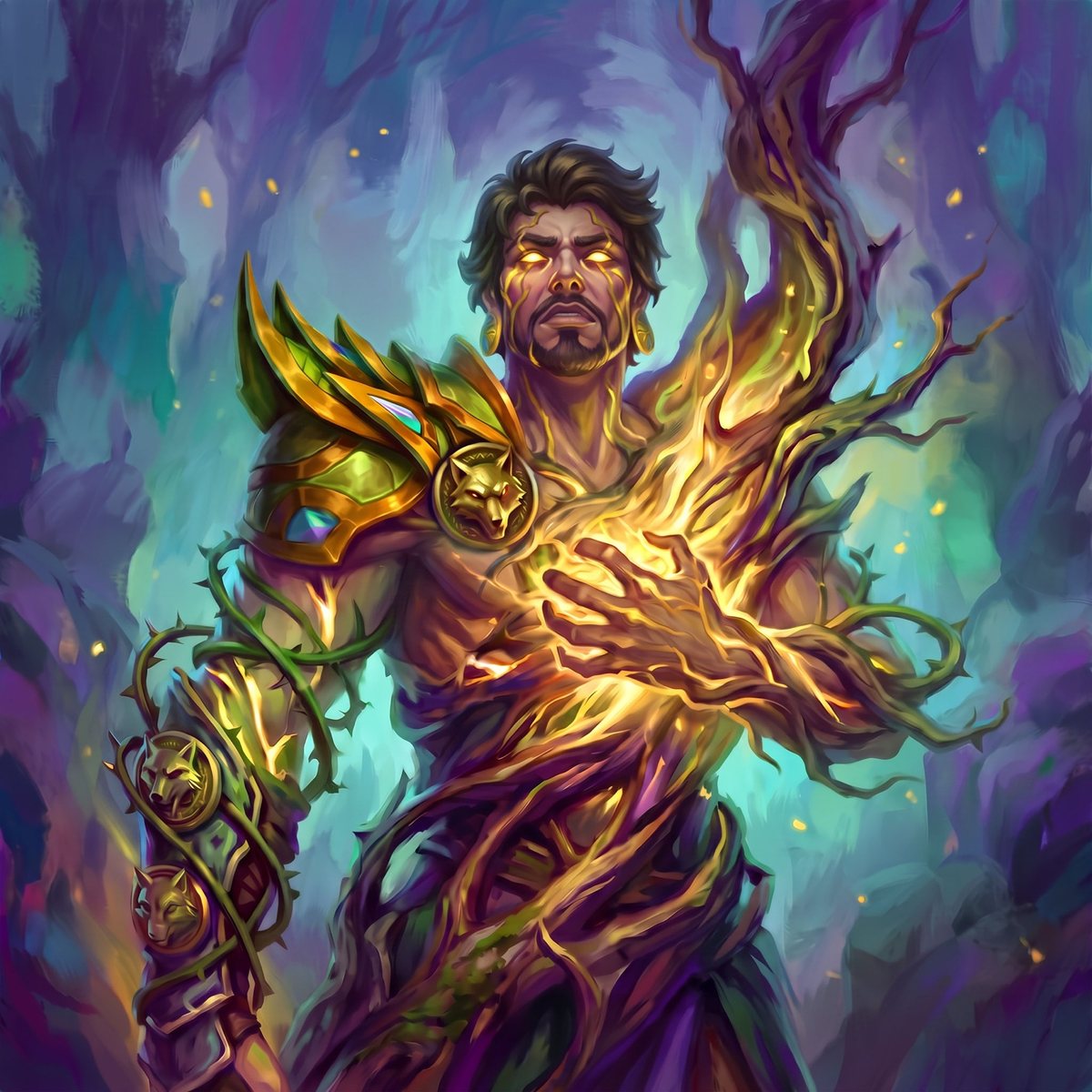
Divya No Longer
Divya of the Band of the Wolf — the gallivanting, braggadocious hero, the man who fought alongside Eiko from Raneko to the top of the Tower — was gone. What walked toward them was Everborn. He was Divya no longer. He eyed the trio from afar, and without a word, the horde charged.
Consuming Assault
The fight dragged on until Selena saw what a lesser fighter would have missed: every Everborn on the field had counterparts, but Divya stood alone and never approached. Remove him from the board, and the board might fall. She loosed an arrow directly at his head — he moved out of the way with inhuman speed, as if there was no space between where it started and where it ended. It was the distraction they needed. Dagan leapt from behind, barreling through ranks of creatures, launching himself from the top of a hulk, teeth finding Divya's neck. There was no blood. Only spores and splinters. Divya broke off one of Dagan's antlers, drove it into the great wolf's side, and tossed him away.
Something snapped behind Ulvar's eyes. A wave of energy tore a path to Divya and Ulvar followed it in, claws buried in the creature's chest. His power had always been borrowed — drawn from the living wild that trusted him, never more than it could spare. This time he took everything. Trees withered. Grass died at his feet. The Everborn closing in fell one by one, drained, while Selena pinned Divya's wrists with an arrow and held him fast as Ulvar drained whatever remained of his corrupted life. It was not a rescue. It was a mercy nobody wanted to perform.
When Divya stopped struggling, Ulvar plunged his claws into the earth and returned the borrowed life to the forest many times over. Every Everborn left in the clearing collapsed at once. So did Ulvar. The last thing he saw was Selena letting go of the body.
The Amazons would later mourn someone important to them, and would not speak of it to outsiders. Selena was last seen walking alone toward her homeland, bruised and too proud to let it slow her down. What became of Ulvar, of Dagan, and of the goddess who turned on them is not yet told.
Lamentation
Death — Cold Authority
On a battle-scarred plain at the edge of those same woods, Volkaaz walked among the bodies of human, beast and demon alike, admiring them like an artist judging his own masterpiece. His contract with Malissus was simple: put an end to the forces disrupting the mortal cycle, by any means required. The means he chose was slaughter — souls sent into Death's queue faster than they could ever be processed — and he fully expected to be paid for it in power. When his imps returned without the bounty he had sent them after, he flayed one alive simply to feed.
Then Malissus arrived. To the letter, she told him, he had done exactly what their agreement asked — and in doing it, he had become one of the very forces disrupting the balance the contract existed to protect. He was in violation. Volkaaz was indignant. He had been crafting such arrangements for centuries. She reminded him that she had created the very framework they were written in. And when he refused to concede, she invoked the arbitration clause.
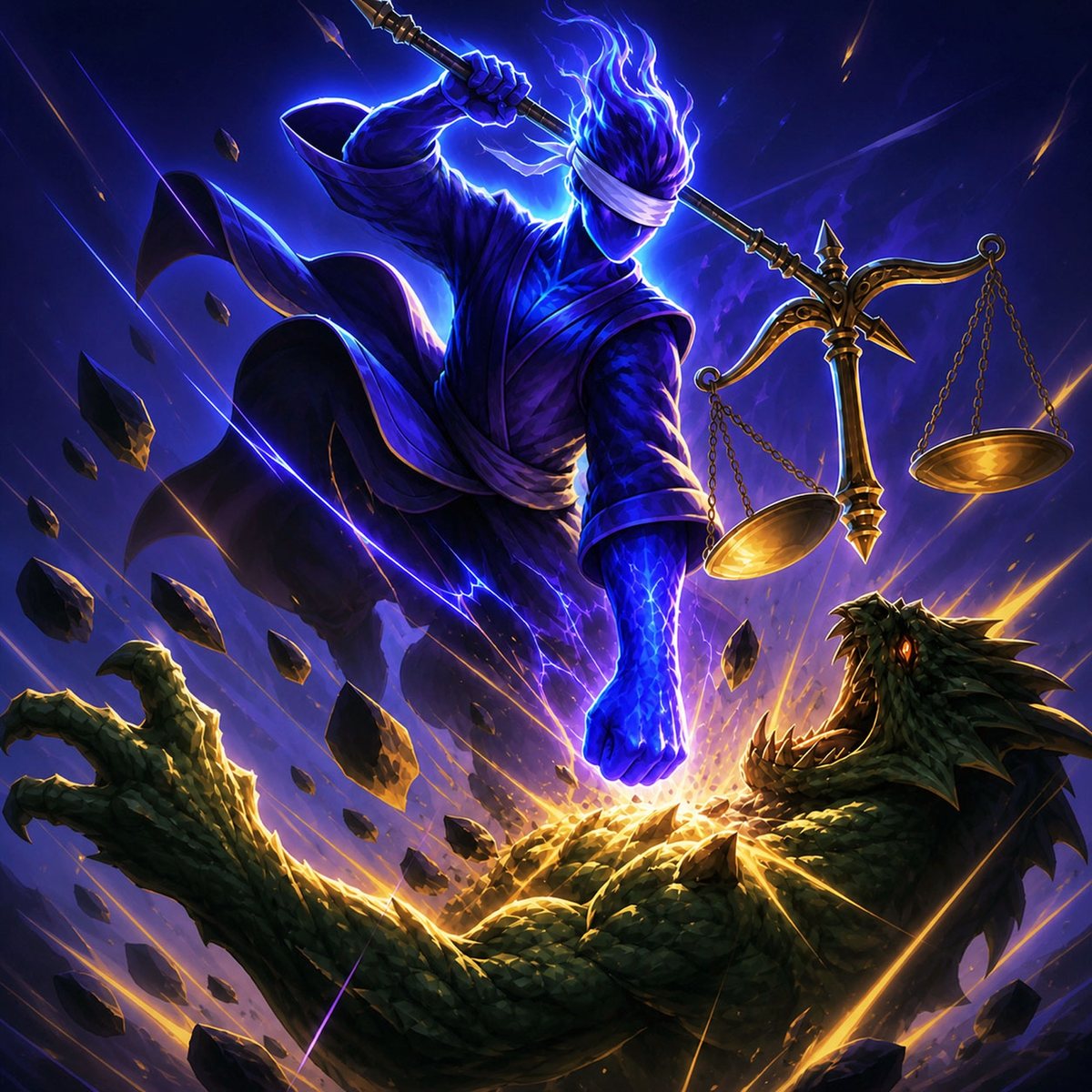
Over the ridge came the judges: aetheric beings of fire and light. At their head stood a blindfolded figure in shimmering blue robes, holding a perfectly balanced scale. Beside her stood a warrior wreathed in fire, carrying a molten spear.
Vesper, Relentless Adjudicator
Malissus backhanded the broker who thought he could outwrite Death. She had spent a great deal putting this council together, she told him as he knelt, but she alone was qualified to find him in breach. The judges were a formality. They were not there to judge him. They were there to enforce the revocation of all of his agreements.
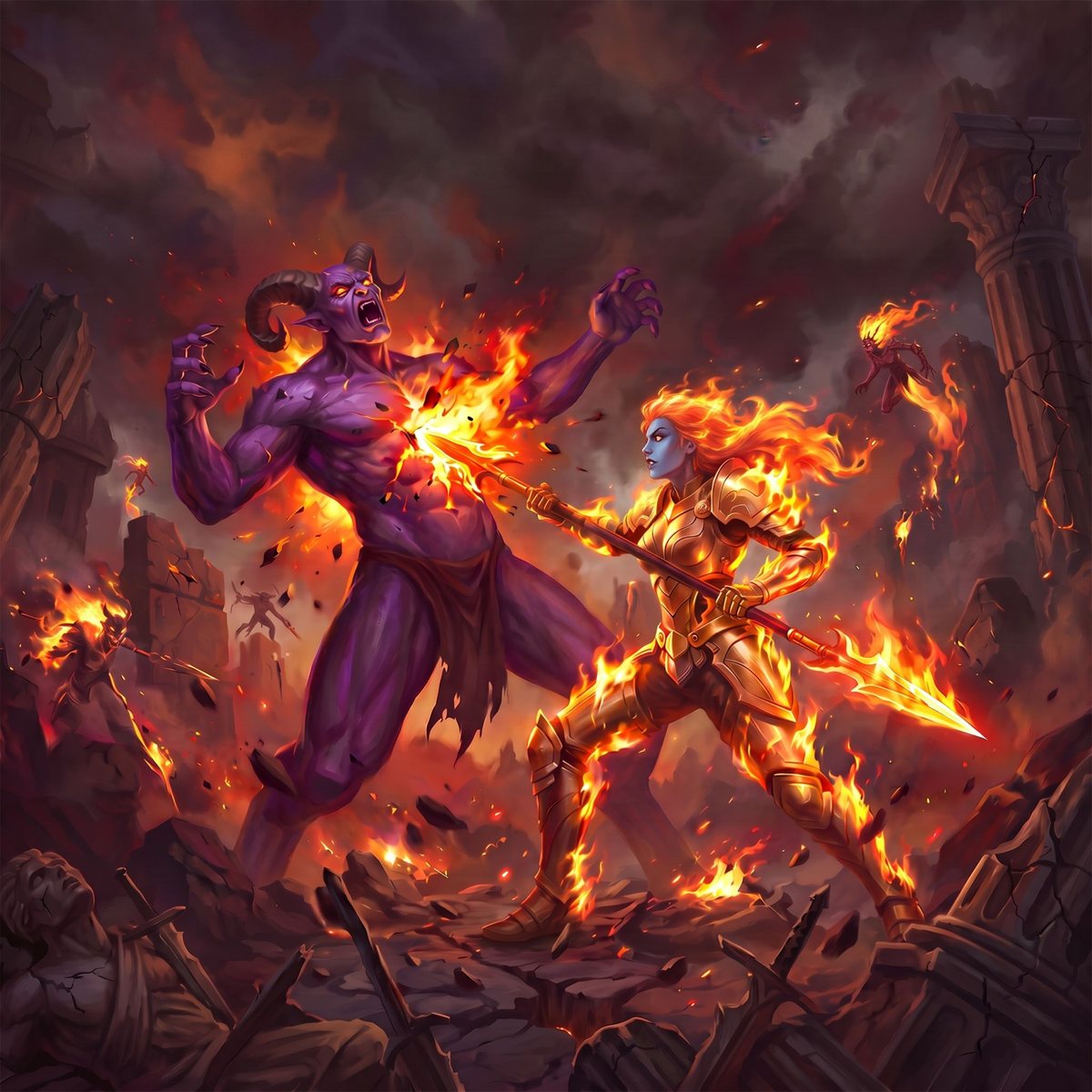
The blue Aether raised her scales, and one side sank. The fire warrior walked toward him. Volkaaz, Lord God of Pain, charged her, demanding the power he had been promised. A pillar of ethereal fire erupted from the ground and threw him, blackened and blinded, at her feet. She drove her spear through his chest and held it there while the flames spread until nothing was left but ash. His last words were almost a boast: he had come closer than anyone else.
Revoke
Malissus did not stay to watch. The imbalance his slaughter had deepened remained, and Death's queue was longer than it had ever been.
War — The Crash After Glory
The siege at the Garrison was the greatest battle Eucos had ever seen. Draka and Valknir, Light and Magic converged on a single keep while a titan the size of a city descended on them from above, blotting out direct sunlight entirely.
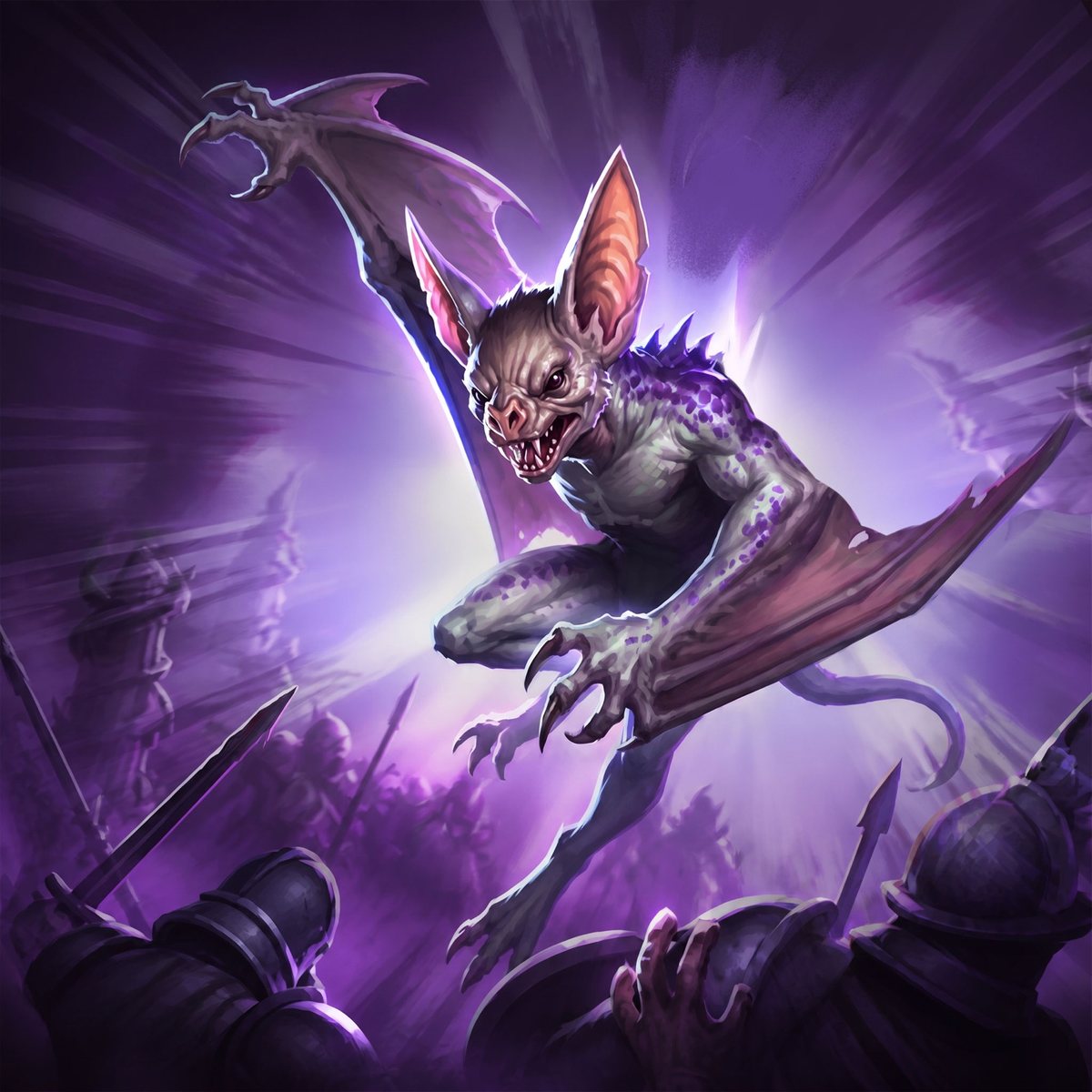
The Thirsting Syphon
Wave after wave of Everborn flung themselves at the walls with increasing frequency. New horrors arrived in the ranks — hulking creatures that took concentrated fire to fell, only to burst near death and release smaller combatants, ever closer to the walls in larger numbers. Draka gargoyles flew overhead, dropping oil bombs and spearing the larger ones before taking back to the skies. Valknir warriors cleaved their way through from atop mechanical war machines the Draka had devised — armored and weaponized, they crushed rank after rank beneath the violent engines they rode. At the gates stood Argus alone, his great shield repelling anything that approached, protecting the entry so the war machines could egress if they needed it. He was a warrior without peer, but even his time was dwindling, exhausted from non-stop combat.
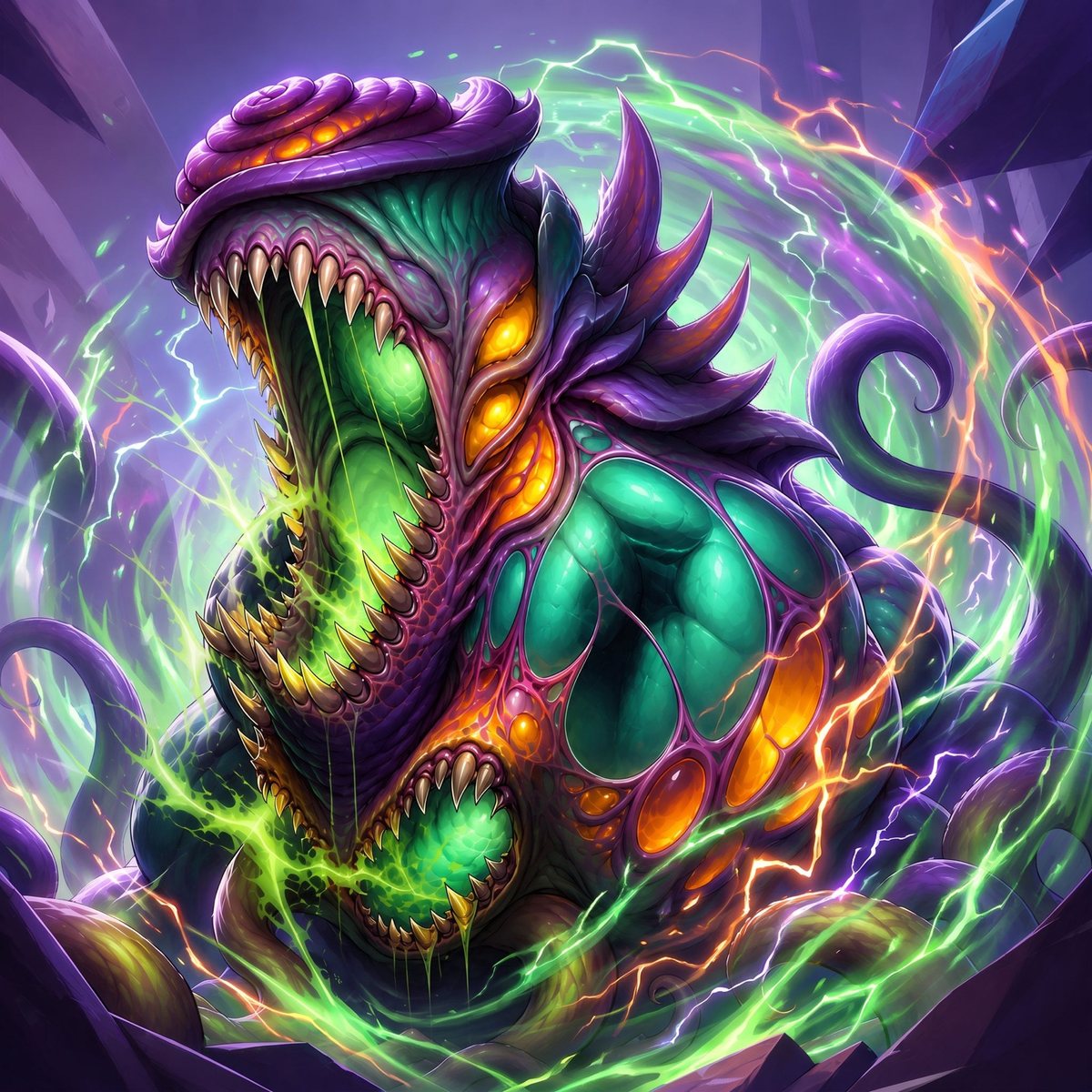
The Swollen Terror
The final wave brought something worse: beasts triple the size of anything before them, assembled from the parts of every Everborn the Garrison had already fought, their forms shifting as they moved. They hurled masses of acrid, corrosive bile against the walls, shaking supports loose and stripping skin and scale from the defenders who breathed it. Glinn ordered every arm to bear. And an armored war wagon rolled out through the gate, carrying a payload the Academy had been building in the workshops for days. Nobody outside the Academy knew what was inside. Oddi joked that they had packed their libraries into it.
Auros, God of War, was consumed by the scale of it. The Lord of War had never met a battle so fierce, so grand in its scope, and with every wave he lusted for more — the enormity of the forces, the weight of everything at stake, the sheer, roaring totality of a conflict that justified his entire existence.
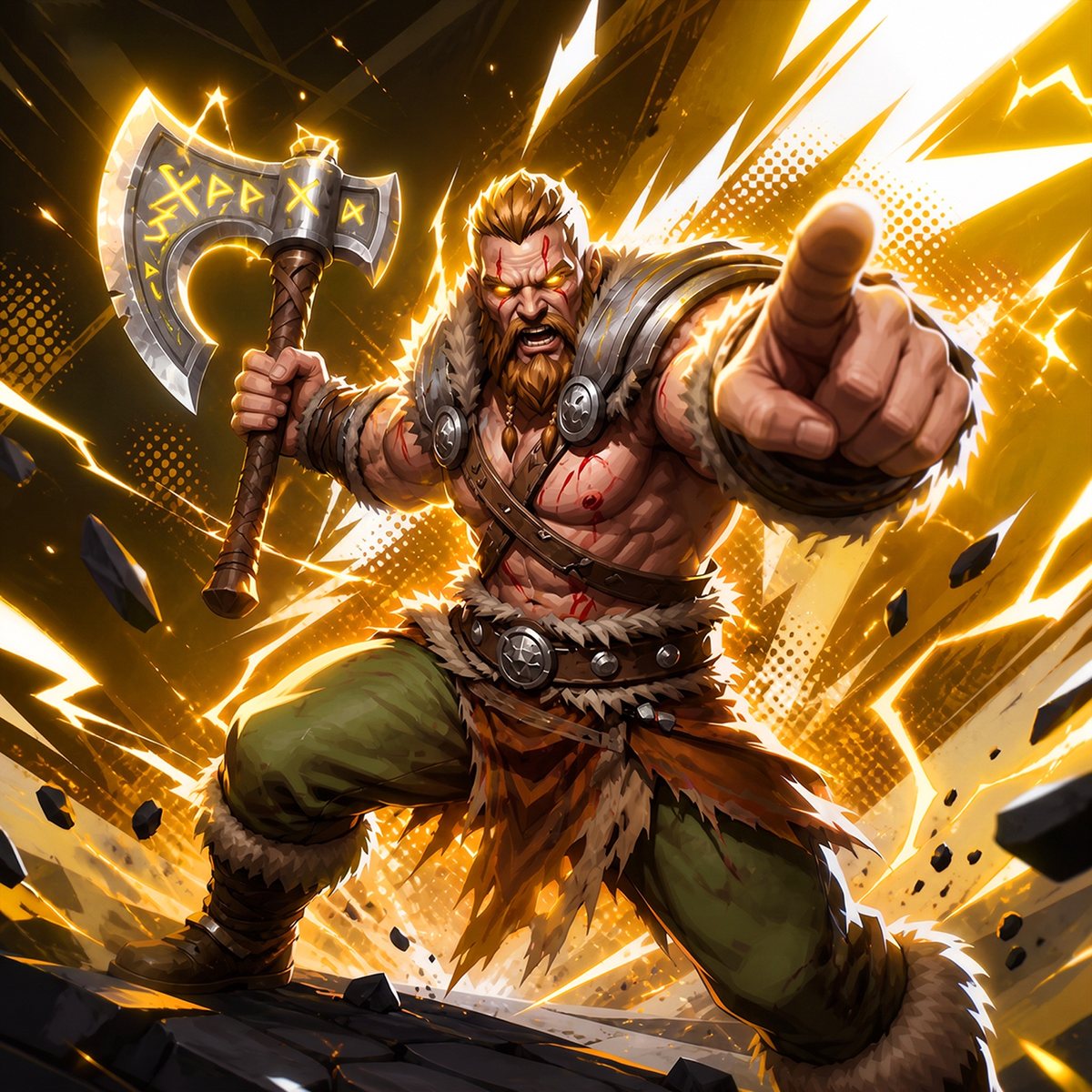
Harald, Until Death
And then it ended.
The silence after the shockwave was unlike anything Auros had ever known. The absence of battle, after the greatest battle, was not peace. It was withdrawal. He understood, in that silence, a truth that would undo him: he would never feel it again. No future war, no escalation, no provocation would ever match what had just happened. The high was gone, and he would spend whatever came next chasing it — pushing situations toward conflict not for strategy but for the sensation of it, becoming reckless in ways his faithful could not explain or predict. A god of war who fights not for victory but for the feeling.
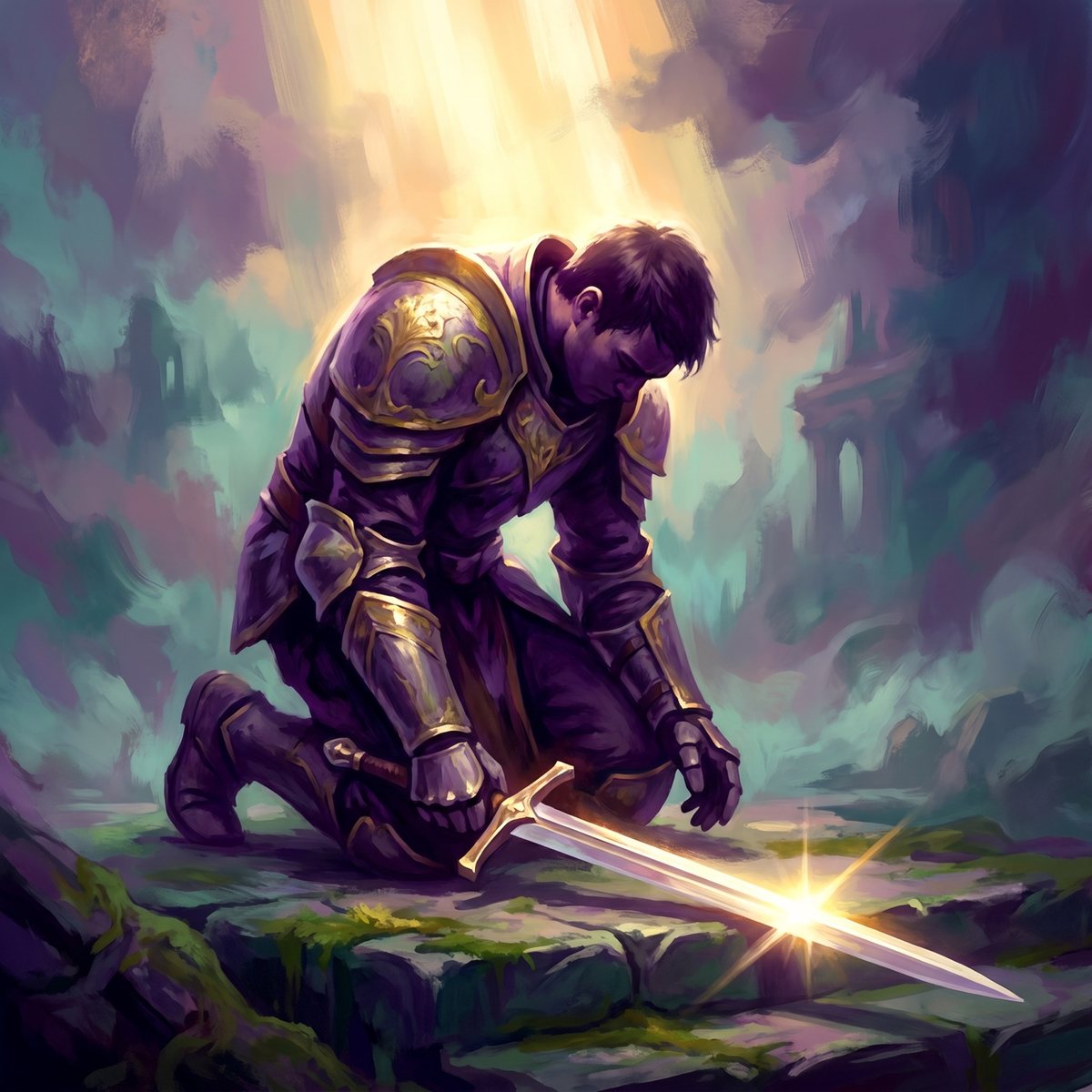
Frailty of Conviction
The Hollow Victories
Ludia was not heard from. Orfeo had vanished. Into the space they left stepped Admiral Mayday — not a god, not a champion, just a pirate. In the burned-out ruins of Ronel, a free city torn apart by fear and sectarian violence, she told the survivors the truth: Ludia and Orfeo had stoked it all, and the trickster goddess had never cared for them. When the crowd begged her to lead them, she refused. She wanted a world without rulers, gods included. "Ludia will not rebuild this city," she told them, "but you can." Then she gathered the largest mortal fleet assembled in a generation and sailed after Orfeo, certain he would lead her to his mistress.
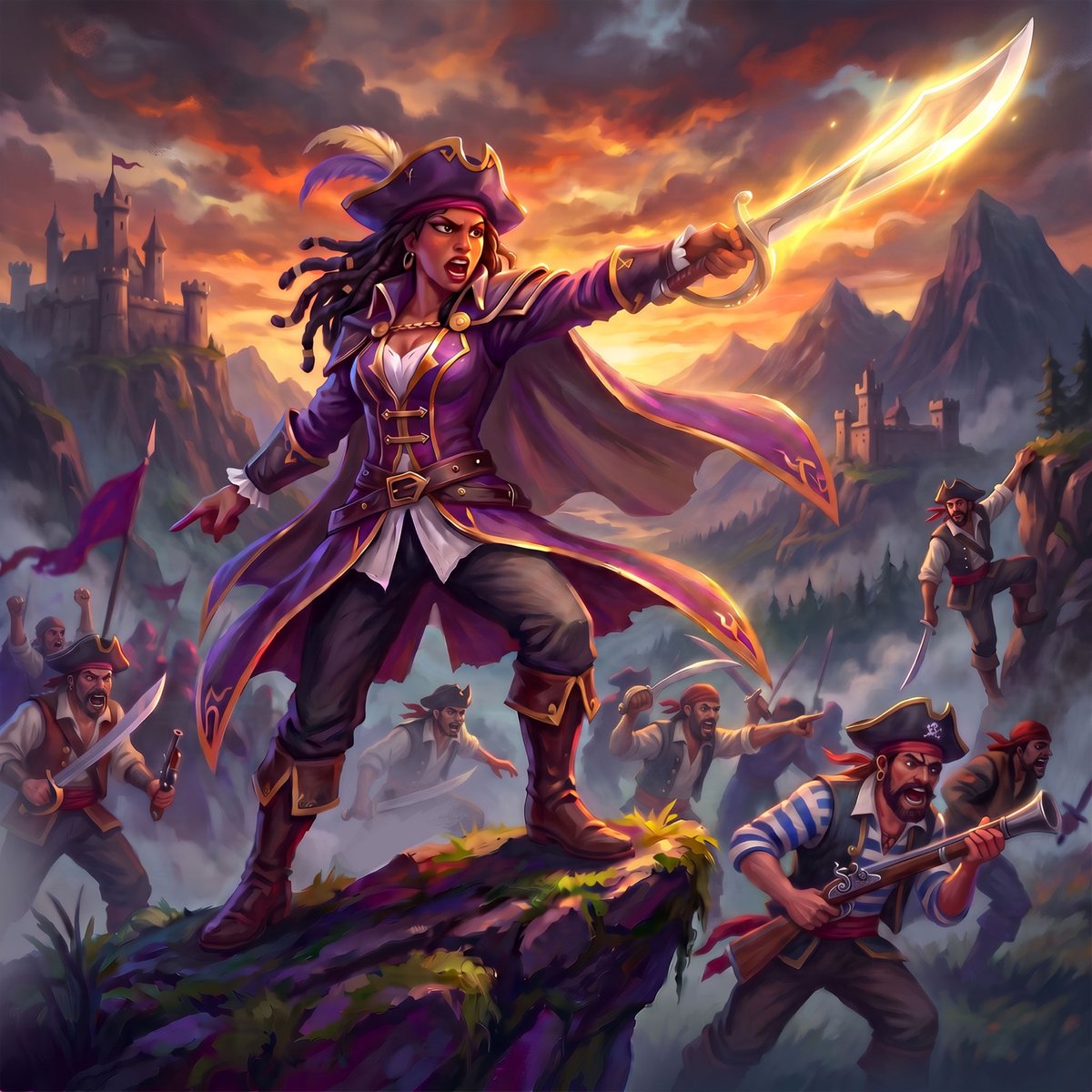
An End to Tyranny
He led her to the source instead. Mayday's fleet made landfall on a blighted shore where the second force — Atlantean constructs, shielded golems and slender casters wreathed in swarms of floating orbs — held a dome of blue light against endless Everborn while they worked at something on the ground. Then the earth split open, a fresh horde poured out, and above it hovered a winged woman in black-and-gold armor, a scythe at her side. She caught the glint of Mayday's spyglass. Part of the horde turned toward the cliffs.
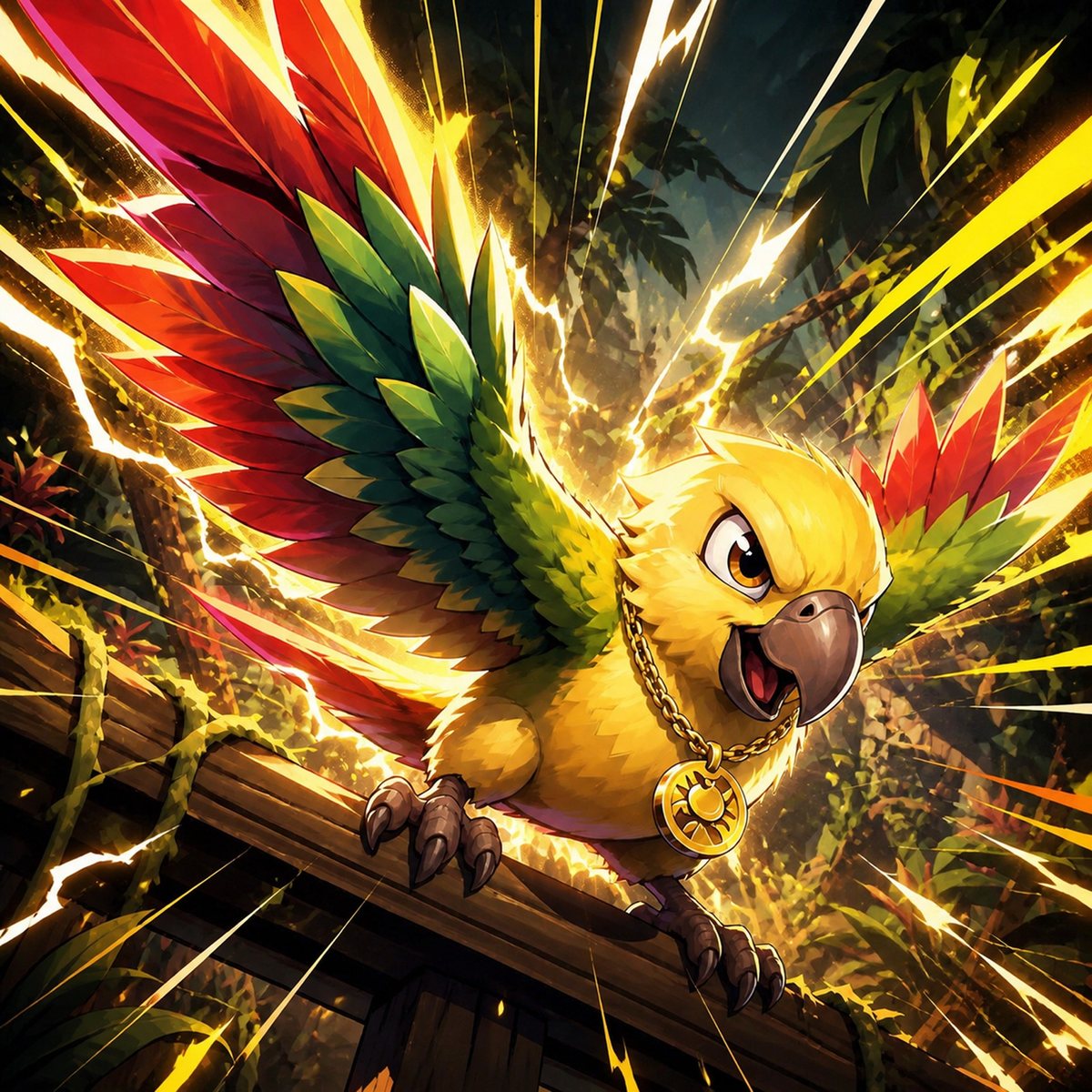
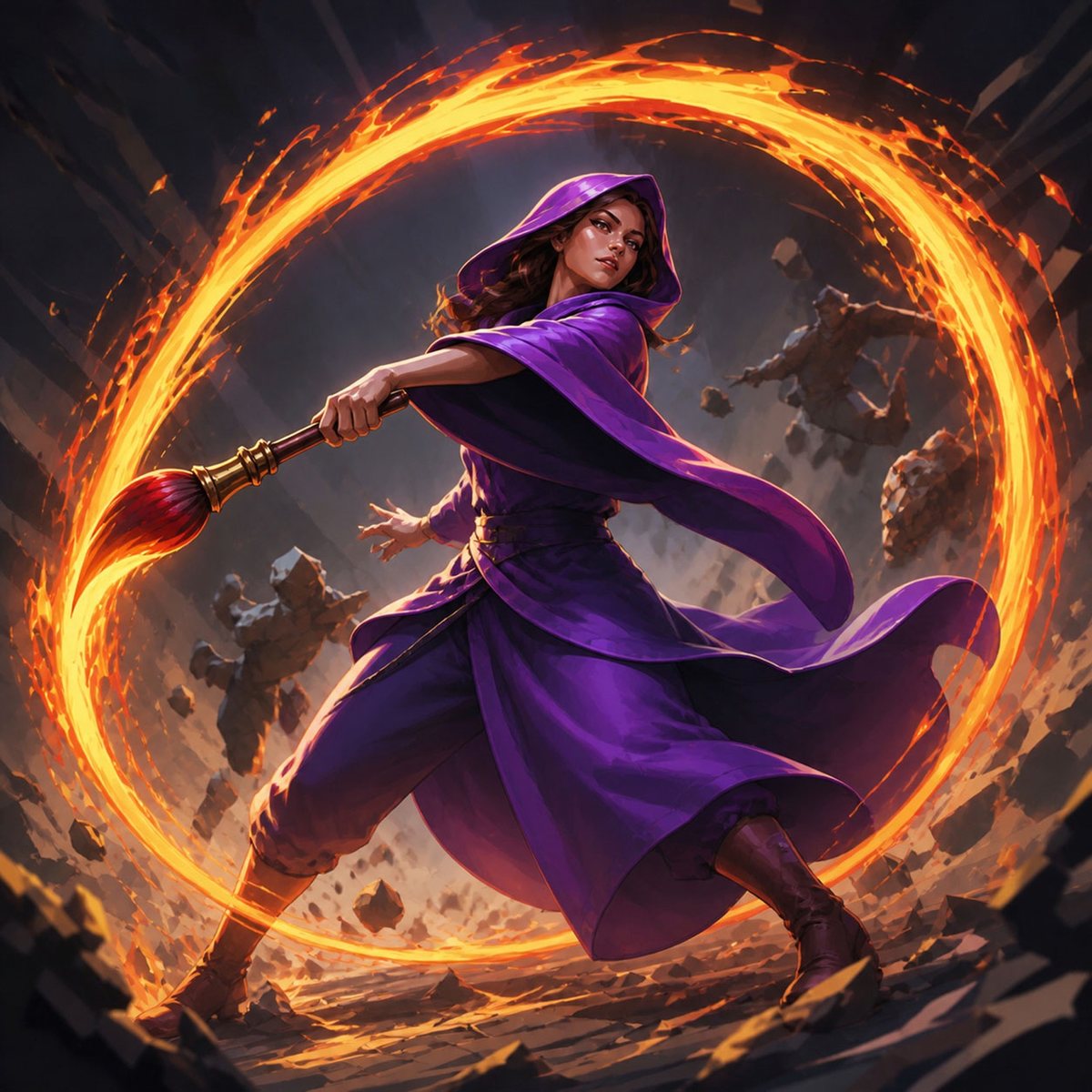
Digby of a Feather · Ella
Mayday's first mate died in the fighting. Mayday burned the winged woman out of the sky with a signal flare, and when she fell, the horde around her reeled as though it shared her pain. They fought hand to hand. Mayday took a shard through the shoulder and had her arm wrenched from its socket, and still drove her cutlass up into the woman's unarmored side. The creature spoke a single word — "No." — and when she fell, she bled red. Mortal blood. Then came a flash of blue: the Atlanteans had finished their work. A construct lifted Mayday from the field. When she asked it what the woman was, it answered "No time." Then the shockwave reached her, and she went out cold.
Weeks later she returned to Ronel aboard what was left of the Marauder, her side wrapped in bandages and Atlantean devices, her crew badly reduced, carried through the streets by Atlantean constructs who handled her like a clumsy father with a newborn. It was said she invented entirely new curse words for them.
The Academy's mages returned home. Their work at the Cracked Mountains had been decisive, and nobody wanted them there a moment longer than they had to be. The Academy has since locked its doors and barred its gates. Pallas did not apologize.
And Argus led the search for survivors through the wreckage of a plan he had never been told the whole of. When he learned what Pallas had done to Charity's flock, he had pinned the Champion of Magic to the wall. It had not been enough. He found the flock. He did not find Charity. Light was victorious, and it had never felt less like winning.
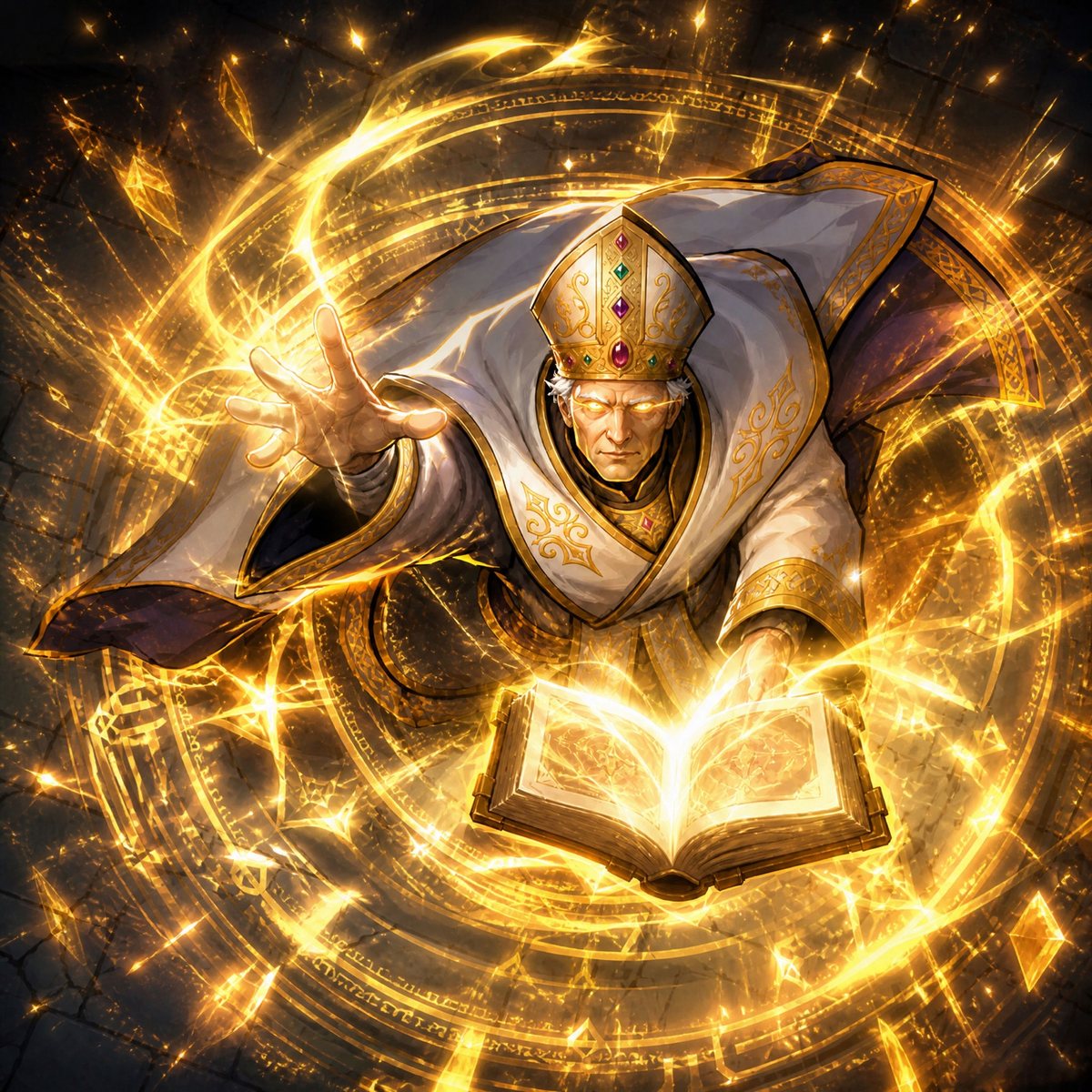
The Bishop
Charity's story is next. It deserves its own telling.